


.
.
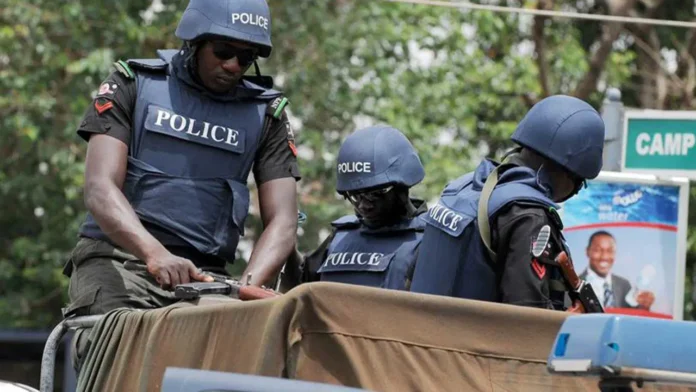
The daily interactions between the Nigeria Police Force and the civilian population present two distinctly different realities depending on which side of the regional divide a citizen resides. While systemic underfunding, administrative centralisation, and institutional corruption remain national afflictions, the very architecture of the police system operates as though designed to mistreat specific sections of the population while leaving others entirely exposed.
In the southern half of the country, policing is experienced primarily as a tool of state-backed extortion, aggressive youth profiling, and lethal recklessness at stop-and-search checkpoints. Conversely, across vast stretches of the northern regions, the system inflicts a different kind of violence: a deliberate structural vacuum where a complete absence of police presence leaves entire rural populations at the mercy of non-state armed groups.
Regional Breakdown of Police Misconduct, Deployment, and Impact
| Region | Deployment Pattern | Nature of Police Abuse & Extortion | Dominant Driver of Civilian Fatalities | Structural Impact on Population |
|---|---|---|---|---|
| South-East & South-South | Heavy tactical and checkpoint presence along transit corridors and economic hubs. | Systematic appearance profiling (“Yahoo boy” stereotyping), unlawful phone searches, forced ATM/electronic money transfers, and illegal border-post extortion. | “Accidental discharge” at checkpoints, extrajudicial killings by specialized tactical units, and violent counter-insurgency clashes. | High civilian distrust, militarized living conditions, and active state harassment of youth. |
| South-West | High concentration in dense commercial centers (Lagos, Ibadan, Ogun). | Mass blackspot raids, arbitrary arrests of young professionals, forced digital device searches, and custodial extortion. | Bystander deaths during urban raid operations, vehicular checkpoint altercations, and protest suppression. | Pervasive profiling of young adults, financial exploitation, and high demand for regional security corps (e.g., Amotekun). |
| North-West & North-East | Severe under-policing in rural areas; stations abandoned. Heavy reliance on joint military task forces. | Arbitrary detentions on suspicion of aiding bandits/terrorists, harsh curfew enforcement, and custodial mistreatment in detention camps. | Kinetic military-police raids, crossfire during anti-banditry operations, and severe conditions in counter-insurgency detention centers. | Vulnerability to mass abductions and bandit attacks due to police absence; complete collapse of rural security. |
| North-Central & FCT | Massive concentration in Abuja for elite protection; low presence in rural farming belts. | Indiscriminate urban sweeps in informal settlements, enforcement of municipal bans, and arbitrary bail extortion in capital cities. | Collateral deaths during agrarian/herder clashes and police delay/inaction during rural community raids. | Rapid emergence of state-backed volunteer guards to fill law enforcement gaps in rural areas. |
A critical examination of police operational data highlights that despite the severe security crises gripping the North-West and North-East, tactical deployment remains disproportionately clustered around southern economic hubs and urban administrative centers. Statistically, nearly half of the nation’s total police workforce is concentrated across the southern zones. In major commercial cities like Lagos, Port Harcourt, and Benin City, heavy personnel allocations are routinely diverted away from neighborhood patrols toward static guard duties for political elites, multinational executives, and corporate entities.
This heavy urban concentration in the South, however, has not translated into improved public safety. Instead, the force operates almost predatory in nature against young Nigerians between the ages of 17 and 30. In the South-East, South-South, and South-West, citizens report persistent harassment driven by appearance-based stereotyping. Individuals carrying laptops, driving private vehicles, or sporting non-traditional hairstyles are routinely targeted under the guise of cybercrime prevention.
The operational methods in these southern corridors have increasingly centered on direct financial extraction. Unlawful stop-and-search operations frequently involve forced smartphone inspections, arbitrary detentions, and coercion to compel victims to execute electronic bank transfers or cash withdrawals at automated teller machines. Confrontations stemming from driver resistance at these checkpoints remain a leading driver of civilian casualties, with “accidental discharges” and lethal force frequently documented along major inter-state transport routes.
In the South-East specifically, the security landscape is further complicated by a heavily militarized police posture. Years of counter-insurgency operations and friction between federal police, non-state actors, and state-backed security outfits have fostered deep institutional distrust, making the region a persistent flashpoint for extrajudicial encounters and custodial abuse.
The reality shifts dramatically upon moving to the North-West and North-East. Across these zones, rural communities endure severe under-policing. Scores of police outposts in remote communities across Sokoto, Zamfara, Katsina, and Borno sit abandoned or understaffed due to their vulnerability to heavily armed bandits and insurgents. The vacuum left by standard law enforcement has forced the federal government to rely on joint military-police task forces and regional field deployments under Deputy Inspectors-General of Police to maintain basic operational continuity.
Consequently, civilian expectations of law enforcement in the North differ markedly from the South. Rather than fearing routine profiling or financial extortion at city checkpoints, northern rural populations face the structural danger of security absence. Casualties in these regions rarely stem from commercial checkpoint altercations; instead, civilian deaths linked to security operations occur primarily during active kinetic engagements, crossfire in anti-banditry raids, or inside counter-insurgency detention facilities.
The North-Central zone and the Federal Capital Territory occupy a middle ground within this framework. In urban Abuja, heavy police deployments are maintained to protect state infrastructure, diplomatic missions, and manage public demonstrations. Outside the capital, however, in the agricultural belts of Benue, Plateau, and Nasarawa, standard police response times during community raids and agrarian disputes remain critically slow. This shortfall has driven state governments to increasingly rely on localized volunteer guard structures to fill the security void.
Underpinning these regional disparities is the structural rigidity of Nigeria’s centralized command framework, which inherently designs inequality into policing. The practice of posting personnel far from their home states routinely creates language barriers, cultural friction, and a lack of local accountability. As calls for the establishment of state police forces gain momentum across legislative floors and civil society organizations nationwide, the data underscores a clear reality: until structural decentralization and equitable deployment are achieved, the Nigeria Police Force will remain an instrument structured to prey on southern citizens while failing to protect northern communities.







