
A report on insecurity in Northwest Nigeria, September 2026
1. The Incident
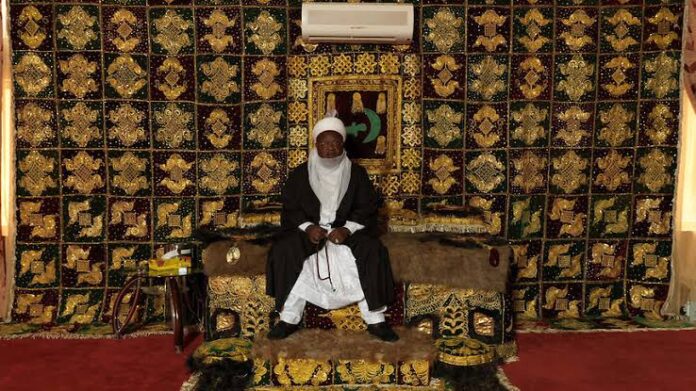
On Friday, September 11, 2026, Katsina-based security commentator Bakatsine reported on X that bandits holding more than 100 abducted residents in Katsina State had killed one of their captives and sent his severed head to the Shadadi Emirate. Bakatsine described the killing as “heartbreaking” and warned it would deepen fear among families of the roughly 100 others still believed to be in captivity, asking publicly how many more people must die before the cycle of abduction and killing ends.
Important caveats:
- The report traces to a single source — Bakatsine’s post on X — and has not been independently confirmed by police, the military, or traditional authorities as of this writing.
- The victim’s identity has not been disclosed, and the circumstances of his abduction remain unverified.
- Separately, a similar account also circulated the same week describing a beheading tied to Shadadi in Niger State (Mariga LGA) rather than Katsina. It is unclear from public reporting whether these are the same incident described inconsistently by different outlets, or two distinct incidents — this discrepancy has not been resolved in available coverage and should be treated with caution.
This event does not stand alone. In the same reporting period, the elder brother of the Minister of State for Agriculture and Food Security, Aliyu Sabi Abdullahi — the Village Head of Galla in Borgu Emirate, Niger State — was reportedly killed at his palace on August 24, 2026, after having earlier warned terrorists to stay away from his community.
2. The Scale of the Crisis: Northwest Nigeria’s Kidnapping Epidemic
Northwest Nigeria (Zamfara, Katsina, Kaduna, Sokoto, Kebbi, Kano, Jigawa) is the epicentre of the country’s banditry crisis. Two consecutive annual reports by SBM Intelligence show the trend is worsening sharply:
| Period | People kidnapped (nationwide) | Incidents | People killed |
|---|---|---|---|
| July 2023 – June 2024 | 7,568 | — | — |
| July 2024 – June 2025 | 4,722 | 997 | 762 |
| July 2025 – June 2026 | 7,825 | 1,713 | 1,142 |
- Victims increased 66% year-on-year in the most recent cycle.
- Northern Nigeria accounted for 93.7% of all abducted persons nationwide; the South accounted for 6.3%.
- Zamfara State alone recorded 236 kidnapping incidents and 1,921 victims — nearly a quarter (24.55%) of all victims nationwide — while security forces conducted only four anti-kidnap operations in the state during the entire period.
- Northwest state breakdown for the 2024–2025 cycle (SBM): Zamfara 1,203 abducted, Kaduna 629, Katsina 566, Sokoto 358 — together over 60% of all reported kidnapping incidents nationwide.
- Separately, Nextier recorded 2,452 kidnap victims nationwide in 2024, a 31% rise over 2023’s 1,878.
Large-scale, single-incident mass abductions have become a defining feature of the crisis: 416 people taken in Ngoshe, Gwoza (Borno) in April 2026, and 315 pupils and staff abducted from St Mary’s School, Papiri (Niger State) in November 2025, among others.
3. The Ransom Economy
The same SBM Intelligence report (“The Economics of Nigeria’s Kidnap Industry, 2026“) quantifies how the ransom trade itself is shifting:
| Metric | July 2024–June 2025 | July 2025–June 2026 |
|---|---|---|
| Total ransom demanded | ₦48 billion | ₦22.9 billion |
| Total ransom actually paid | ₦2.56 billion | ₦7.78 billion (~US$5.8m) |
| Collection rate | 5.35% | 34% |
Ransom payments more than tripled even as total demands fell — driven largely by a small number of very large mass-abduction payouts. The breakdown by perpetrator type is stark:
- JAS (a Boko Haram faction): demanded ₦9.2 billion, collected ₦7 billion — a 76% collection rate, accounting for roughly 90% of all ransom paid nationwide in the period.
- Bandit/criminal gangs: demanded ₦13.5 billion across 146 incidents, collected only ₦719 million — a 5.3% collection rate.
An earlier cycle (July 2023–June 2024) saw ₦11 billion demanded against just ₦1.04 billion paid — underscoring how quickly the collection rate, and terrorist financing, has grown.
4. Government Spending: Two Ledgers
4a. Security and defence budget
| Year | Allocation |
|---|---|
| 2022 | ₦2.41 trillion |
| 2023 | ₦2.90 trillion |
| 2024 | ₦3.85 trillion |
| 2025 | ₦6.57 trillion |
| 2026 (proposed, Dec 2025) | ₦5.41 trillion |
Nigeria has spent an estimated ₦32.88 trillion on defence over the past 15 years — about 12.5% of total government expenditure in that period. The 2026 defence and security allocation (₦5.41tn) was presented by President Tinubu as the largest single sectoral allocation in the ₦58.18 trillion 2026 budget, ahead of infrastructure (₦3.56tn), education (₦3.52tn) and health (₦2.48tn). (Note: the budget was reportedly signed into law at a higher, amended figure of ₦68.32 trillion after National Assembly review — public reporting is not fully consistent on the final defence-line figure post-amendment.)
Despite the scale of this spending, the Senate Committee on Defence has publicly flagged slow disbursement/implementation of the 2025 defence budget as a factor undermining operations, and analysts note that, “by virtually every metric, the security situation has not improved” over the period of rising allocations.
4b. Presidential foreign travel spending
According to GovSpend records (an independent public-expenditure accountability platform), covering June 2023 – April 2026:
| Period | Travel-related spending |
|---|---|
| H2 2023 | ₦9.19 billion |
| 2024 | ₦25.27 billion |
| 2025 | ₦2.71 billion |
| Jan–Apr 2026 | ₦477.45 million |
| Total (June 2023–April 2026) | ₦37.64 billion |
Additional figures:
- The 2026 federal budget allocates ₦6.1 billion for the President’s international travel alone, plus ₦873 million for local travel; combined with the Vice President’s allocation, foreign-trip budgeting for 2026 totals roughly ₦7.4 billion.
- Separately, the 2026 budget provides ₦6 billion for Presidential Air Fleet aircraft-engine overhauls, including ₦3.86 billion for a single Gulfstream G550 (tail number 5N-FGW) engine overhaul.
- President Tinubu has made 52 foreign trips and spent approximately 261 days abroad (visiting 30+ countries) since taking office in May 2023.
- Separate foreign-exchange disbursements of $553,884 (≈₦700.7 million) were recorded for First Lady Oluremi Tinubu’s overseas travel between 2023–2024; the Transparency and Accountability Group has questioned the legal basis for this spending, noting the Office of the First Lady has no statutory recognition under Nigerian law.
5. Putting the Numbers Side by Side
| Category | Amount |
|---|---|
| Ransom paid to kidnappers/terrorists, July 2025–June 2026 alone | ₦7.78 billion |
| Presidency foreign travel spending, June 2023–April 2026 (~3 years) | ₦37.64 billion |
| 2026 budget line for presidential international travel alone | ₦6.1 billion |
| 2025 federal security/defence budget | ₦6.57 trillion |
| 2026 federal security/defence budget (proposed) | ₦5.41 trillion |
| Cumulative security/defence spending, 2011–2026 (~15 yrs) | ₦32.88 trillion |
Context worth holding in view:
- In absolute terms, the security budget dwarfs travel spending by roughly three orders of magnitude — security funding is not being displaced by travel funding in any literal budgetary sense.
- The more substantive critique raised by opposition figures (including former Vice President Atiku Abubakar) and civil-society commentators is one of optics and opportunity cost: with insecurity displacing families, ransom payments funding armed groups, and Katsina residents burying loved ones piecemeal, extended presidential absences and multi-billion-naira travel outlays are politically difficult to justify to the public, regardless of their share of the total budget.
- The Presidency’s stated justification for foreign travel is that the trips generate investment, strengthen diplomatic ties, and support economic recovery — a rationale contested by critics who argue the trips have not translated into visible relief for ordinary Nigerians.
- Separately, the gap between security budgeted (₦5.41tn–₦6.57tn annually) and security delivered — reflected in a 66% year-on-year rise in kidnap victims and record ransom collection by armed groups — is arguably the more damning statistic for accountability purposes than the travel figures alone.
6. Sources
- Bakatsine (X/Twitter), via Naija News, Katsina Mirror, Parallel Facts News, Century Newspaper (Sept. 11–12, 2026)
- SBM Intelligence, The Economics of Nigeria’s Kidnap Industry, 2026, via The Guardian (Nigeria), Daily Trust, West Africa Pilot News, ABC News (Aug.–Sept. 2026)
- Human Rights Watch, World Report 2026: Nigeria
- Nextier Security data, via EUAA Nigeria Security Situation report
- GovSpend records, via Daily Trust, Legit.ng, Pulse Nigeria, YEN.com.gh, Politics Nigeria, TG News (Aug. 2026)
- State House Abuja, official 2026 Budget presentation (Dec. 19, 2025)
- Vanguard News, ThisDay Live, African Leadership Magazine, Modern Ghana — 2025/2026 budget and defence-spending coverage
All figures are as reported by the cited outlets and have not been independently re-verified by the author of this report. Where figures conflict across sources (e.g., final signed 2026 budget total), this is noted rather than resolved.