

.
.
.
September 4, 2026
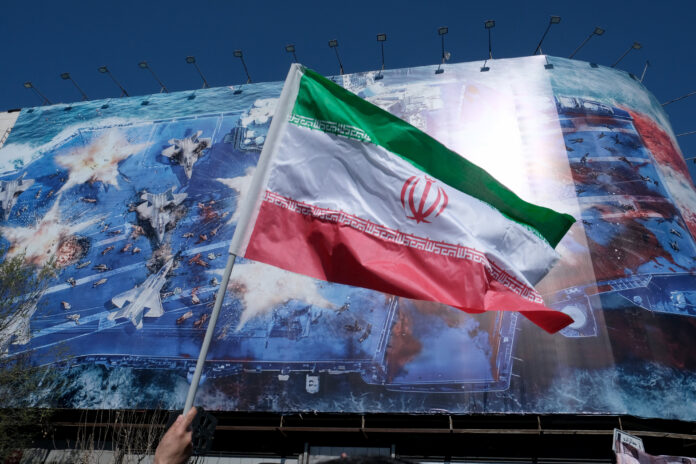
Iran’s army said Friday that its military doctrine has moved away from a purely defensive posture toward one that explicitly allows for preemptive strikes, the latest sign of an entrenched, monthslong war showing no sign of winding down.
Army spokesman Brigadier General Mohammad Akraminia, speaking on Iranian state television, said Iran defends itself when facing an American threat and that international law permits preemptive self-defense. He described the change as a move from a purely defensive doctrine to one allowing preemptive strikes and retaliation broader than the attack that provoked it, saying the shift had developed over the course of two recent wars.
Akraminia pointed to a past Iranian strike on a US base in Jordan as an example of what Tehran now considers a preemptive operation, and warned that any future attack on Iran would draw an immediate response that could exceed the scale of the original strike. He also said the military had used the recent pause in fighting to rebuild and upgrade equipment damaged in the conflict and to revise training based on lessons learned.
A War Now in Its Seventh Month
The doctrinal announcement comes against the backdrop of a conflict that has run since the United States and Israel struck Iran on February 28, 2026, drawing in fighting across the wider Middle East, disrupting global shipping and travel, and forcing reroutes away from the Strait of Hormuz and the Red Sea.
Muwaffaq Salti Air Base in Jordan, which hosts US forces, has been a recurring target throughout the war. Iran launched five ballistic missiles at the base in a surprise attack in late July, part of a pattern that has seen Jordan absorb well over a hundred Iranian and Iran-aligned missile and drone strikes since February. A mid-July strike on the base killed three US service members; later reporting confirmed two service members were killed and a third went missing in a subsequent Iranian missile and drone attack there.
The military has also been running a sustained multi-phase campaign against American positions across the Gulf, which Iranian officials have referred to as “Operation Saeqeh.” That campaign has exceeded 30 phases, with one launched around September 3 targeting US assets in Kuwait and the UAE. Separately, Akraminia said Iranian forces had targeted US bases from Jordan to the UAE and destroyed radar and air-defense systems at some of them.
What Remains Unverified
A widely circulated social media post attributed additional, more specific claims to an Iranian military spokesman — including a direct quote about denying the US “the initiative,” a fresh ballistic missile strike on Muwaffaq Salti that same day, a US refusal to respond, an unacknowledged attack on Kuwait two days prior, and a strike on seven US bases across five countries three days earlier.
None of those specific claims could be independently confirmed through mainstream or regional reporting at the time of writing. The broader doctrinal shift and the general pattern of strikes on US bases in Jordan, Kuwait, and elsewhere in the Gulf are well documented; the granular details in the circulated post — the exact wording attributed to Iran’s spokesman, today’s specific strike, and Washington’s alleged silence — are not yet corroborated by outlets such as Reuters, Al Jazeera, or US Central Command, and should be treated as unverified until confirmed by primary sources.