
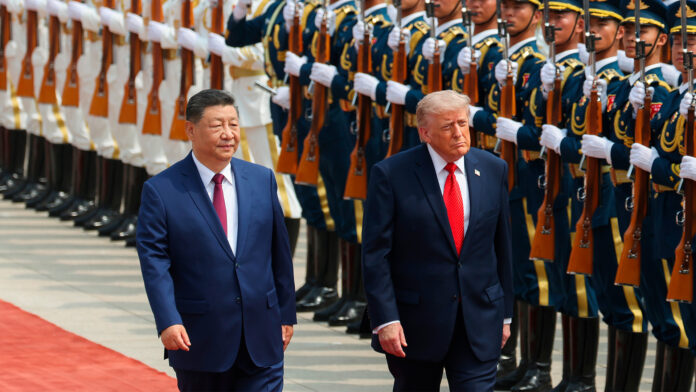

WASHINGTON — The Trump administration has initiated direct contact with China to seek its intervention in ending the ongoing armed conflict with Iran. According to a report by The Washington Post, U.S. Treasury Secretary Scott Bessent, operating with the backing of President Donald Trump, formally requested Beijing to utilize its economic and political leverage with Tehran to bring the hostilities to a conclusion.
The diplomatic approach follows a shift in the American domestic political climate after recent midterm elections, where the ongoing conflict emerged as a primary source of economic and public concern for the administration.
A Multi-Track Diplomatic Strategy
The outreach to Beijing establishes a major secondary channel alongside high-level, indirect negotiations led by Vice President JD Vance. For the past two weeks, Vance has engaged in near-daily communications with regional intermediaries, including Pakistan’s Field Marshal Asim Munir and the Prime Minister of Qatar, focusing on securing a new ceasefire and establishing a framework to return to nuclear non-proliferation talks.
U.S. officials have confirmed that the administration’s message has already been conveyed by Beijing to Iranian leadership. This development occurs ahead of a highly anticipated bilateral summit between President Trump and Chinese President Xi Jinping, scheduled to take place on November 18, 2026, in Shenzhen.
Regional Intermediaries and Tehran’s Response
The administration’s diplomatic push has utilized multiple regional backchannels to signal a desire for a peaceful resolution:
- The Vance Correspondence: Vice President Vance recently sent a formal communication to the Secretary of Iran’s Supreme National Security Council, Mohsen Rezaei, outlining parameters for potential direct dialogue.
- The Role of Doha and Islamabad: Qatari and Pakistani officials have been acting as critical facilitators, working to align the expectations of both Washington and Tehran regarding security guarantees and the cessation of regional hostilities.
According to Middle Eastern diplomatic sources, Iranian officials have acknowledged the shift in the U.S. stance but remain cautious. Tehran is reportedly assessing whether the American turn toward diplomacy represents a long-term strategic policy shift or a temporary reaction to domestic electoral pressures.
The Upcoming Shenzhen Summit
The inclusion of China introduces a fresh dynamic into the conflict’s resolution framework. While Beijing has publicly advocated for a diplomatic solution over military action, it is now actively coordinating with Washington to ensure that the November 18 summit yields actionable steps toward regional stabilization.
Meantime, U.S. military forces remain deployed in the region as a deterrent should backchannel negotiations stall. The success of the joint diplomatic efforts by the U.S., China, Qatar, and Pakistan will be critical in determining whether a durable ceasefire can be achieved before the end of the year.