
.
.
.
247ureports Investigative Desk
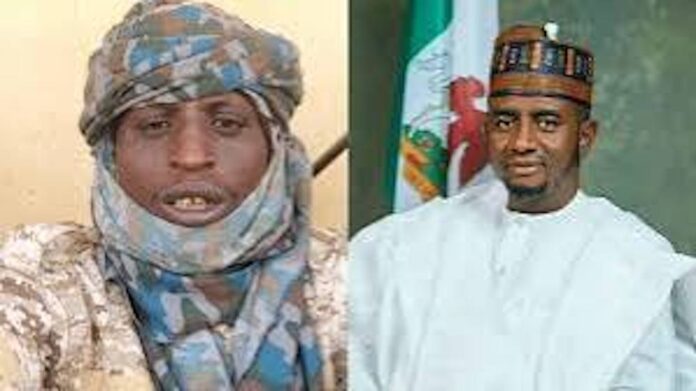
Bauchi/Abuja — More than two years after Bauchi State Governor Bala Mohammed formally petitioned President Bola Ahmed Tinubu over allegations that a senior aide to Senator Shehu Umar Buba helped a suspected bandit obtain Hajj travel documents, the paper trail raises uncomfortable questions not just about the senator, but about the institutions that were supposed to act on the warning — the Senate leadership that placed him atop the country’s most sensitive security oversight committee, and a presidency that, by its own public conduct, appeared content to let the matter drift.
The Petition That Started It
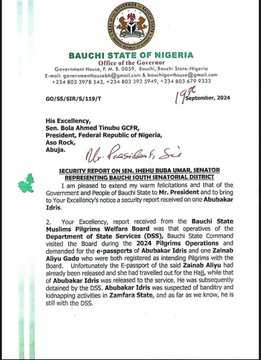
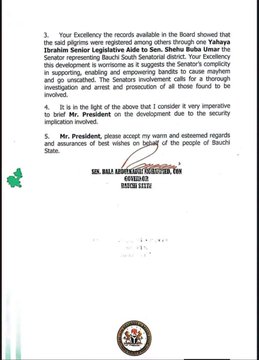
The governor’s letter, dated September 19, 2024, was addressed directly to President Tinubu and copied to the Directorate of State Services. Its central claim was specific and serious: that one Abubakar Idris — described as a suspected bandit — and a woman identified as Zainab Aliyu Gado had been registered for that year’s Hajj pilgrimage through Yahaya Ibrahim, an individual the governor’s letter described as a senior legislative aide to Senator Buba. Governor Mohammed, invoking the security implications of the matter, urged the president to brief himself directly and called for an “immediate and thorough investigation.”
This was not a stray accusation from an anonymous petitioner. It came from a sitting state governor, on state letterhead, naming a serving senator’s office directly, over a matter — Hajj vetting fraud allegedly shielding a bandit suspect — that sits squarely inside the docket of the very Senate committee Buba chaired: National Security and Intelligence.
Senator Buba denied the substance of the allegation, stating he had no aide named Yahaya Ibrahim on his staff, while acknowledging that he — like many public officials in the North — sponsors pilgrims annually on the recommendation of community and religious leaders. He characterized the governor’s petition as part of a personal and political vendetta rooted in Governor Mohammed’s own strained relationship with the Tinubu presidency.
That denial, however, did not end the matter — it merely opened a much longer, murkier chapter.
A Committee Chairmanship That Outlived the Allegations
What should trouble Nigerians most is not simply that the allegations were made, but how little they appeared to matter to the people with the power to act on them.
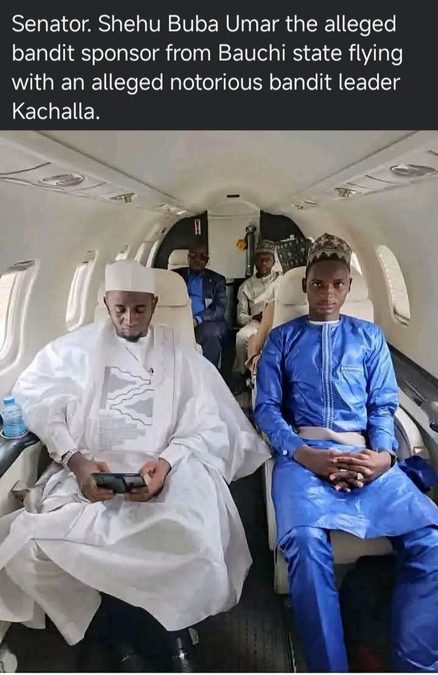
For more than a year after the governor’s petition landed on the president’s desk, Senator Buba continued to chair the Senate Committee on National Security and Intelligence — the same committee responsible for overseeing the agencies meant to investigate exactly the kind of claim made against his office. Youth coalitions in the North repeatedly petitioned Senate President Godswill Akpabio demanding Buba’s removal, citing not only the governor’s letter but a leaked video that a coalition calling itself Northern Youth for Peace and Progress said appeared to show large sums of cash and bandit-style motorcycles at the senator’s residence, escorted by a controversial cleric. By August 2025, reporting had catalogued a widening list of controversies swirling around the senator — an alleged peace arrangement with wanted bandit kingpin Bello Turji, accusations of stoking sectarian tension in Plateau State, and the recurring Hajj-sponsorship claims. None of it moved the Senate leadership to act on the substance of the allegations.
When Akpabio finally did strip Buba of the chairmanship in late November 2025, the justification offered was telling in what it omitted. The Senate Leader, Opeyemi Bamidele, told the chamber the committee had simply failed to provide “timely and relevant security information” amid the country’s worsening kidnapping and banditry crisis — a bureaucratic failure-to-perform charge, not an acknowledgment of the corruption and banditry-linkage allegations that had been sitting in the public domain, and reportedly on the president’s desk, for well over a year. Buba was not investigated, suspended, or referred to any ethics or security vetting process. He was reassigned — reportedly to chair the Senate Committee on Livestock and Animal Husbandry — a lateral move that let the underlying allegations quietly evaporate rather than face scrutiny.
That is not accountability. That is a change of seating arrangement.

The Presidency’s Conspicuous Silence
If the Senate’s handling of the matter looks like institutional indifference, the Tinubu administration’s posture looks little better. Governor Mohammed’s petition asked the president directly to “brief” himself on the matter given its “security implications.” Yet at no point in the following year did the presidency publicly acknowledge receiving the petition, order an independent probe, or explain what — if anything — security agencies did with the allegations. The DSS was copied on the governor’s letter; there has been no public accounting of what, if any, action the service took.
This silence is especially hard to square with the administration’s stated priorities. President Tinubu has repeatedly framed the fight against banditry and kidnapping as central to his government’s security agenda, and his administration has not hesitated to publicize action against other perceived threats to national security. Yet an allegation implicating the aide of the Senate’s own security oversight chairman in facilitating a suspected bandit’s travel documents appears to have generated no visible presidential response — not a probe, not a public statement, not even a formal acknowledgment that the petition was received. When the Senate leadership did eventually act more than a year later, it did so over unrelated performance complaints, not the security allegations the presidency had specifically been asked to examine.
Whether that reflects genuine oversight failure, political caution given the governor’s own fraught relationship with the presidency, or simple institutional inertia, the effect is the same: a serious, formally lodged allegation involving Nigeria’s security architecture appears to have been left to resolve itself through political attrition rather than investigation.
Where Things Stand Now
The matter has since moved on political rather than judicial lines. Senator Buba defected from the All Progressives Congress to the People’s Redemption Party, prompting a group calling itself Concerned APC Youths Bauchi South to petition the Senate President and the APC national leadership in July 2026 to have his seat declared vacant over the defection — a separate legal question from the original banditry allegations, and one that will likely dominate whatever remains of the controversy going forward. The original claims in Governor Mohammed’s 2024 petition, meanwhile, remain formally unresolved: no publicly disclosed investigation has confirmed or cleared them.
The Accountability Gap
To be clear: the allegations against Senator Buba’s office remain allegations. He has denied them, disputed the existence of the aide named in the governor’s petition, and accused his accusers of political motivation — all of which is part of the public record and deserves to be weighed alongside the claims against him. Nothing in the public record definitively establishes that the senator personally facilitated banditry.
But that is precisely the point. In a system working as it should, a petition of this seriousness — from a sitting governor, naming a Senate security committee chairman’s office, alleging complicity in clearing a bandit suspect for international travel — should have triggered a transparent investigation capable of either clearing the senator’s name or holding someone accountable. Instead, Nigerians got over a year of silence from the presidency, a Senate leadership that ultimately removed the senator for an unrelated administrative failure rather than the substantive allegations, and a political dispute that has since moved on to questions of defection and seat vacancy — leaving the original question of who registered a suspected bandit for Hajj, and how, still unanswered.
That is the real story here: not just one senator’s conduct, but a security and legislative establishment that had every opportunity to investigate a credible warning, and chose not to.