
.
.
Background report | September 2026
Lagos — A fresh round of political sparring has broken out ahead of Nigeria’s 2027 general election, after a spokesperson for Federal Capital Territory Minister Nyesom Wike dismissed the chances of two prominent opposition figures — Peter Obi and Omoyele Sowore — arguing that neither is genuinely contesting to win.
What was said
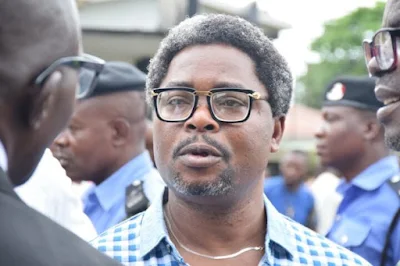
Speaking on Arise News on Friday, Lere Olayinka, Senior Special Assistant on Public Communications and Social Media to Wike, argued that not all 19 candidates cleared by the Independent National Electoral Commission (INEC) for the 2027 presidential poll are running with a realistic shot at State House. Some, he said, are simply “contesting to register their presence.”
He pointed first to Sowore, the African Action Congress (AAC) candidate, noting that Sowore polled about 14,600 votes in 2023 — a tally he said made a 2027 victory implausible. He then turned to Peter Obi, the former Anambra State governor now flying the flag of the newly registered Nigeria Democratic Congress (NDC), arguing that despite Obi’s profile, the NDC lacks the grassroots machinery to win a national election. According to Olayinka, the party has governorship candidates in only 13 of Nigeria’s 36 states, sat out recent off-cycle governorship elections in Ekiti and Osun, and — in his view — cannot compete without the estimated five party agents per polling unit needed to cover Nigeria’s 176,846 polling units on election day.
The context Olayinka’s framing leaves out
The claim rests on comparing two very different political situations, and a fuller picture cuts against a simple “neither can win” reading.
Sowore’s numbers are, on their face, marginal. His 2023 tally of roughly 14,600 votes was a small fraction of the field, and AAC has not shown signs of a mass mobilisation capacity since. On this point, Olayinka’s underlying arithmetic is broadly accurate, even if the political motive behind saying it — needling an opposition figure on behalf of Wike’s camp — is worth noting.
Peter Obi’s case is materially different. In 2023, running under the Labour Party, Obi placed third nationally but won roughly a quarter of the vote — well over six million votes — carrying Lagos and the FCT and running competitively across the South-South, South-East and parts of the North-Central. That is not the profile of a fringe candidate, and conflating his personal support base with the newness of his current party vehicle blurs two separate questions: whether Obi himself commands a following, and whether the NDC — the platform he has now adopted after a turbulent search for a party home — has built out the structure to convert that following into a national ground game.
Obi’s route to the NDC ticket has itself been contested. Earlier in 2026 he was linked to a broader opposition coalition built around the African Democratic Congress (ADC), alongside Atiku Abubakar and Nasir El-Rufai, before that arrangement fractured amid internal disagreement; the Labour Party separately endorsed him for 2027; and the NDC’s own registration was briefly thrown into doubt after a Federal High Court ruling on its status, which Obi said at the time he was confident would not derail his candidacy. He was formally named the NDC’s candidate in May 2026, with former Kano State Governor Rabiu Kwankwaso as his running mate.
Structural questions are real — but contested
Olayinka’s point about ground organisation is not without substance: Nigerian presidential elections are won at the polling-unit level, and a thin spread of governorship candidates or absent local structures can genuinely hamper a national campaign. But allies of the opposition dispute the extent of the problem. The Obidient Movement, which mobilised heavily for Obi in 2023 largely through social media and volunteer networks rather than conventional party structures, has insisted its support will follow Obi regardless of which platform he contests on, and has ruled out him accepting a running-mate role on anyone else’s ticket. Whether that online-driven, volunteer model can substitute for a conventional party machine at 176,846 polling units remains an open and genuinely contested question — not one the numbers alone settle either way.
It is also worth noting Olayinka’s comments were not made in a vacuum. He has separately suggested that Wike expects political “payback” from both Atiku and Obi should either defeat President Bola Tinubu in 2027, an acknowledgment that Wike himself — a former PDP heavyweight now serving in Tinubu’s cabinet — regards both men as live threats rather than non-factors. Other figures aligned with the ruling APC have made similar dismissals: presidential aide Bayo Onanuga has argued that even a combined Atiku-Obi ticket would not be able to beat an APC ticket, while a minister aligned with the party’s Anambra rival, David Umahi, has separately argued Obi cannot even guarantee his home South-East region in 2027. None of these are neutral assessments; each comes from a political camp with a direct stake in diminishing opposition prospects.
The bigger picture
The 2027 field remains unusually crowded, with INEC clearing 19 presidential candidates and the official campaign period opening on 19 August 2026. That fragmentation is itself part of the story: a splintered opposition — Obi on the NDC platform, Atiku’s coalition on the ADC, plus Sowore and 15 others — could work in the ruling APC’s favour by dividing anti-Tinubu votes, regardless of how strong any individual challenger’s underlying support may be. Whether Obi’s demonstrated 2023 support can be rebuilt on a new and untested party platform, and whether that translates into the organisational capacity Olayinka says is missing, is likely to be one of the central questions of the campaign — one that polling-day logistics, not campaign rhetoric from rival camps, will ultimately answer in January 2027.