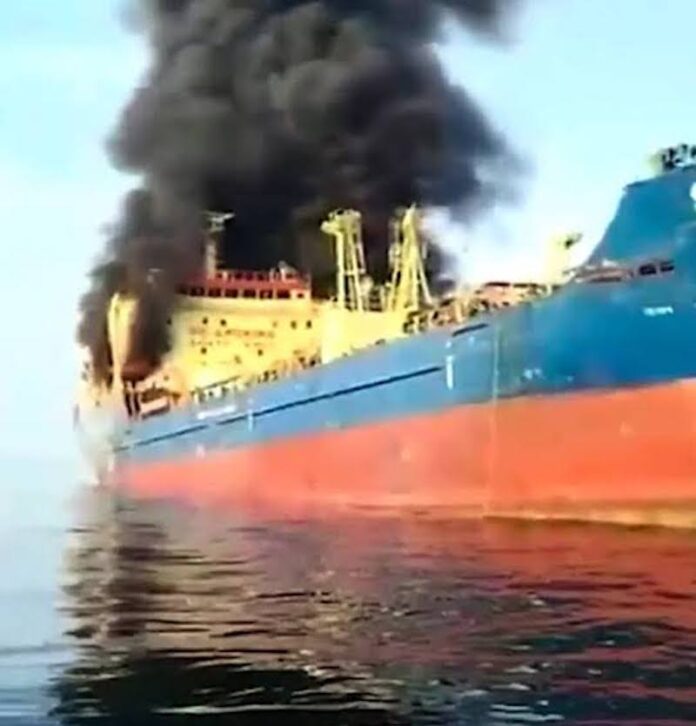


ABUJA / WASHINGTON — Escalating maritime conflict in the Middle East reached a fresh flashpoint over the weekend following a missile strike on an Abu Dhabi National Oil Company (ADNOC) vessel transiting the Strait of Hormuz, as growing reports highlight severe depletion of U.S. precision munitions and a major geopolitical realignment across the Gulf.
The United Arab Emirates condemned Saturday’s missile strike—marking at least the 16th attack targeting ADNOC-affiliated vessels since conflict flared in February—as an act of “hostile aggression and piracy” violating UN Security Council Resolution 2817 protecting commercial navigation. While no fatalities were reported in the latest strike, ADNOC confirmed over a dozen hit vessels, one crew death, and 20 injuries since the onset of hostilities.
Despite earlier rhetoric from Washington promising decisive military retaliation against Iranian infrastructure for targeting commercial shipping, U.S. response capabilities face mounting logistical constraints. Major international media outlets, including CNN and Reuters, report that months of sustained interception operations have severely drained American precision missile inventories—with THAAD interceptor stocks down between 50 to 80 percent, alongside significant drawdowns in Patriot interceptors and Tomahawk cruise missiles.
While the Pentagon disputed the reports, maintaining that military readiness remains intact, President Donald Trump publicly criticized the leaks as “untrue and treasonous,” directing federal authorities to identify intelligence leakers.
Tehran, meanwhile, maintains a rigid posture over the vital shipping corridor through which nearly twenty percent of global petroleum flows. Iranian Foreign Minister Abbas Araghchi confirmed near-completion of a maritime transit framework mediated by Oman, but stressed that the strait will remain restricted to Western-aligned shipping until Washington fulfills compensation claims over alleged agreement violations. Iran’s Supreme National Security Council reiterated that the waterway will not fully reopen until the U.S. “corrects its behavior.”
Shift in Regional Security Architecture
Amid perceived uncertainty over Washington’s traditional security umbrella, Saudi Arabia, Turkey, and Pakistan formally executed the landmark Mecca Joint Defence Agreement on Friday, August 7.
Signed in Mecca by Saudi Crown Prince Mohammed bin Salman, Turkish President Recep Tayyip Erdoğan, and Pakistani Prime Minister Shehbaz Sharif, the trilateral pact includes a mutual defense commitment stipulating that an armed attack on any signatory state will be treated as an attack on all three.
Although Turkish officials emphasized that the agreement is purely defensive and “targets no specific country,” foreign policy analysts view the pact as a historic structural shift combining Saudi Arabia’s financial capacity, Turkey’s NATO-tested defense industrial base, and Pakistan’s military manpower and nuclear capability.
With Saudi energy infrastructure repeatedly targeted by long-range drone and missile strikes during the conflict, the creation of an independent regional security framework marks a significant departure from total reliance on American military protection in West Asia.