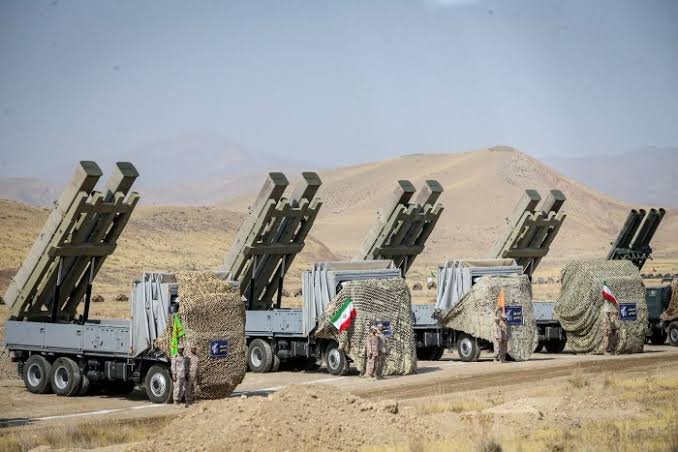


WASHINGTON, D.C. — As the intense air war in the Persian Gulf continues to escalate, a startling intelligence assessment published by The Wall Street Journal (WSJ) has revealed that the Islamic Republic of Iran has successfully adapted its missile tactics to challenge and bypass advanced United States air defense networks.
According to senior U.S. defense officials cited in the report, Tehran is now deploying sophisticated ballistic missiles that travel at extremely high speeds and possess the capability to perform evasive maneuvers during their final descent toward the earth. The tactical evolution has triggered deep concern within the Pentagon regarding Iran’s ability to strike highly sensitive military infrastructure with unprecedented precision.
High-Speed Maneuvering: A Nightmare for Interceptors
The WSJ report highlights a significant technological shift in Iran’s operational deployment. Standard ballistic missiles follow a predictable parabolic trajectory, making them relatively easy for advanced Western systems like the Patriot or terminal high-altitude defense batteries to track and intercept.
However, Iran’s newly adapted arsenal changes the rules of engagement:
                  IRAN'S EVOLVING MISSILE DOCTRINE
┌───────────────────────────────┬──────────────────────────────────────────┐
│ NEW TACTICAL PROFILE          │ DEFENSE SYSTEM CHALLENGE                 │
├───────────────────────────────┼──────────────────────────────────────────┤
│ • Extremely High Velocities   │ • Reduces target acquisition and        │
│   during atmospheric reentry. │   reaction windows for radar crews.      │
├───────────────────────────────┼──────────────────────────────────────────┤
│ • Terminal Maneuverability    │ • Throws off predictive intercept paths  │
│   just prior to impact.       │   calculated by automated defense grids. │
└───────────────────────────────┴──────────────────────────────────────────┘
Defense intelligence assessments indicate that these capabilities allow the missiles to break through layered allied defense bubbles. The realization follows Friday’s deadly bombardment in Jordan that claimed the lives of two U.S. service members, proving that despite massive nightly U.S. strikes on launch sites, Iran’s offensive capabilities remain remarkably resilient.
The Big Concern: Foreign Technical Assistance?
What is causing the highest level of anxiety within the Pentagon is the pinpoint accuracy these maneuvering missiles are demonstrating. The ability to steer a missile traveling at Mach 5 or higher requires advanced satellite guidance, sophisticated actuators, and real-time telemetry.
According to the U.S. officials quoted by the WSJ, this sudden leap in precision has raised serious intelligence concerns that the Iranian regime may be receiving covert targeting assistance or technological blueprints from major global adversaries, specifically Russia or China.
Furthermore, despite five months of a heavy U.S. bombing campaign, intelligence estimates show that Iran has preserved or rapidly restored roughly 50% to 70% of its pre-war mobile missile launchers and stockpiles. This resilience is credited to their “missile cities”—massive underground manufacturing complexes buried deeper than 70 meters into mountainous terrain, rendering them virtually immune to conventional airstrikes.
Pentagon Scrambles to Update Tactics
The revelation that Iran can reliably penetrate regional air defenses changes the calculus for U.S. Central Command (CENTCOM). With Iran actively threatening to widen its target list to commercial ports and international airports across the UAE if the U.S. strikes its domestic infrastructure, the Pentagon is under immense pressure to adapt its own defensive posture.
Military analysts warn that if Iran has mastered terminal maneuverability on a mass-production scale, Western forces in the region will face an increasingly dangerous environment where absolute aerial dominance can no longer be guaranteed.
247ureports.com will continue to monitor this developing military intelligence story.