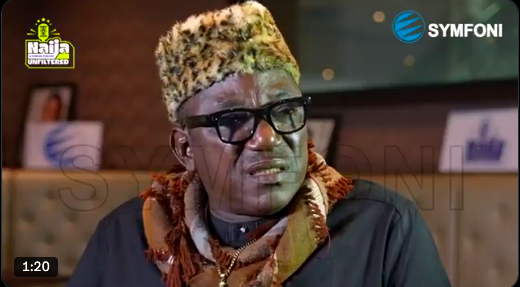


ABUJA — Former Minister of Youth and Sports, Barrister Solomon Dalung, has launched a blistering attack on President Bola Ahmed Tinubu, accusing his administration of dismantling the rule of law, running a government of personal patronage, and institutionalizing procurement abuse.
Dalung singled out the controversial single-source award of the Lagos-Calabar Coastal Highway project to the Chagoury Group, alleging that the multi-trillion naira contract was finalized without competitive bidding while the President’s son, Seyi Tinubu, served as a director in a corporate entity linked to the same business empire.
“Tinubu has crossed every existing red line. The rule of law has been taken away from the people,” Dalung declared in a public briefing on governance and political accountability. “In the comfort of his bedroom, he awarded a N17 Trillion contract to his friend Chagoury Chagoury, with his son Seyi Tinubu as a Director in that company.”
The Coastal Road Contract and Conflict of Interest Concerns
The 700-kilometer Lagos-Calabar Coastal Highway—initially pegged at N15.6 trillion—was awarded to Hitech Construction Company Limited, a subsidiary of the Gilbert Chagoury-owned Chagoury Group.
The transaction drew nationwide criticism after revelations surfaced confirming that Seyi Tinubu served on the board of CDI Properties, a Chagoury Group subsidiary. Civic watchdogs and opposition legal experts have repeatedly questioned how a project of such scale bypassed open public bidding under the Public Procurement Act, with billions in mobilization funds disbursed before complete environmental impact assessments were concluded.

A Growing Pattern of Questionable Spending and Luxury Allocations
Dalung’s critique aligns with a growing list of public finance scandals and lavish expenditures that have sparked public outrage across the country:
- N21 Billion VP Residence Renovation and Non-Occupancy: The administration faced intense backlash after allocating over N15 billion in supplementary funds to complete a N21 billion official residence for Vice President Kashim Shettima in Abuja. Despite the massive expenditure during an economic crisis, reports revealed the Vice President failed to occupy the complex months after its official commissioning.
- N10 Billion Presidential Villa Solar Mini-Grid: The Federal Government allocated N10 billion in the national budget to construct a dedicated solar mini-grid and inverter system at Aso Rock. Critics described the expenditure as an open admission of failure in the national power grid, coming at a time when ordinary citizens faced repeated grid collapses and steep electricity tariff hikes.
- Multi-Billion State House Refurbishments: Over N13.5 billion was directed toward renovating presidential and vice-presidential quarters in Abuja and Lagos, alongside billion-naira allocations for luxury SUV fleets for lawmakers and executive officials.
Endless Debt Accumulation, Unfunded Deficits, and Economic Hardship
While executive expenditures continue to climb, public finance analysts warn that the administration is fueling an unsustainable debt crisis.
- Mounting Foreign and Domestic Debt: The administration has secured billions of dollars in foreign loans alongside massive domestic bond issuances to fund widening budget deficits, leaving debt servicing obligations to consume the lion’s share of national revenues.
- Unfunded Budgets and Fiscal Deficits: Revenue shortfalls have left annual budgets heavily underfunded, forcing the Central Bank and international financial markets to cover multi-trillion naira gaps.
- Crushing Inflation and Commodity Price Spikes: The uncoordinated removal of the fuel subsidy and rapid naira devaluation pushed food inflation above 40 percent. Prices of essential staple foods, cooking gas, and life-saving prescription medicines have spiraled beyond the reach of average families, pushing millions into acute poverty.
Opposition Vows Coalition Push for 2027
Dalung, now aligned with the African Democratic Congress (ADC) and broader opposition coalition initiatives, argued that the All Progressives Congress (APC) has weaponized economic hardship to weaken democratic resistance.
“The government of President Bola Tinubu has declared war against the Nigerian people,” Dalung asserted. “The government has weaponized poverty, hunger, and hardship, and has popularised corruption, impunity, and injustice. The only option we have now is to align with the coalition movement to reposition ourselves and confront the government in 2027.”
He expressed confidence that no amount of political defections by state governors would protect the administration from voter backlash at the polls, as public discontent deepens over governance priorities.