


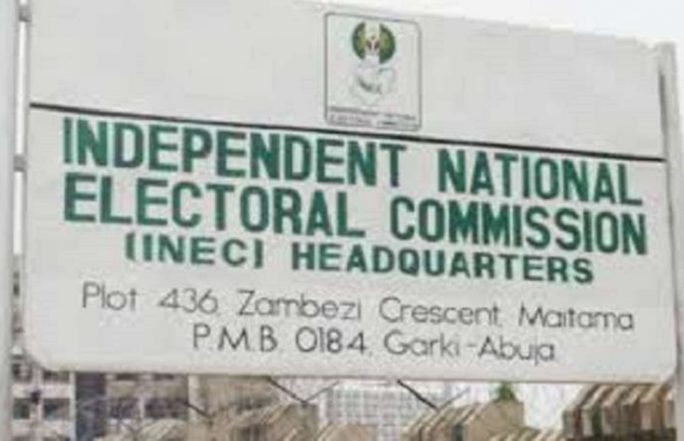
ABUJA — As political realignments intensify ahead of the 2027 general elections, major political stakeholders, civil society coalitions, and opposition groups have voiced deep skepticism over the Independent National Electoral Commission’s (INEC) readiness to deliver a free and fair poll.
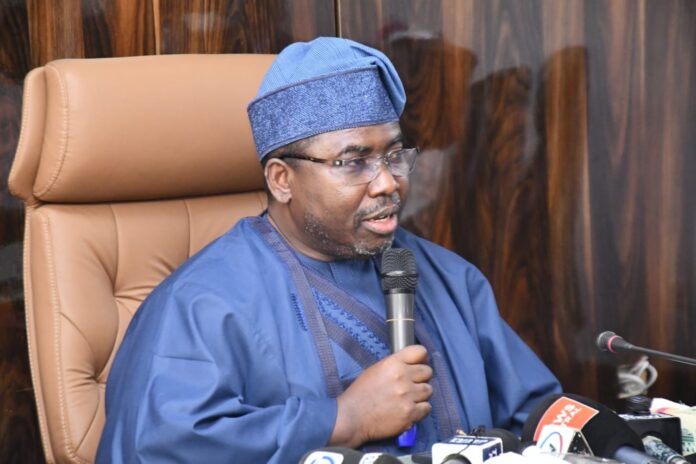
At the center of the mounting public anxiety are two critical issues: unresolved systemic vulnerabilities exposed during the 2023 elections and the political controversy surrounding the appointment of Professor Joash Ojo Amupitan (SAN) as INEC National Chairman.
Have the 2023 Loopholes Been Addressed?
Following the widespread public backlash over the 2023 general election—which former President Olusegun Obasanjo famously labeled a “national disgrace”—INEC and the National Assembly faced intense pressure to overhaul Nigeria’s electoral framework.
While INEC maintains it has made administrative adjustments regarding real-time result upload procedures (IReV) and Bimodal Voter Accreditation System (BVAS) reliability, key legal and operational loopholes remain unaddressed ahead of 2027:
- IReV Transmission Mandate: The Electoral Act 2022 contained ambiguities regarding whether real-time electronic result transmission to the IReV portal was mandatory for election validity. Judicial rulings following the 2023 polls held that electronic transmission remains auxiliary, leaving the door open for manual collation discrepancies if legislative amendments are not passed.
- High Evidential Burden for Over-Voting: Under current jurisprudence, proving electoral fraud or over-voting requires petitioners to physically tender BVAS hardware, voter registers, and Form EC8A across thousands of polling units. Stakeholders argue this imposes an almost impossible burden on litigants unless INEC is legally compelled to automatically release raw server logs.
- Logistics and Operational Failures: Delayed arrival of polling officials and election materials—a core vulnerability in 2023—remains subject to local administrative efficiency rather than structural enforcement.
The Controversy Surrounding Prof. Joash Amupitan
Public trust suffered a fresh blow following President Bola Ahmed Tinubu’s nomination of Professor Joash Ojo Amupitan (SAN), a distinguished legal scholar from Kogi State, to succeed Prof. Mahmood Yakubu as INEC Chairman in late 2025.
  INEC CHAIRMAN:       Prof. Joash Ojo Amupitan, SAN (Sworn in Oct 2025)
  NOMINATING AUTHORITY: President Bola Ahmed Tinubu
  OPPOSITION CLAIM:    Alleged conflict of interest / political alignment
  PRESIDENCY DEFENSE:  Apolitical legal scholar with extensive corporate governance record
Opposition political parties, including the Peoples Democratic Party (PDP), Labour Party (LP), and civil society organziations, have strongly condemned the appointment:
- Alleged Conflict of Interest: Critics argue that appointing a legal practitioner with past professional ties to the president or the ruling All Progressives Congress (APC) compromises the constitutional requirement of an independent, partisan-free umpire.
- Demands for Resignation/Sack: Coalition groups insist that the only way to reassure the electorate that the 2027 polls will not be a rigged outcome is for Prof. Amupitan to step down or be replaced by a consensus candidate vetted by non-partisan civic bodies.
- The Presidency’s Position: The Federal Government and the Senate defense panel maintain that Amupitan’s appointment followed constitutional norms. The presidency insists Amupitan is an apolitical legal scholar of high repute whose career in evidence law and corporate governance equips him to strengthen institutional transparency.
Key Requirements for a Credible 2027 Poll
Civic observers and election monitoring groups warn that without urgent institutional reforms, public confidence in Nigeria’s democratic process will continue to erode. Stakeholders maintain that guaranteeing a transparent election in 2027 requires:
- Binding Legislative Amendments: Amending the Electoral Act to explicitly declare real-time electronic transmission of polling unit results mandatory for election validity.
- Unrestricted Public Access to Server Audit Logs: Compelling INEC to grant public and political party access to automated BVAS accreditation data immediately after voting closes.
- Independent Appointment Framework: Reforming the nomination process for the INEC Chairman and Resident Electoral Commissioners (RECs) to remove absolute presidential discretion, shifting oversight to a neutral judicial or civil service council.







