

TEHRAN / WASHINGTON — Iran’s Islamic Revolutionary Guard Corps (IRGC) has issued a stern warning to Washington, declaring that the strategic Strait of Hormuz remains strictly under its control and will not be reopened to international shipping while American interference continues.
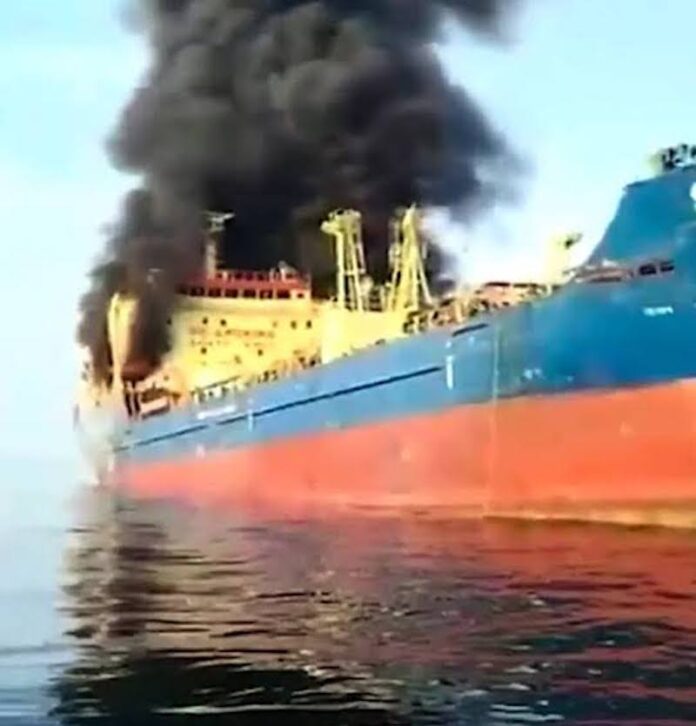
The declaration follows an incident on Wednesday night in which the IRGC claimed two commercial oil tankers attempting to pass through the waterway under U.S. air cover were forced to abort their passage after one of the vessels caught fire.
In an official statement released on July 30, 2026, the Revolutionary Guards asserted that the vessels turned back after attempting to navigate what Tehran considers an unauthorized corridor.
“Last night, two oil tankers, encouraged by American aircraft, attempted to leave through the unsafe southern route of the Strait of Hormuz. After a major fire broke out on one of them, both vessels quickly turned back.” — IRGC Statement
Key Highlights & Maritime Escalation
- Unclear Cause of Blaze: The IRGC did not claim direct responsibility for the fire nor specify whether the vessel was hit by weaponry, sea mines, or experienced onboard failure. No details regarding casualties or structural damage were provided.
- Defiance Against U.S. Forces: Reaffirming Tehran’s military posture, the Guards warned that outside powers operating thousands of kilometers away would not be allowed to dictate terms in the Persian Gulf.
- Strict Passage Mandates: Since taking control of the strait following the outbreak of Middle East hostilities on February 28, Iranian authorities have forced all commercial traffic to adhere to Tehran-designated routes, acquire prior security clearance, and pay mandatory transit fees.
Global Energy & Security Implications
The Strait of Hormuz serves as the world’s most critical maritime bottleneck for global energy exports, normally carrying nearly a quarter of the world’s seaborne petroleum.
“The Strait of Hormuz is our territory and cannot be reopened as long as the excessive rhetoric and threats of American officials and their interference in maritime movements in the region continue.” — IRGC Statement
With the United States military conducting naval operations and retaliatory strikes across the region, Tehran’s firm refusal to yield control of the channel threatens further disruption to global energy markets and heightens the risk of direct naval confrontations in international waters.