
ABUJA, NIGERIA — The dust may have long settled on the judicial battles of the 2023 presidential election, but the systemic vulnerabilities exposed by the litigation continue to shadow Nigeria’s democratic journey. As political actors and civil society sharpen their focus on the 2027 general elections, policy experts are increasingly pointing at the National Assembly. The core objective? Redesigning the legal framework to permanently close loopholes in how the Independent National Electoral Commission (INEC) vets the academic and personal credentials of political candidates.
The legal status quo—upheld by the Supreme Court in late 2023—established that INEC operates under a presumption of regularity, meaning it accepts candidates’ sworn affidavits at face value unless challenged in a pre-election tribunal. However, placing the entire burden of forensic verification onto political rivals and civil society has proven highly inefficient, turning election cycles into a legal circus of international depositions and delayed dockets.
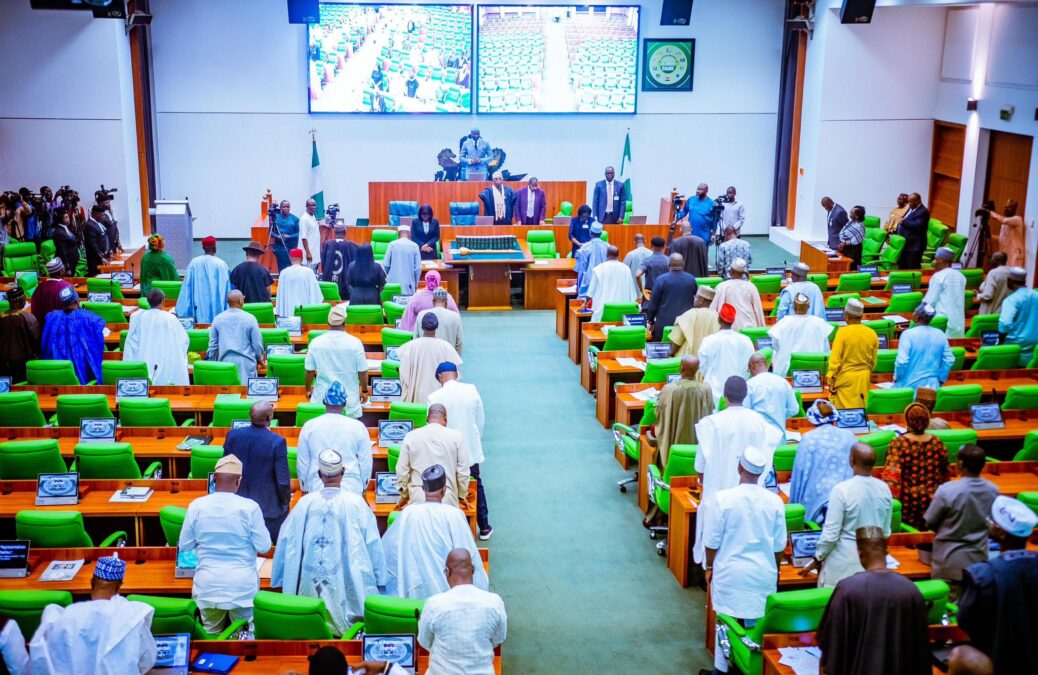
With the National Assembly continually fine-tuning the legal framework via legislative actions, lawmakers have a golden window to pass targeted statutory amendments.
Three concrete legislative reforms could structurally transform INEC’s credential verification pipeline before the 2027 polls open:
1. Statutory Integration of NIMC Biometrics for Form EC9
Under current guidelines, candidates complete INEC Form EC9 as a self-declaration under oath. The simplest way to institutionalize verification is to link candidate submissions directly to the National Identity Management Commission (NIMC) database.
The National Assembly could introduce an amendment mandating that every candidate’s INEC profile must sync with their National Identification Number (NIN). Because the NIMC database is progressively capturing biometric and educational history data, an automated, cross-agency verification system would instantly flag discrepancies in names, birth dates, and basic identity profiles long before an political party primary is even scheduled.
2. Establishing an “Inter-Agency Screening Window”
One of the primary roadblocks in previous election cycles was time. Political parties routinely submit candidate lists just weeks before final print windows, giving the public little time to scrutinize records.
While recent iterations of legislative bills have modified the publication period for candidate details—such as shifting publication deadlines to 21 days after receipt—the law still stops short of empowering INEC to audit the files. The National Assembly should legislate an explicit 30-day “Inter-Agency Verification Window.” During this period:
- INEC would be legally required to transmit submitted educational certificates to the Federal Ministry of Education, the West African Examinations Council (WAEC), and regional tertiary regulatory bodies for digital verification.
- The Federal Government would deploy secure, digital verification clearinghouses to check certificates in real time.
If an institution fails to authenticate a document within this timeframe, the candidate would face automatic, administrative disqualification before ballots are cast, avoiding post-election stability threats.
3. Strict Guidelines for “Lost Certificate” Affidavits
A major loophole in Nigerian electoral history is the ease with which politicians bypass presenting basic primary and secondary school documents by substituting them with a police report or a sworn court affidavit claiming the documents were “lost or stolen.”
The legislature can tighten this by amending the Electoral Act to state that while a sworn affidavit for a lost certificate is legally admissible, it must be accompanied by a certified true copy (CTC) or an official confirmation of results letter issued directly by the graduating institution or examination body (like WAEC). If a candidate cannot produce a digital or physical paper trail from the school they claim to have attended, the affidavit alone should no longer be legally sufficient to satisfy the minimum constitutional requirements.
The Regulatory Blueprint
The Problem: INEC acts merely as a post office for candidate files, shifting the burden of uncovering potential forgery or perjury onto opposition legal teams.
The Legislative Solution: Pivot INEC from an administrative repository into a proactive gatekeeper by giving it the statutory tooth, funding, and cross-agency digital access required to verify claims at the point of entry.
The Path Forward for 2027
For 247ureports and the wider public tracking these changes, the message is clear: institutional credibility cannot rely on post-election lawsuits. True electoral stability requires pre-election transparency.
If the National Assembly utilizes the buildup to 2027 to institutionalize deep, automated verification checks, it will insulate the presidency from future distracting identity scandals, lower the burden on the judiciary, and restore long-term citizen trust in the sanctity of the democratic process.