
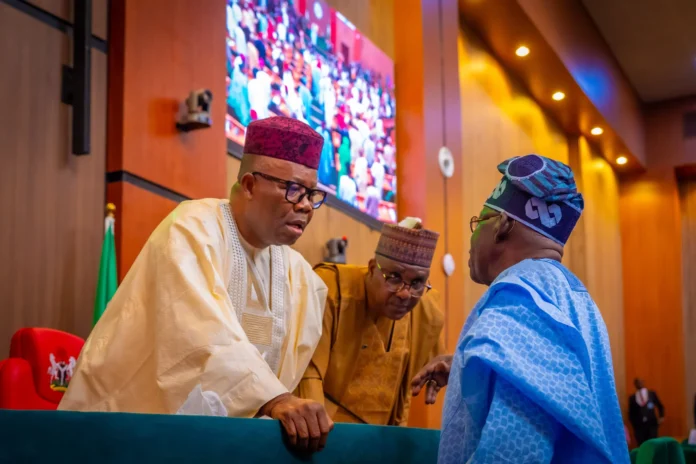


ABUJA, NIGERIA — The political architecture undergirding Nigeria’s 10th National Assembly has once again become a flashpoint for intense debate among political analysts, opposition figures, and constitutional lawyers. At the center of the storm is Senate President Godswill Akpabio, whose leadership style has drawn sharp scrutiny over the independence of the legislature.
While allies of the administration frame the relationship between the executive and parliament as a necessary “constitutional partnership” for national stability, critics allege a more transactional dynamic. They argue that unresolved Economic and Financial Crimes Commission (EFCC) cases involving past administrative tenures are being utilized as political leverage to guarantee total compliance from the nation’s number three citizen.
The ‘Pocketing’ Theory: Compliance Through Anti-Graft Pressure
A persistent narrative within civil society and opposition circles suggests that high-ranking political figures are systematically selected for principal offices precisely because of their legal vulnerabilities. In the case of Senator Akpabio, critics point to a litany of past corruption allegations.
These include an long-standing EFCC investigation into the alleged diversion of ₦108.1 billion during his tenure as Governor of Akwa Ibom State, alongside subsequent petitions regarding his time as Minister of Niger Delta Affairs overseeing the Niger Delta Development Commission (NDDC).
The political leverage theory posits that by placing an individual with active anti-graft files at the helm of the legislature, the executive branch—specifically the Bola Ahmed Tinubu administration—retains an invisible veto over parliamentary oversight. According to this viewpoint, any deviation from the executive’s legislative or budgetary agenda could trigger a sudden revival of dormant EFCC files, creating a powerful incentive for compliance.
Independent commentators often highlight instances where controversial executive proposals have sailed through the upper chamber with minimal resistance as circumstantial evidence of this imbalance.
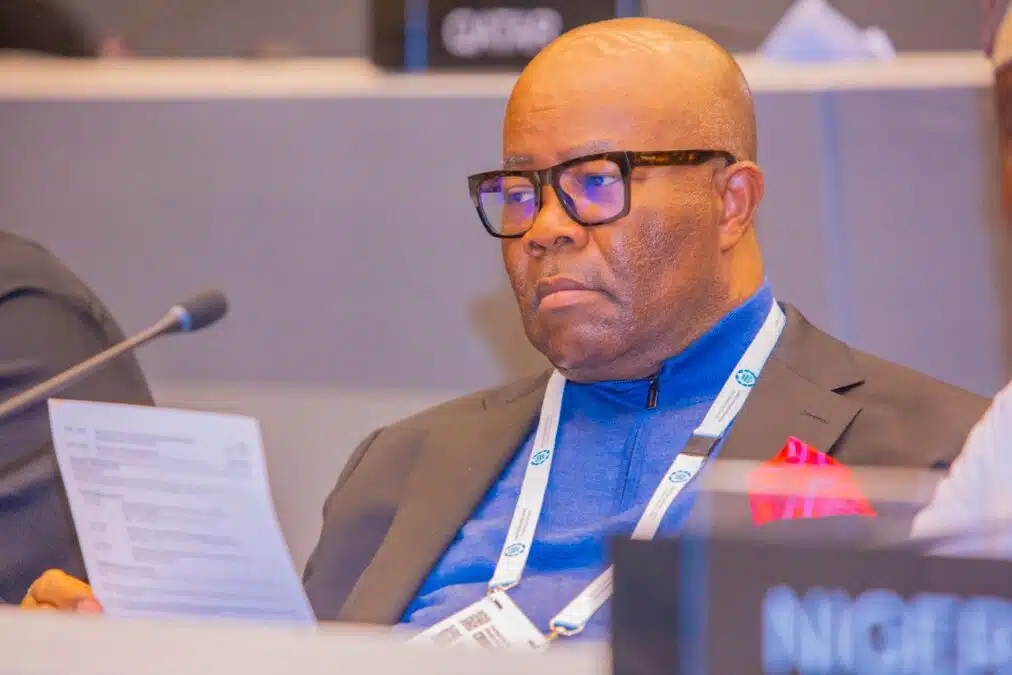
The Official Defense: Geopolitics, Competence, and Institutional Harmony
Conversely, the presidency, ruling All Progressives Congress (APC) loyalists, and Akpabio’s media team strongly reject the notion of executive coercion, describing it as an unfounded conspiracy theory designed to undermine democratic institutions.
Supporters maintain that Akpabio’s ascent to the Senate Presidency was the result of deliberate geopolitical balancing. With the presidency and vice presidency occupied by the South-West and North-East respectively, the APC officially zoned the Senate Presidency to the South-South to ensure federal character representation. As a former two-term governor, minority leader, and cabinet minister, Akpabio possessed the legislative seniority and political weight required for the role.
Furthermore, leadership defenders argue that cooperation between the executive and the legislature should not be misconstrued as subservience. In public addresses, Akpabio has repeatedly emphasized that history favors inter-branch collaboration over perpetual hostility, citing economic and security reforms as the fruits of a synchronized government. Legally, his defenders also note that under Nigerian law, allegations do not equal guilt, and a pending investigation does not disqualify a citizen from holding public office.
Journalistic Conclusion
As the 10th National Assembly navigates complex national issues—ranging from security funding to sweeping economic bills—the true nature of the relationship between Aso Rock and the Red Chamber remains a subject of intense public interpretation. Whether the current harmony is born out of shared patriotic vision or strategic political vulnerability remains a question that continues to divide the Nigerian populace.
You can review a historical report detailing the initial anti-graft investigations involving the Senate President in this TVC News broadcast regarding the EFCC investigation into Godswill Akpabio, which offers context on the specific allegations often cited by critics.