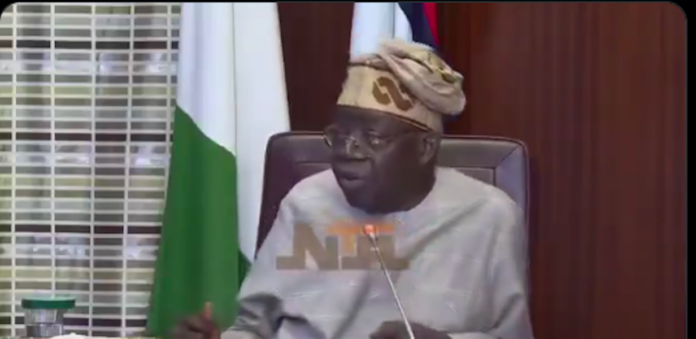

ABUJA — President Bola Ahmed Tinubu’s public claim that the Independent National Electoral Commission (INEC) is completely neutral has sparked intense pushback from civil society organisations, opposition leaders, and legal scholars, who argue that systemic structural flaws render genuine impartiality nearly impossible.
While President Tinubu dismissed opposition criticism as “fear of their own shadows,” critics point out that an electoral umpire cannot be perceived as neutral when its leadership is appointed by an incumbent president actively competing in the very contest INEC is tasked with refereeing.
The Incumbent Dilemma: Referees Handpicked by Players
At the core of the controversy is the constitutional framework governing election administration in Nigeria:
- The Conflict of Interest: Under Section 154(1) of the 1999 Constitution (as amended), the President nominates the INEC Chairman and National Commissioners. Critics contend that allowing a sitting President—who doubles as a candidate—to appoint the leadership of the electoral body creates an inherent, inescapable conflict of interest.
- Controversial Executive Appointments: Public scrutiny has deepened over presidential appointments to key positions within the electoral commission, including instances where individuals with direct personal, political, or legal ties to the President—such as his former personal lawyer—have been appointed to the commission.
- The “Referee and Player” Paradox: Political analysts maintain that institutional neutrality must be structural, not merely rhetorical. Expecting opposition parties or the public to view an electoral body as impartial when its top officials owe their positions to the executive directly undermines public trust before voting begins.
Executive Purse Strings: Financial Dependency Erodes Autonomy
The argument against total neutrality is further reinforced by candid statements from within the electoral body itself regarding operational and financial constraints:

“Until INEC attains complete financial independence and operational autonomy from the executive arm, true structural independence remains an ongoing struggle.”
- Control over Allocations: Despite statutory provisions aimed at autonomy, practical disbursements, election security funding, and supplementary budgets still rely heavily on executive approvals and finance channels.
- The Uwais Panel Benchmark: Governance experts point back to the recommendations of the 2008 Justice Mohammed Uwais Electoral Reform Committee, which urged that appointment powers be transferred away from the presidency to an independent body like the National Judicial Council (NJC), with funding secured via a direct constitutional trust fund completely detached from executive control.
Public Confidence Gap
  PRESIDENTIAL CLAIM:      INEC is neutral and does not intimidate candidates
  CONSTITUTIONAL REALITY:  Section 154(1) empowers the President to appoint the umpire
  APPOINTMENT CONCERNS:    Key commission posts given to individuals tied to the executive
  FINANCIAL REALITY:       INEC leadership acknowledges reliance on executive funding
As the nation looks toward future election cycles, analysts stress that no amount of official assurances can replace structural independence. Until the authority to appoint and finance the electoral umpire is fully separated from the Presidency, claims of complete INEC neutrality will continue to meet public skepticism.