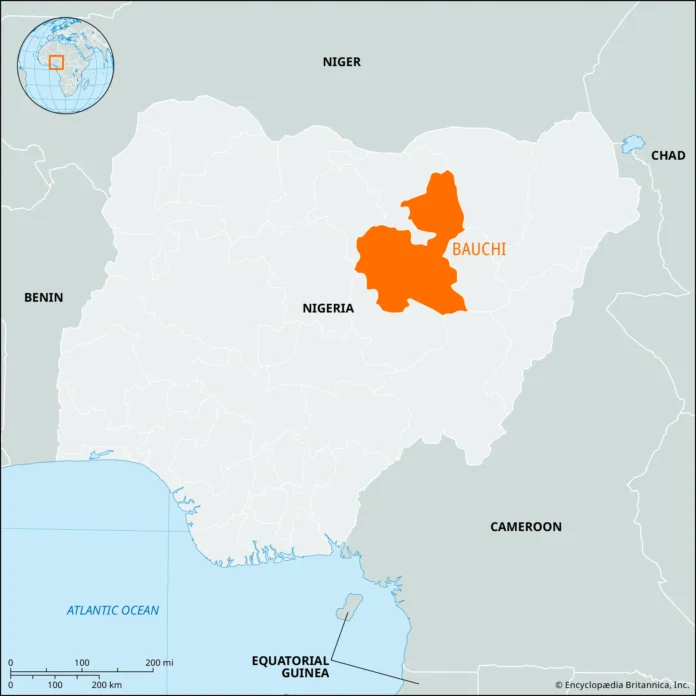


The 2027 governorship race in Bauchi State promises to be a five-cornered contest involving the candidates of the Allied Peoples Movement (APM), Dr. Yakubu Adamu; the All Progressives Congress (APC), Mohammed Abdullahi Abubakar, SAN; the Nigerian Democratic Congress (NDC), Ibrahim Mohammed Kashim; the African Democratic Congress (ADC), Senator Halliru Dauda Jika; and the People’s Redemption Party (PRP) candidate, Senator Shehu Buba Umar.
Judging by the antecedents of the candidates, it would not be wrong to describe this as a formidable field of contestants: one former governor, two former senators, one former commissioner for finance, and one former secretary to the state government.
By extrapolation, certain deductions can be made about these candidates. One such deduction is that none of them is likely to be a pushover. Their backgrounds suggest that each has cultivated a substantial political following within the state. In addition, each has been exposed in varying degrees to the mechanics of governance and public administration and, by that token, should understand the expectations and aspirations of the people. More importantly, each is sufficiently acquainted with the challenges and opportunities confronting Bauchi State.
To put the matter in proper perspective, let me elaborate further.
MA Abubakar was Governor of Bauchi State between 2015 and 2019 on the platform of the APC before losing his re-election bid to the incumbent Governor, Senator Bala Mohammed. Dr. Yakubu Adamu is the immediate past Commissioner for Finance. In that capacity, he was deeply involved in the remarkable transformation of the state from a relatively laid-back agrarian enclave into a rapidly developing state recording notable progress in infrastructure, social services, human capital development and economic empowerment.
Ibrahim Kashim served as Secretary to the State Government under Bala Mohammed. As SSG, he was not only one of the chief coordinators of government business but also one of the most visible defenders of the administration. His public interventions repeatedly celebrated Bala Mohammed’s leadership style, vision and developmental accomplishments. Senators Halliru Jika and Shehu Buba Umar, on their part, have traversed the length and breadth of the state as elected representatives and must therefore possess a fair understanding of the needs and expectations of the electorate.
The implication of the foregoing is simple. No matter who eventually emerges victorious, Bala Mohammed would not be handing over to a novice or an unknown quantity. Every one of the contestants is constitutionally and politically entitled to seek the mandate of the people, and ultimately it is the electorate that will determine who succeeds the incumbent governor.
That said, there are crucial questions that should not be ignored.
Has the Bala Mohammed administration failed to deliver on the mandate entrusted to it by the people? Has Bauchi State not recorded measurable and visible progress across critical sectors of development? Is the vision encapsulated in the “My Bauchi Project” no longer relevant to the needs of the state? More significantly, what entirely new direction do the aspiring governors propose that justifies abandoning or substantially altering a development trajectory that many observers regard as one of the most successful in the state’s history?
These questions become even more pertinent when one considers the broad consensus that has emerged around several achievements of the administration. Across sectors such as road infrastructure, urban renewal, healthcare, education, agriculture and social inclusion, the evidence of progress is visible. No government is perfect, and no administration is beyond criticism, but the central issue is whether the state is better off today than it was in 2019. For many citizens and even for some of Bala Mohammed’s former critics, the answer appears to be in the affirmative.
If that is indeed the case, then another reasonable question arises: what exactly is wrong with supporting a succession arrangement designed primarily to preserve and consolidate existing gains? Why should continuity suddenly become undesirable when the outgoing administration is widely acknowledged as having performed creditably?
This is where the positions of MA Abubakar and Ibrahim Kashim become particularly difficult to reconcile.
Take the case of MA Abubakar.
The former governor was rejected by the electorate in 2019 and replaced by Bala Mohammed. Since then, he has, on more than one occasion, publicly acknowledged the achievements of the incumbent governor. Indeed, prior to the 2023 election, he reportedly praised Bala Mohammed’s performance and expressed sentiments that suggested appreciation for the governor’s stewardship despite belonging to a different political platform.
That raises an obvious question. If Bala Mohammed’s performance was worthy of public commendation; if the administration was delivering tangible benefits to the people; if the governor was considered preferable to alternatives at the time, on what basis should the continuity of that vision now be opposed?
Politics permits ambition, but logic demands consistency.
One cannot convincingly spend years applauding the direction of an administration and then suddenly argue against the continuation of that same direction without explaining what fundamental circumstances have changed. If Bala Mohammed’s policies were commendable yesterday, what precisely makes them unworthy of preservation today? If they were good enough to be praised across party lines, why should the electorate now be encouraged to abandon them?
The people of Bauchi deserve answers to these questions.
The case of Ibrahim Kashim is even more intriguing.
Kashim anchored his governorship ambition on the argument that Bauchi requires visionary leadership. Yet the difficulty with that proposition is that it directly contradicts numerous statements he himself made while serving as the Secretary to the State Government.
The same Kashim repeatedly described Bala Mohammed as a visionary leader. The same Kashim was among those who defended the policies and programmes of the administration before local, national and international audiences. The same Kashim associated himself with what he consistently presented as a transformative government that was changing the face of Bauchi State.
Indeed, during an interview on the programme “Solid Steps to a New Bauchi State” aired on True Vision TV and AIT, Kashim enthusiastically highlighted the achievements of the administration and attributed much of the progress to the governor’s leadership and vision.
The evidence he cited was compelling.
Consider the extensive road construction and rural infrastructure projects that earned Bauchi national recognition. Consider the unprecedented urban renewal programme that transformed the state capital and produced such landmarks as the International Conference Centre, the remodelled Government House and the first flyover in Bauchi State. Consider also the advances recorded in agriculture, healthcare, education and solid minerals development.
These accomplishments did not emerge from a leadership vacuum.
They were products of a governing philosophy and development blueprint that Kashim himself publicly praised.
That is why his current argument raises difficult questions. If Bauchi lacked visionary leadership, who then provided the vision that reportedly drove these achievements? If the administration was genuinely transformative, why suggest that the state now requires the very quality that supposedly produced its transformation?
Did visionary leadership suddenly expire when Kashim left office?
Or is he inviting the public to believe that he was the sole architect of the developmental agenda despite not being among the small circle of original Bala Mohammed loyalists who helped formulate the My Bauchi Project document that became the intellectual foundation of the administration?
Such a proposition would not only stretch credulity; it would undermine the very arguments he advanced for years in defence of the government.
The reality is straightforward. Either Bala Mohammed’s leadership was genuinely visionary, as Kashim repeatedly asserted, or it was not. If it was, then continuity becomes a rational proposition. If it was not, then Kashim must explain why he spent years celebrating it in public.
This is why the debate over succession should not merely revolve around personalities. It should revolve around the future of a developmental agenda that even many of its critics have acknowledged produced substantial results.
No serious observer is suggesting that Bala Mohammed should impose a successor on the people of Bauchi State. That decision ultimately belongs to the electorate. However, it is equally true that democratic societies often defer to the judgement of successful leaders regarding the preservation of their legacies. Such deference does not amount to blind loyalty; it is recognition that continuity can be beneficial when an administration has demonstrably moved a state forward.
If a governor has substantially improved infrastructure, strengthened social services, promoted inclusion, enhanced interfaith harmony and elevated the national profile of his state, it is neither unusual nor undemocratic for citizens to pay attention to his preferred successor. After all, the leader who initiated a developmental vision is often best positioned to identify who can faithfully sustain and improve upon it.
On balance, therefore, Dr. Yakubu Adamu of the APM appears particularly well placed. Beyond his youthfulness, energy and administrative experience, he is widely perceived as one of the key figures associated with the implementation of the Bala Mohammed developmental agenda. Many voters see him not merely as a politician but as a participant in the governance structure that helped restore confidence in the future of Bauchi State.
He would also benefit from the goodwill generated by Bala Mohammed’s emphasis on inclusion, stakeholder engagement, diversity management and inter-ethnic and inter-religious harmony. These are achievements that many citizens are reluctant to jeopardise through unnecessary experimentation.
Perhaps Bauchi’s ambitious politicians should draw inspiration from the example of the late Premier of Northern Nigeria, Sir Ahmadu Bello. Offered an opportunity to assume leadership at the centre, he instead deferred to Sir Abubakar Tafawa Balewa, believing him better suited for the role at the time. Whether one agrees with the comparison or not, the broader lesson remains relevant: true statesmanship sometimes consists not in personal ambition but in supporting the course that best serves the larger public interest.
MA Abubakar and Ibrahim Kashim unquestionably have every right to contest for the governorship. Nobody can fault them for aspiring to lead their state. The issue, however, is not their right to contest. The issue is the inconsistency between their current political positions and the praise they lavished on the leadership, achievements and vision of Governor Bala Mohammed.
Having acknowledged the success of the administration, having publicly celebrated its accomplishments, and having associated themselves with its developmental record, they now find themselves opposing a succession project intended to preserve that same record.
That contradiction is difficult to explain away.
And that is precisely why many observers conclude that, on the question of who should succeed Bala Mohammed and safeguard the legacy of good governance that he established, the joke is substantially on MA Abubakar and Ibrahim Kashim.
Kola Oyerinde, a public affairs commentator, is of the Iresa-Adu royal house in Ogbomosho, Oyo State.