
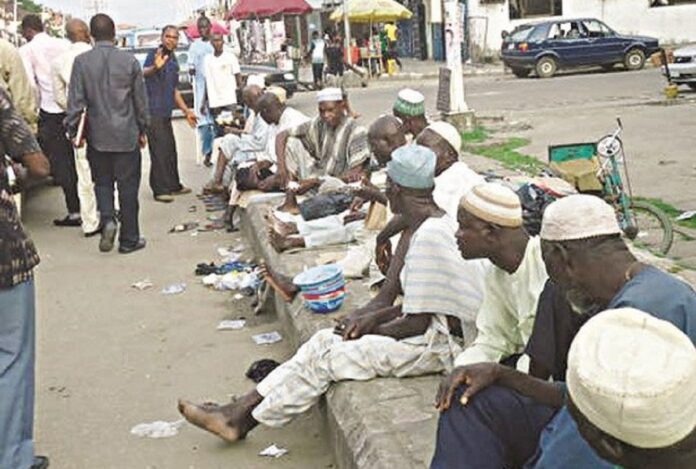

At dawn, before markets open and offices become busy, thousands of men, women, children, and persons living with disabilities have already taken positions along major highways, traffic intersections, motor parks, and places of worship across Northern Nigeria. With bowls in their hands and hope in their eyes, they wait for the generosity of strangers.
For many Nigerians, this has become a familiar sight. Yet beneath the daily appeals for alms lies a deeper story—one of poverty, unemployment, insecurity, displacement, weak social protection, and systemic governance challenges. Street begging is not merely an individual choice; it is a visible symptom of broader socio-economic failures that demand urgent attention.
An investigation into the phenomenon reveals that the rapid increase in street begging over the past decade has coincided with worsening economic hardship.
Inflation has eroded purchasing power, unemployment has remained high, and insecurity has displaced countless families from their homes and livelihoods. In many communities, parents struggling to provide food now depend on public charity to survive.
The situation is particularly concerning for children. Across several northern cities, children of school age can be found navigating busy roads, approaching vehicles, and moving through markets in search of alms instead of attending school. Their daily exposure to traffic hazards, exploitation, abuse, trafficking, and criminal influence raises serious concerns about child protection and the future of the region’s human capital.
The Almajiri system frequently enters public discussions on street begging. Historically, it served as a respected model of Qur’anic education sustained by communities. However, economic decline, rapid urbanisation, and reduced community support have left many pupils vulnerable. It is important to distinguish between Islamic education itself and circumstances in which children are left without adequate care, supervision, or access to basic needs. Reform should strengthen, not undermine, religious education while safeguarding children’s welfare.
Interviews and public discussions with community leaders, social workers, and development practitioners consistently point to a common conclusion:
enforcement alone cannot solve the problem. Periodic raids that remove beggars from city centres may produce temporary improvements, but the numbers often return because the underlying drivers remain unresolved.
A lasting response must begin with economic empowerment. Governments should expand vocational training, agricultural support, entrepreneurship programmes, and access to affordable finance, particularly for young people and women. Creating sustainable livelihoods reduces the economic desperation that pushes many onto the streets.
Education must also be prioritised. Integrating quality formal education with religious learning, improving school infrastructure, and supporting vulnerable families can help ensure that children remain in classrooms rather than on the streets. Every child denied education today represents a lost opportunity for tomorrow’s development.
Equally important is the need for stronger social protection. Effective cash transfer programmes, disability support, healthcare, nutrition assistance, and services for older persons can provide dignified alternatives for vulnerable households. Such programmes should be transparent, data-driven, and targeted to those most in need.
Religious institutions and traditional leaders also have a pivotal role. Islam strongly encourages charity, but it equally promotes dignity through work, education, and community responsibility. Organising zakat, sadaqah, and waqf through credible institutions can transform charitable giving into sustainable investments in education, healthcare, housing, and skills development rather than perpetuating dependence on street almsgiving.
The private sector and civil society organisations should complement government efforts by creating apprenticeship opportunities, supporting rehabilitation centres, funding scholarships, and investing in social enterprises that employ vulnerable people.
Partnerships across sectors can deliver broader and more sustainable results.
Furthermore, security agencies must intensify efforts against criminal networks that exploit children and vulnerable adults for organised begging. Victims require protection, rehabilitation, and reintegration, while those who profit from exploitation should be investigated and prosecuted in accordance with the law.
Citizens, too, have an important role. While compassion is commendable, lasting change requires directing support toward credible organisations and programmes that help people rebuild their lives rather than relying solely on roadside handouts.
Northern Nigeria stands at a crossroads. Continuing with short-term responses will only preserve a cycle of poverty and dependence. Breaking that cycle requires bold leadership, evidence-based policies, sustained investment in education and livelihoods, and stronger collaboration among governments, communities, religious institutions, and development partners.
Street begging is not simply a humanitarian concern—it is a development challenge, a governance issue, and a test of society’s commitment to protecting its most vulnerable members. The true measure of success will not be the number of people removed from the streets, but the number empowered to leave them permanently through opportunity, education, and dignity.
Only when the root causes are addressed can Northern Nigeria begin to replace the culture of survival through begging with a future built on productivity, inclusion, and hope.