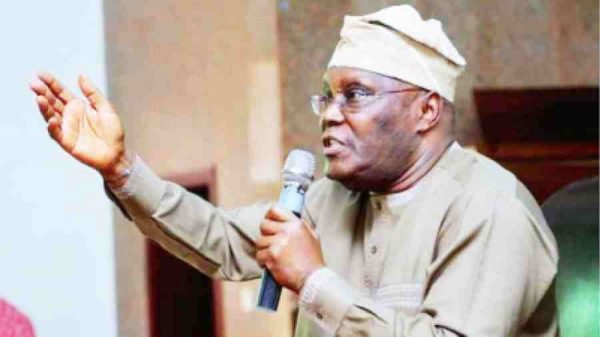


ABUJA, NIGERIA — Former Vice President and presidential candidate of the People’s Democratic Party (PDP), Atiku Abubakar, has launched a blistering assault on the President Bola Tinubu administration, accusing it of a “comprehensive and disgraceful” failure in its handling of the death of 26-year-old Mary Habila.
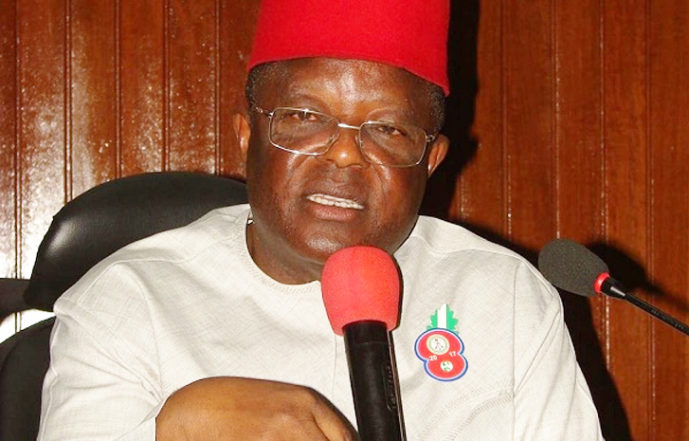
Habila, a native of Nok in Southern Kaduna, reportedly died on June 27, 2026, inside the private country home of the serving Minister of Works, Senator David Umahi, in Uburu, Ohaozara Local Government Area of Ebonyi State.
Atiku’s intervention has instantly transformed the tragic incident into a national political firestorm. He accused the federal government, the police high command, and Senator Umahi of enforcing a “conspiracy of silence” to suppress the truth and shield a powerful political figure.
The Timeline of Silence: “It Took Sahara Reporters to Break the Story”
In a strongly worded public statement, Atiku laid out a damning timeline of events, highlighting the near-total blackout from state authorities until independent media blew the lid off the incident.
- June 27, 2026: Mary Habila dies inside the private residence of Minister David Umahi in Uburu, Ebonyi State.
- The Two-Week Blackout: For nearly two weeks, neither the Ebonyi State Police Command, the Ministry of Works, nor any government agency issued any statement or acknowledged the death.
- The Exposure: The incident only gained national attention after it was exposed by Sahara Reporters, prompting public outcry.
- Three Weeks Later: No official autopsy has been performed, no cause of death has been established, and the investigation remains tightly controlled within Ebonyi State—where Umahi served as governor for eight years.
“For nearly two weeks, neither the Minister, nor the police, nor any arm of government said a word to the Nigerian people… A young woman died in the residence of a serving Federal Minister… and through all of this, silence from the Presidency.”
— Atiku Abubakar
The “Conflict of Interest” in the Ebonyi Command
A central pillar of Atiku’s criticism is the decision to keep the homicide investigation within the Ebonyi State Police Command.
                       THE INVESTIGATION CONFLICT
┌─────────────────────────────────┬────────────────────────────────────────┐
│ LOCAL INVESTIGATION (CURRENT)   │ FEDERAL DEMAND (PROPOSED)              │
├─────────────────────────────────┼────────────────────────────────────────┤
│ • Handled by Ebonyi Police.     │ • Immediate transfer to Abuja Force HQ.│
│ • Conducted in the shadow of    │ • Involvement of independent, foreign   │
│   Umahi’s massive state power.  │   forensic pathologists.               │
│ • High risk of local cover-up.  │ • Independent oversight to build trust.│
└─────────────────────────────────┴────────────────────────────────────────┘
Critics argue that because Senator Umahi is a two-term former governor of Ebonyi State and a powerful chieftain of the ruling All Progressives Congress (APC), the local police command is structurally and politically compromised. Atiku pointed out that instead of a transparent probe, the Minister has been allowed to manage the narrative through personal aides and private lawyers while continuing his official ministerial duties without interruption.
Atiku’s Four-Point Ultimatum to Tinubu
To restore public confidence and ensure a credible investigation, Atiku has laid down four non-negotiable demands for the federal government:
- 1. Umahi Must Step Aside: President Tinubu must direct the Minister of Works to step down from his cabinet immediately. Atiku emphasized that this is not an admission of guilt, but the minimum standard of public accountability while under such a grave cloud.
- 2. Transfer the Probe to Force Headquarters: The Inspector-General of Police must instantly strip the Ebonyi State Police Command of the case and move the investigation to Abuja to eliminate local political interference.
- 3. Independent, Public Autopsy: A fully transparent and internationally credible post-mortem examination must be conducted without further delay, and the findings must be made fully public.
- 4. Protection for the Habila Family: The family of the deceased must be aggressively shielded from any form of backchannel pressure, monetary inducement, or physical intimidation by state or non-state actors.
A Critical Test for “Renewed Hope”
The death of Mary Habila has quickly become an existential test of the Tinubu administration’s commitment to the rule of law. Opposition figures and civil society coalitions are rallying behind Atiku’s statement, warning that treating the death of a young citizen as a minor “inconvenience” to be waited out will permanently damage the government’s legitimacy.
As pressure mounts on the Presidency and the Police Force Headquarters to break their silence, Nigerians are demanding to know if the life of a young woman from Southern Kaduna carries the same weight in the eyes of the law as the political survival of a federal minister.