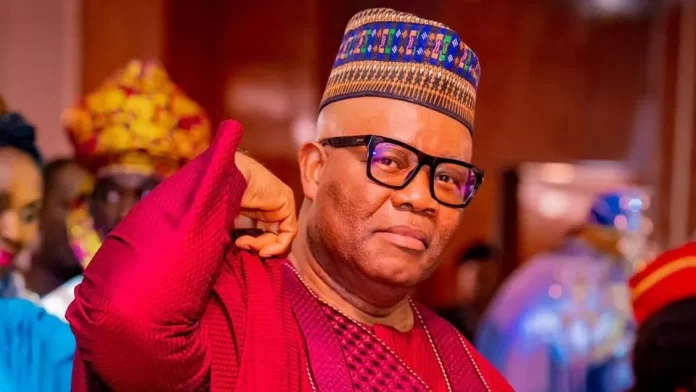


ABUJA, NIGERIA — Senate President Godswill Akpabio has come under heavy fire from civil society organizations, security analysts, and distraught citizens following comments downplaying the country’s rampant kidnapping crisis as a mere political ploy.
Speaking on the floor of the National Assembly regarding the nationwide wave of abductions, Akpabio cautioned Nigerians to look beyond the immediate financial motives of criminal gangs.
“Be careful about people trying to kidnap for ransom,” the Senate President stated. “They are kidnapping in order to cause a distraction. They are kidnapping in order to give the impression that Nigeria is not safe.”
The remarks by the former two-term Governor of Akwa Ibom State have triggered a wave of public anger, with critics labeling the statement as callous, irresponsible, and deeply disconnected from the bloodshed on the ground.
Critics Slam ‘Callous’ Disconnect from Frontline Reality
The Senate President’s comments come at a time when Nigeria is grappling with an unprecedented surge in coordinated mass abductions, highway ambushes, and targeted attacks on security personnel. Just weeks after reports emerged of the brutal killing and beheading of Nigerian soldiers in frontline operations, critics argue that framing these existential threats as a political “distraction” insults the memory of fallen heroes.
Human rights advocates have aggressively condemned the rhetoric, pointing out that kidnapping-for-ransom has mutated into a thriving, multi-billion naira criminal economy driven by deep economic hardship, high youth unemployment, and massive ungoverned forests.
“To suggest that a father watching his children carted into the forest or a community mourning slaughtered security forces is just part of a political PR campaign is the height of insensitivity,” stated a prominent Abuja-based security analyst who chose to remain anonymous. “It reveals a political class far more concerned with protecting the image of the administration than protecting human lives.”
Political Gaslighting or Narrative Control?
Political observers note that Akpabio’s framing follows a familiar pattern among top government officials who frequently attribute systemic security failures to hidden political opposition or “saboteurs.” By treating a security emergency as a tactical plot to undermine the ruling party, leadership effectively shifts the blame away from institutional failures.
Many Nigerians have taken to social media to voice their frustration, accusing the Senate President and his colleagues of prioritizing the principal’s re-election machinery over concrete legislative action. Critics point out that while the executive and legislative arms debate narrative control, regional militias continue to challenge state sovereignty with military-grade weapons.
Calls for Empathetic Governance and Decisive Action
The fallout from Akpabio’s speech highlights a widening trust gap between everyday Nigerians and the country’s leadership. Rather than receiving dismissive political lectures, victims’ families and defense stakeholders are demanding transparent updates on security expenditures, advanced logistical deployment for troops, and direct accountability from the nation’s service chiefs.
As the backlash intensifies, opposition lawmakers and civil advocacy groups are calling on the Senate President to withdraw his statement and offer an apology to the thousands of Nigerians currently traumatized by the unrelenting security crisis.