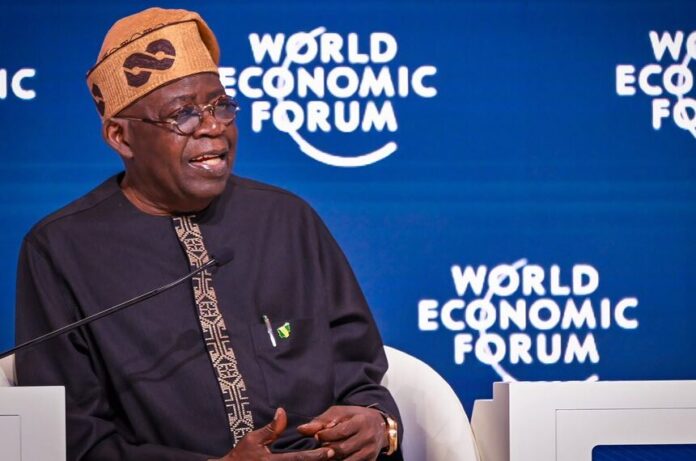

ABUJA, NIGERIA — A brewing national controversy over the fiscal discipline of President Bola Ahmed Tinubu’s administration has escalated, triggering intense public debate and a parallel disinformation storm across Nigerian social media.
A heavily circulated document detailing multi-billion Naira expenditures under the current administration has gone viral. The memo aggressively challenges President Tinubu’s recurrent claim that he inherited a “dilapidated economy” from former President Muhammadu Buhari. While the text has been widely circulated by various online groups and platforms under the name of the Emir of Kano, His Highness Muhammadu Sanusi II, independent media verifications have exposed the true origin of the statement.
The Disinformation Twist: From Charly Boy to Emir Sanusi
Investigation reveals that the explosive text was not authored by the former Central Bank of Nigeria (CBN) Governor turned monarch. Media watchdogs, including the FactCheckHub, tracked the exact text back to a social media post made by veteran Nigerian entertainer and activist, Charles Oputa, popularly known as Charly Boy.
Despite the false attribution, the list has resonated deeply with a frustrated populace, becoming a rallying cry for critics who argue that the federal government’s lifestyle contradicts its pleas for citizens to endure economic hardships.
The Core Grievances: Breakdown of the Controversial Expenditures
The viral document highlights an exhaustive list of capital-intensive allocations and projects executed or authorized under the Tinubu administration, juxtaposing them against a backdrop of double-digit inflation and a cost-of-living crisis. The key grievances cited in the public sphere include:
- Luxury Real Estate and Renovations: The completion and commissioning of the Vice President’s official residence at a revised cost of ₦21 billion, alongside budgeted sums of ₦4 billion for Dodan Barracks and ₦3 billion for Aguda House.
- Elite Transportation: The highly criticized allocation of ₦70 billion to National Assembly members for SUVs (valued at roughly ₦160 million each), a ₦5 billion presidential yacht allocation, ₦5 billion for the presidential vehicle fleet, and the acquisition of a presidential jet valued at ₦225 billion.
- Unconstitutional Offices & Advisory Costs: The procurement of a ₦1.5 billion vehicle fleet for the Office of the First Lady, Senator Oluremi Tinubu, an office not formally recognized by the Nigerian Constitution. It further decries a ₦5 billion allocation to the Presidential Tax Reforms Committee, headed by Taiwo Oyedele.
- Political Compensation & Legislative Packages: A controversial 300% salary hike for judicial officers, combined with reported monthly earnings of ₦21 million for Senators and ₦13.5 million for members of the House of Representatives.
- Cabinet Expansion & Subsidy Queries: Maintaining the largest ministerial cabinet in Nigeria’s political history while creating new entities like the Ministry of Livestock Development, a move critics say defies the cost-saving recommendations of the landmark Oronsaye Report.
The Lagos-Calabar Coastal Road Project Under Fire
Beyond systemic governance costs, the report targets the administration’s infrastructural flagship—the ₦15 trillion Lagos-Calabar Coastal Road project. The document alleges that the multi-trillion Naira contract was awarded via non-transparent procurement channels to Hi-Tech Construction Company, a firm owned by Lebanese-Nigerian billionaire Gilbert Chagoury, a long-time associate of the President. Critics recall historical friction between Chagoury and previous administrations to question the legality and equity of the massive award.
Public Discontent and the Presidency’s Stand
While Emir Sanusi has independently questioned the Federal Government’s post-subsidy borrowing structures in economic forums, he has not released this specific, abrasive statement. However, the speed with which the public adopted the viral letter highlights deep-seated skepticism over state expenditure.
The Presidency and the Ministry of Works, led by David Umahi, have continuously defended these legacy infrastructure projects as vital long-term investments rather than frivolous costs. They maintain that infrastructure is one of the most effective tools to stimulate long-term economic growth. Nevertheless, as civil society organizations and public commentators flag trillions of Naira in what they label “frivolous budget line items”, pressure continues to mount on the administration to match its rhetoric of structural adjustment with tangible fiscal restraint at the top.