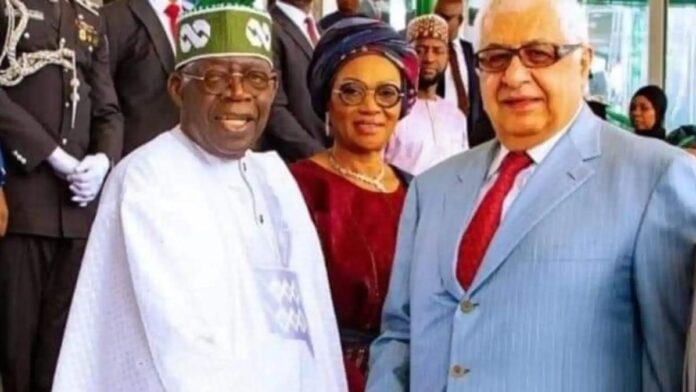


ABUJA, NIGERIA — The administration of President Bola Ahmed Tinubu is facing a fierce wave of public scrutiny and integrity questions following the award of a multi-trillion naira contract for the construction of the ambitious 1,068-kilometre Sokoto–Badagry Superhighway to Hitech Construction Company—a firm heavily owned by the President’s long-time billionaire ally, Gilbert Chagoury.
As public outrage intensifies over the massive deal, political watchdogs have noted with concern that President Tinubu’s current whereabouts remain largely uncommunicated to the public, leaving a vacuum of leadership as multi-trillion naira national assets are partitioned out behind closed doors. Opposition figures are raising alarms over the complete absence of open competitive bidding, pointing directly to Chagoury’s Lebanese roots and past international money laundering convictions as a severe threat to Nigeria’s economic sovereignty.
The Breakdown: Lebanon-Born Tycoon Sweeps All Lucrative Contracts
The Sokoto–Badagry Superhighway ranks as one of the most expensive infrastructure undertakings in African history, with sections across Sokoto, Kebbi, and Lagos corridors currently accumulating estimated costs running deep into trillions of naira.
The Federal Executive Council (FEC) recently secured an additional $516.33 million external loan from Deutsche Bank to fund the first phases of the massive corridor. However, the decision to hand this monolithic project directly to the Lebanon-born tycoon has fueled intense suspicions of cronyism.
With this latest development, critics point out that Chagoury’s corporate empire has systematically cornered virtually all the most lucrative mega-infrastructure contracts under the Tinubu dispensation, including the highly controversial ₦15 trillion Lagos–Calabar Coastal Highway project.
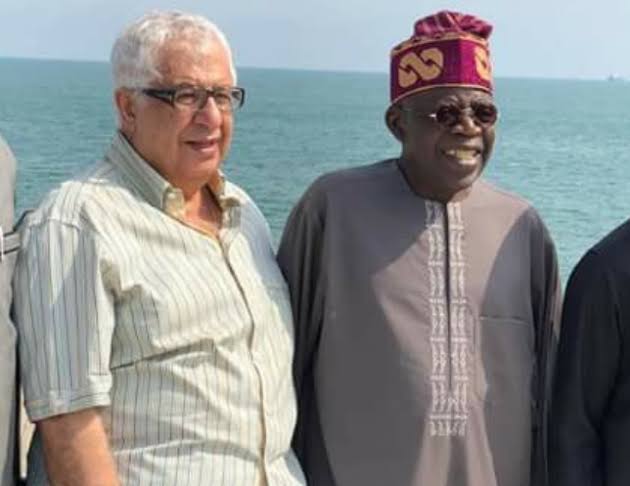
The Chagoury File: A History Of Money Laundering
For critics of the administration, the involvement of Gilbert Chagoury is a massive red flag. The Lebanese-Nigerian billionaire businessman has historically occupied a highly controversial space in Nigeria’s socio-political landscape.
- The Abacha Loot: During the military regime of General Sani Abacha, Chagoury was central to high-level financial operations. In 2000, a Swiss court convicted him of money laundering and participating in a criminal organization, forcing him to forfeit over $60 million in laundered state funds back to the Nigerian government.
- US Sanctions and Penalties: In December 2021, Chagoury entered into a deferred prosecution agreement with the United States Department of Justice, paying a $1.8 million fine to resolve criminal allegations that he conspired to make illegal, illicit foreign campaign contributions to US political candidates.
Despite this global criminal track record, the Tinubu administration has fully embraced the Lebanese mogul as its premier infrastructure partner, shielding the multi-trillion naira procurement files from the public eye.
“Shrouded In Secrecy” — Where Is The President?
Civil rights organizations and legal analysts argue that the Sokoto–Badagry contract violates the core tenets of the Public Procurement Act, which explicitly mandates transparent, competitive bidding for public works to ensure value for taxpayers’ money.
The fact that these astronomical decisions are being finalized while the President’s whereabouts remain vague and shielded from consistent public view has added a dangerous layer of anxiety to the scandal. Public policy experts note that by repeatedly handing the nation’s largest infrastructure assets to a single foreign-linked consortium without open competition, the presidency is establishing a dangerous corporate monopoly over Nigeria’s highway network.
“The entire process is completely shrouded in secrecy,” an independent procurement monitor stated. “There was no open bidding, and key details of the contract terms remain undisclosed. Giving trillions of naira in contracts to an individual from Lebanon with a documented history of laundering Nigerian state funds is an insult to accountability.”
Political Fallout Ahead Of 2027
The escalating infrastructure scandal is fast becoming major political ammunition for the opposition camp. Critics are openly alleging that these single-source trillion-naira contracts are being strategically funneled to preferred foreign allies to build an elite elite campaign war chest ahead of the 2027 presidential election cycle.
While the Ministry of Works has defended the project, arguing that Hitech possesses unique technical capabilities in concrete road technology, the public remains deeply cynical about the true economic cost of the administration’s infrastructural legacy.
As demands grow for the National Assembly to audit the procurement files of the Sokoto–Badagry project, 247ureports will continue to uncover the financial networks behind Aso Rock’s favorite contractors.