

MAKURDI, Nigeria — For years, the official script reading from Nigeria’s capital city, Abuja, has rarely changed. Whenever armed men storm rural communities across the country’s agrarian belts, official police statements from the President Bola Tinubu administration almost uniformly attribute the bloodshed to “farmer-herder clashes”—local disputes over grazing lands and trampled crops.
But data on the ground, intelligence updates, and an increasingly sophisticated trail of regional arms flows tell a vastly different story.
What is presented by the state as a localized, resource-driven friction is a deliberate political deception. Critics, local advocacy leaders, and international security monitoring groups increasingly argue that the “farmer-herder” framing acts as a cowardly political screen.
The reality is an expanding blueprint of Islamic terrorism, where heavily armed, transnational militant networks exploit local ethnic fault lines to overrun and permanently displace indigenous communities while the presidency fears calling it what it is.
- North-Central (Middle Belt – Benue, Plateau, Taraba, Nasarawa): Officially labeled “Farmer-Herder Clashes” by the Tinubu administration. The tactical reality consists of asymmetric Islamic terrorism, heavy artillery, and total land displacement.
- North-West (Zamfara, Katsina, Southern Kaduna): Officially labeled “Banditry & Cattle Rustling”. The tactical reality consists of tactical alliances between local gangs and Sahelian jihadists.
- North-East (Borno, Yobe, Gombe): Officially labeled “Boko Haram / ISWAP Insurgency”. The tactical reality consists of territorial control, mass kidnappings, and taxing rural farmers.
- South-West (Ondo, Niger Bordering): Officially labeled “Isolated Agrarian Friction”. The tactical reality consists of coordinated forest camp occupations and high-value abductions.
Local civic associations point out a glaring contradiction in how the violence is framed by state officials.
When attacks occur in Benue, Plateau, or Taraba, the federal machinery labels it a pastoralist dispute. Yet, when identical tactical operations—such as burning villages to the ground, mass executions, and establishing permanent occupation—happen in Zamfara, Katsina, or Niger State, they are categorized as “banditry” or “terrorist incursions”.
“It is a political gimmick by a government terrified of facing the truth,” states a local leader from the Middle Belt Youth Forum, speaking anonymously for fear of reprisal.
“In the North-West, the victims and attackers often share religious ties, so they call it banditry. In our region, they call it a clash to hide the religious expansionism. But a clash implies two sides meeting in a fight. What we have are sleeping communities being invaded by men carrying weapons that ordinary herders could never afford.”
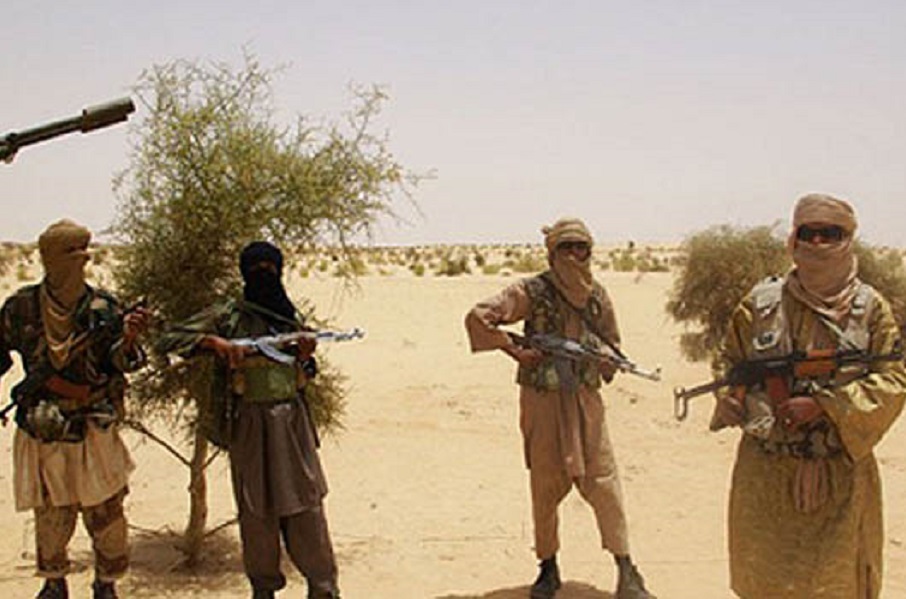
The tactical footprint of these attacks mirrors the operations of ideological Islamic terrorist networks operating in broader African theaters, such as the Democratic Republic of Congo (DRC), Sudan, and Somalia. Assaults are highly synchronized.
Raiding groups, sometimes numbering in the dozens on motorcycles, utilize military-grade firearms—including AK-pattern rifles, PKM general-purpose machine guns, and rocket-propelled grenades (RPGs)—sourced directly from the destabilized black markets of the Sahel and post-conflict Libya.
The Disarmament Dilemma
A key point of anger for affected communities is the asymmetric enforcement of security laws under Tinubu’s leadership. In states like Benue and Plateau, state actors and military task forces have repeatedly carried out disarmament campaigns targeting local vigilantes and volunteer civil defense groups.
While the state defends these operations as vital to preventing lawlessness and anarchy, the structural failure of federal security forces to plug the gaps leaves rural populations entirely exposed.
A report by SBM Intelligence highlights the structural trauma left behind. From 2019 through early 2025, over 2.2 million civilians were internally displaced (IDPs) across Benue, Plateau, and Nasarawa alone. When these communities are disarmed by the state and subsequently attacked, the original inhabitants are pushed into squalid IDP camps, while their ancestral farmlands are re-occupied and renamed by the invaders.
There is growing alarm that regional extremist franchises are fully integrating into these rural networks. In late 2025, the al-Qaeda-affiliated Jama’at Nusrat al-Islam wal-Muslimin (JNIM) claimed its first verified attack inside Nigeria’s Kwara State, moving inward from the Benin Republic border.
Concurrently, newer ideological threats like the Lakurawa group have emerged in the Northwest, blending religious militancy with the tactical prowess of seasoned desert raiders.
This shifting map proves the crisis has outgrown the environmental explanation. While climate change and desertification are undeniable drivers pushing populations southward, they now function primarily as a vehicle for a well-financed, highly structured asymmetric invasion.
Until the Tinubu administration drops its political deceptions, conquers its fear, and treats these rural massacres as an existential expansion of Islamic terrorism—rather than a localized neighborly dispute—the fields of the Middle Belt will continue to serve as a graveyard for the nation’s food security and its people.