
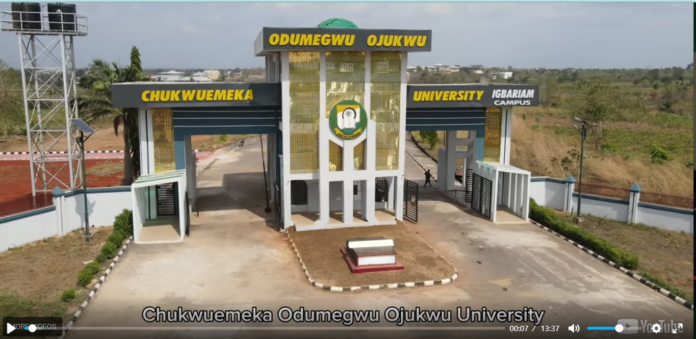


AWKA, Nigeria — Authorities at Chukwuemeka Odumegwu Ojukwu University (COOU) have launched an investigation following explosive allegations that a senior lecturer within the Department of Mass Communication is forcing over 300 students to pay ₦30,000 each before being allowed to sit for a continuous assessment quiz.
The financial exploitation scandal came to light early Tuesday morning after educational analyst and civil advocate Alex Onyia made a public disclosure regarding the developing situation at the university’s Uli campus in Anambra State.
The ₦9.8 Million Shakedown
According to departmental records and student grievances forwarded to university monitors, the affected course has an enrollment of exactly 328 students.
By demanding a mandatory ₦30,000 fee per individual as a prerequisite for academic evaluation, the lecturer, identified as Dr. Gideon Nwafor, stood to illegally gross an estimated ₦9,840,000 from the single student cohort.
Campus whistleblowers revealed that students who voiced financial constraints or questioned the arbitrary levy were allegedly threatened with automatic academic failure, blackmail, and exclusion from the vital departmental assessment.
Vice-Chancellor Intervenes Amid Growing Outrage
The extortion scheme triggered immediate alarm bells within the institution’s top administrative tier. The Vice-Chancellor’s office confirmed it was formally briefed on the matter on Tuesday morning and has ordered an immediate, thorough probe into the Department of Mass Communication’s financial conducts.
Under long-standing university regulations set by both COOU and the Anambra State Ministry of Education, extortion, mandatory selling of unapproved handouts, and charging unauthorized fees for regular academic tests are strictly prohibited offenses. Administrative codes dictate that any academic staff found guilty of such financial misconduct faces severe disciplinary measures, including immediate suspension, demotion, or outright dismissal.
Systemic Academic Corruption Under the Spotlight
The unfolding scandal at COOU reopens broader public frustrations regarding deep-seated academic extortion, bribery, and exploitation plaguing state-owned tertiary institutions across Nigeria.
Students often find themselves vulnerable to predatory lecturers who exploit the absolute power they hold over grading systems, knowing that many undergraduates are too terrified of academic victimization to report abuses of office.
Socio-cultural student groups and digital rights advocates are calling on the university management to ensure total transparency throughout the investigation, demanding that the identity of the student whistleblowers be fully protected to shield them from retaliatory grading or victimization by departmental sympathizers.







