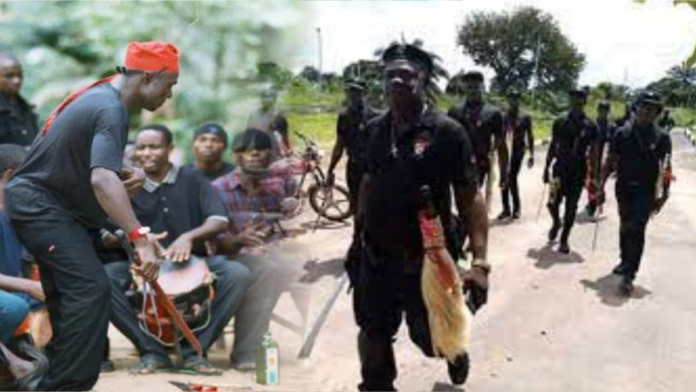


AWKA, NIGERIA — Tensions boiled over in Anambra State as angry youths blocked roads and confronted operatives of the police Anti-Cult Unit over continuous harassment, intimidation, and illegal raids.
The youth group staged a direct standoff with armed officers, chanting “enough is enough” and refusing to let police vehicles pass through the community.
Protest Against Indiscriminate Raids
The demonstration followed a series of controversial midnight sweeps across local neighborhoods. Residents accused the specialized police unit of bursting into private homes without warrants and arresting innocent citizens to extort massive bail payments.
The youths cited a pattern of systemic profiling and harassment based on clothing, hairstyles, and smartphones. They stated that the anti-cult squad has abandoned its core mandate of tracking actual violent gangs, choosing instead to run a commercialized arrest-and-bail scheme targeting students and local artisans.
“We cannot continue to live like criminals in our own homes,” one protest organizer stated during the confrontation. “If you want to fight cultism, go after the criminal hideouts, not innocent youths walking the streets.”
Simmering Discontent
The confrontation highlights a wider, simmering anger across the state regarding the high-handed tactics of specialized police formations. Local community leaders noted that the aggressive tactics of the squad have severely damaged public trust, making residents hesitant to cooperate with law enforcement.
The bold protest drew comparisons to previous regional movements against police brutality, with youth groups warning that continued intimidation would meet fierce resistance.
Police Promise Investigation
As the standoff threatened to escalate, senior officers from the State Command arrived at the scene to defuse the situation.
The command leadership appealed to the youths for calm and promised a full administrative review of the unit’s operational conduct in the area. Authorities assured the community that any officer found guilty of extortion or professional misconduct would face strict internal discipline, leading the youths to temporarily dismantle the barricades.