
.
.
Austin, Texas — September 6, 2026
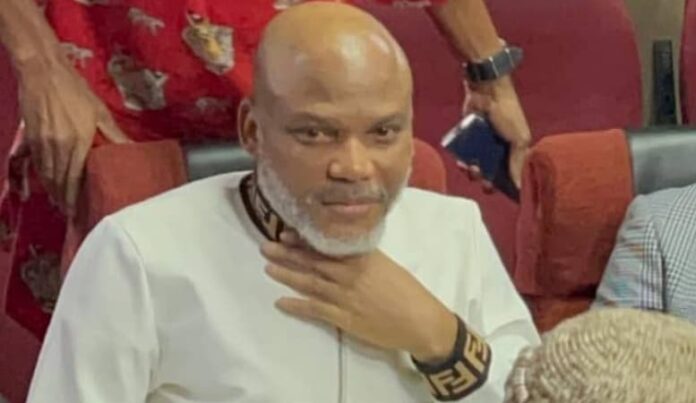
The World Igbo Congress (WIC), the umbrella body representing Igbo interests in Nigeria and the global diaspora, has adopted a formal resolution calling for the release of Mazi Nnamdi Kanu, the imprisoned leader of the proscribed Indigenous People of Biafra (IPOB).
The resolution was among several adopted at WIC’s 2026 Annual Convention, held September 3–6 at the Embassy Suites Austin Central in Austin, Texas, under the theme “Igbo Jikota Onu Kwadosie Ike” (Igbo Unity of Purpose). The convention was hosted by the Igbo Peoples Congress (IPC) of Austin and led by WIC Chairman Dr. Festus Okere and Secretary General Sir Chris Ogara.
In a communiqué issued at the close of the convention, WIC said it was “once again” calling on Igbo political leaders, elected representatives, legal professionals, civil society organizations, human-rights advocates, traditional and religious leaders, and the global Igbo diaspora “to approach this matter with unity of purpose and strategic coordination.”
The resolution follows extended deliberation by delegates on Kanu’s prosecution, detention, and sentencing, which the convention discussed within what it described as a broader pattern of “discrimination against Ndigbo,” selective justice, political marginalization, and unequal application of state power against Igbo individuals and interests. The communiqué framed the case as touching on freedom of expression, political participation, and equality before the law.
Background on the case
Kanu, a dual Nigerian-British citizen, was convicted on all seven terrorism-related counts by the Federal High Court in Abuja in November 2025, following a trial that had stretched over roughly a decade and passed through four different judges. Trial judge James Omotosho sentenced Kanu to life imprisonment on four of the counts, 20 years on another, and five years on the remaining count, saying he would have considered a death sentence given the gravity of the offenses but opted for leniency.
Kanu has denied wrongdoing throughout the proceedings and filed a notice of appeal in February 2026, asking the Court of Appeal in Abuja to quash his conviction and sentence, arguing the trial court violated his right to fair hearing — including by imposing sentence without first hearing his allocutus. As of early 2026, the Court of Appeal had begun substantive review of the case after receiving the full trial record from the Federal High Court. The appeal remains pending.
Kanu was first arrested in 2015 on treasonable felony charges, granted bail in 2017, and then fled Nigeria after his family home was raided by soldiers. He was re-arrested in Kenya in 2021 and returned to Nigeria to stand trial on the terrorism charges that led to his conviction.
Broader context
The WIC resolution reflects a long-running divide in Nigeria over the Kanu case: his supporters, including IPOB and much of the diaspora Igbo community, view the prosecution as politically motivated persecution of a secessionist agitator, while the Nigerian government maintains the conviction was based on evidence that Kanu’s broadcasts incited violence that led to deaths in southeastern Nigeria. The convention’s communiqué did not call for Biafran secession outright but linked the Kanu case to broader resolutions on Igbo political representation and the “future restructuring of Nigeria.”
WIC did not specify what concrete steps it expects Igbo leaders and diaspora institutions to take beyond “unity of purpose and strategic coordination,” and the Nigerian government had not issued a public response to the resolution as of this writing.