
.
.
Bauchi/Abuja, Nigeria — September 13, 2026
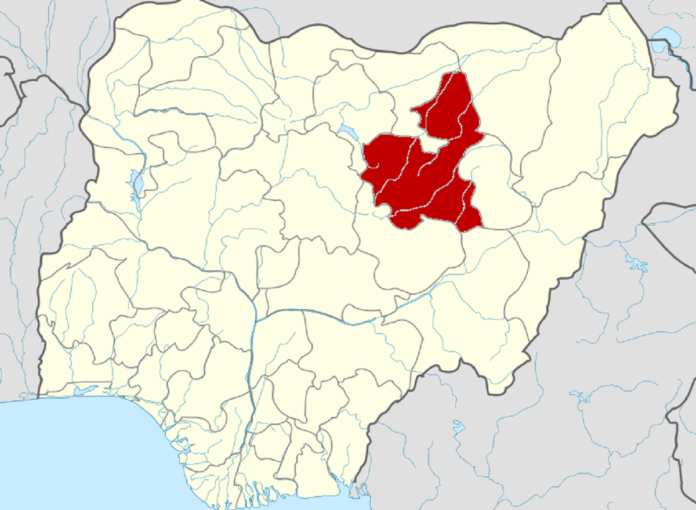
Fresh crisis has erupted within the All Progressives Congress (APC) in Bauchi State after several State House of Assembly candidates alleged their names were substituted despite winning their party primaries — a dispute that is far from isolated, reflecting a pattern of candidate-list controversies now unfolding across a large swath of APC-controlled and APC-contesting states nationwide ahead of the 2027 general elections.
The Bauchi dispute
The allegations come just months after the APC appointed former House of Representatives Speaker Yakubu Dogara to chair a reconciliation committee tasked with resolving grievances among party members in the state.
Hon. Abdulhamid Rufai, seeking to return to the Bauchi State House of Assembly to represent Zungur/Galambi/Miri Constituency, said he was declared winner of his primary on May 23, 2026, by the chairman of the APC’s Governorship and House of Assembly Primaries Committee, retired Assistant Inspector General of Police John Bassey Abang. Rufai said he completed all required INEC documentation, only to discover later that his name had been replaced with that of another candidate, Musa Muhammed Jibrin. He alleged the substitution was linked to efforts by a defeated gubernatorial aspirant to accommodate loyalists, and said he intends to challenge the outcome with the support of lawyers and civil society groups.
Two other Bauchi candidates — Zulkifilu Dahiru Kafi (Ganjuwa West) and Ibrahim A. Adamu (Ganjuwa East) — made similar allegations, saying they too had completed INEC paperwork after winning their primaries before their names disappeared from the final list.
The Bauchi crisis has been compounded by a wave of resignations, including former Deputy Governor Sagir Aminu Saleh, two-time governorship aspirant Captain Muhammad Bala Jibrin, and Hon. Sunusi Aliyu Kunde — an associate of former Foreign Affairs Minister Yusuf Maitama Tuggar, whose campaign organisation has separately called on APC’s national leadership to review the emergence of former Governor Muhammad Abdullahi Abubakar as the party’s 2027 governorship candidate. The Bauchi Progressives Forum has rejected the governorship primary result outright, alleging no election was actually held. The state APC chairman, Muhammad Hassan Tilde, said the party would investigate the substitution allegations, while the party’s publicity secretary maintained that disagreements were “normal” and that the APC could manage its internal challenges.
A national pattern
Bauchi is one of at least nine states — alongside Benue, Ondo, Kwara, Kaduna, Niger, Kogi, Taraba, Ebonyi and Abia — where a national review of the APC’s submitted candidate lists has triggered allegations that duly conducted primary results were altered before submission to the Independent National Electoral Commission (INEC). Party officials have defended the review process as necessary to correct genuine irregularities and say it complies with the party’s constitution and the Electoral Act.
Some of the most prominent flashpoints include:
- Benue State, where aggrieved aspirant Sesugh Akaagba and others filed suit (No. FHC/ABJ/CS/1429/2026) at the Federal High Court in Abuja against the APC and INEC, alleging the party attempted to substitute primary winners before finalizing its list. The court has ordered all parties to maintain the status quo pending determination of the case.
- Kogi State, where the replacement of Samuel Bamidele Aro with incumbent Senator Sunday Karimi as the APC’s Kogi West senatorial candidate has drawn accusations that Karimi neither contested the original result through the party’s internal appeal process nor obtained a court ruling nullifying it before the list was revised. Separately, Senator Jibrin Isah “Echocho” lost the Kogi East ticket to a rival widely seen as backed by Governor Ahmed Usman Ododo and former Governor Yahaya Bello’s camp, and has rejected the result as a “nullity.”
- Abia State, where revision of the APC’s National Assembly nominations triggered what has been described as one of the most contentious internal disputes in the South-East.
- Delta State, where former Deputy Senate President Ovie Omo-Agege lost the APC’s Delta Central senatorial primary to incumbent Senator Ede Dafinone and subsequently resigned from the party, saying in his May 2026 resignation letter that he refused to “remain a sitting duck” in a party where he could no longer advance his constituents’ interests. Fellow senator Peter Nwaoboshi-aligned figures and others have also exited over a reported 60:40 power-sharing arrangement favoring recent defectors over long-time party loyalists.
- Kano State, where the APC’s alliance with Governor Abba Kabir Yusuf — who defected from the NNPP along with commissioners, aides, more than 20 state lawmakers, and roughly eight federal legislators — has set up a bitter factional contest with the Kwankwasiyya movement for control of the state’s political base.
- Lagos, Rivers, Plateau, Zamfara and Osun, cited by BusinessDay among states where aspirants have separately challenged the conduct or outcome of APC primaries, with more than 60 sitting federal legislators nationally reported to have lost their bids to retain their seats.
Party discontent has also spilled beyond the APC’s own structures. In March 2026, APC-aligned lawmakers passed an anti-defection amendment in the House of Representatives, reportedly intended to curb opposition defections ahead of 2027; analysts noted the irony when several of the law’s own sponsors, including Senator Echocho in Kogi, lost their primaries and found themselves boxed in by the very provision they had championed.
Outlook
Political observers say the party’s ability to reconcile aggrieved members — through mechanisms like the Dogara-led Bauchi committee — could prove decisive to its 2027 prospects, particularly given the scale of defections toward rival platforms such as the ADC and NDC. At the same time, analysts note the APC has also gained ground in some states through governors defecting into the party, suggesting the net political effect of the turmoil remains uncertain heading into the election cycle. The party’s national leadership has yet to comment specifically on the Bauchi allegations.