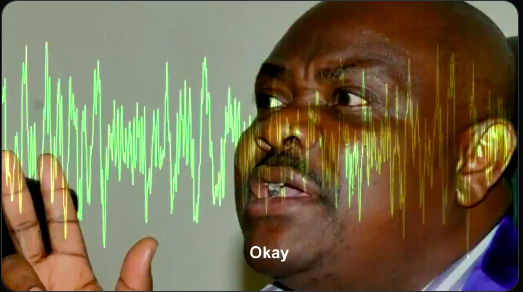


ABUJA, NIGERIA — The political legacy and administrative tenure of the Minister of the Federal Capital Territory (FCT), Nyesom Wike, have once again become the subject of intense social media scrutiny. Opposition commentators and civic activists are circulating historical allegations from his time as Governor of Rivers State to challenge his current standing in public office.
At the center of the renewed digital debate is a controversial audio recording dating back to December 2016, following the highly volatile legislative rerun elections in Rivers State. The resurgence of the clip highlights the deep polarization that continues to define public perception of the former governor’s political trajectory.
The 2016 Audio Controversy
The audio tape in question first gained national prominence in the aftermath of the December 10, 2016, parliamentary rerun elections in Rivers State—an exercise marred by widespread violence, logistical disruptions, and allegations of institutional compromise.
In the leaked recording, a voice resembling Wike’s was heard aggressively lecturing and allegedly threatening officials of the Independent National Electoral Commission (INEC) over an agreed-upon arrangement regarding election results.
Critics and political opponents at the time seized upon the audio as definitive proof of executive interference and electoral malpractice, arguing that it exposed the lengths to which regional political actors would go to secure territorial dominance.
The Defense: Allegations of Fabricated and Doctored Audio
Following the initial leak of the tape in 2016, Nyesom Wike and the Rivers State Government vehemently denied the authenticity of the recording, dismissing it as a coordinated smear campaign orchestrated by the opposition All Progressives Congress (APC) and external security actors.
Wike’s media team asserted that the audio was a product of advanced digital manipulation, constructed by splicing together disparate conversations to create a false narrative of intimidation.
Supporters often maintain that the allegations were part of a broader federal push to destabilize his state administration, which was one of the strongest opposition strongholds against the central government at the time. They emphasize that despite the political uproar, no formal judicial conviction or statutory disqualification was ever established against Wike regarding the recording.
The Modern Political Context
The revival of these decade-old allegations comes at a time when Wike occupies one of the most powerful administrative positions in the country as FCT Minister. His sweeping structural reforms, land title revocations, and enforcement of urban master plans in Abuja have generated significant friction, making him a primary target for online critics.
For independent political analysts, the continuous weaponization of historical election controversies underscores the unresolved grievances surrounding Nigeria’s electoral history. While critics view the archival footage as evidence of systemic impunity, Wike’s defenders view its recurrence as a repetitive political tactic employed by adversaries who are unable to match his administrative output and grassroots influence.