

ABUJA — An investigation by international news agency Agence France-Presse (AFP) has alleged that the Federal Government secretly paid a multimillion-dollar ransom—estimated between N2 billion and N10 billion—to Boko Haram to secure the release of abducted pupils and staff from Niger State.
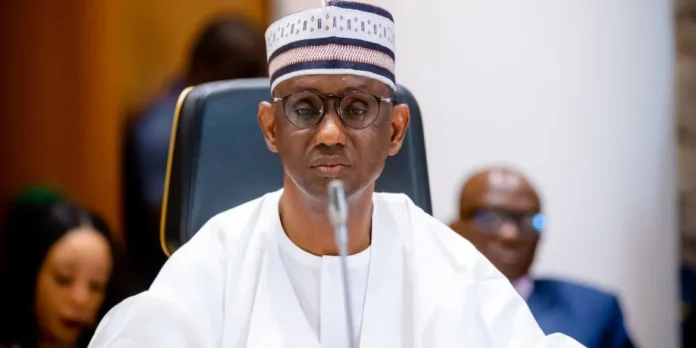
According to intelligence sources cited in the report, the covert negotiations were led by National Security Adviser (NSA) Nuhu Ribadu, contradicting official government policy and federal legislation that strictly criminalizes paying ransoms to terrorist networks.
The allegations surround the November mass abduction at St. Mary’s Boarding School in Papiri, Niger State, where close to 300 pupils and school staff were seized by insurgents under the command of a notorious Boko Haram leader known as Sadiku.

Helicopter Cash Delivery and Prisoner Swap Alleged
Citing multiple intelligence officials directly familiar with the confidential talks, the report claims the cash was delivered by helicopter to a Boko Haram enclave in Gwoza, Borno State, near the Cameroonian border.
The funds were reportedly received by a senior insurgent commander, Ali Ngulde, who reportedly crossed into neighboring Cameroon to confirm receipt before the initial batch of hostages was released into safe custody.
Beyond the financial payout, sources cited in the investigation further alleged that two detained Boko Haram commanders were released as part of the negotiated deal engineered to secure the children’s freedom.
Presidency and Security Agencies Deny Claims
The Office of the National Security Adviser and federal communications representatives have strongly dismissed the report, labeling allegations of government-funded ransoms as baseless and fictitious.
Spokespersons for the Federal Government and the Department of State Services (DSS) reiterated that state security apparatuses operate under a strict prohibition against financial payouts to terrorists, maintaining that the hostages were freed through strategic military pressure and tactical operational channels.
“Government agents do not pay ransoms,” security officials stated in response to the report, maintaining that official intervention consistently prioritizes law enforcement operations over criminal concessions.
Despite official denials, the investigative report has reignited sharp public debate regarding state counter-terrorism transparency, the enforcement of anti-ransom legislation, and the long-term impact of terror-financing concessions on national security.