
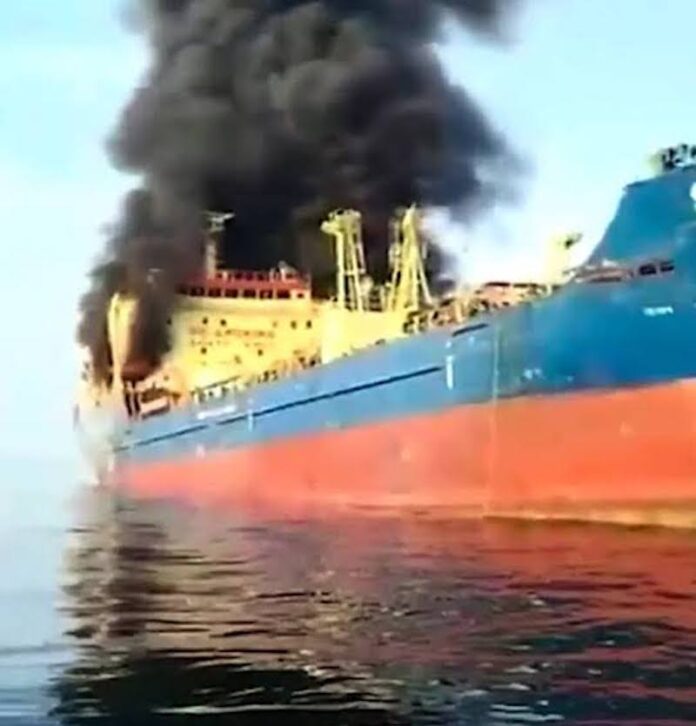


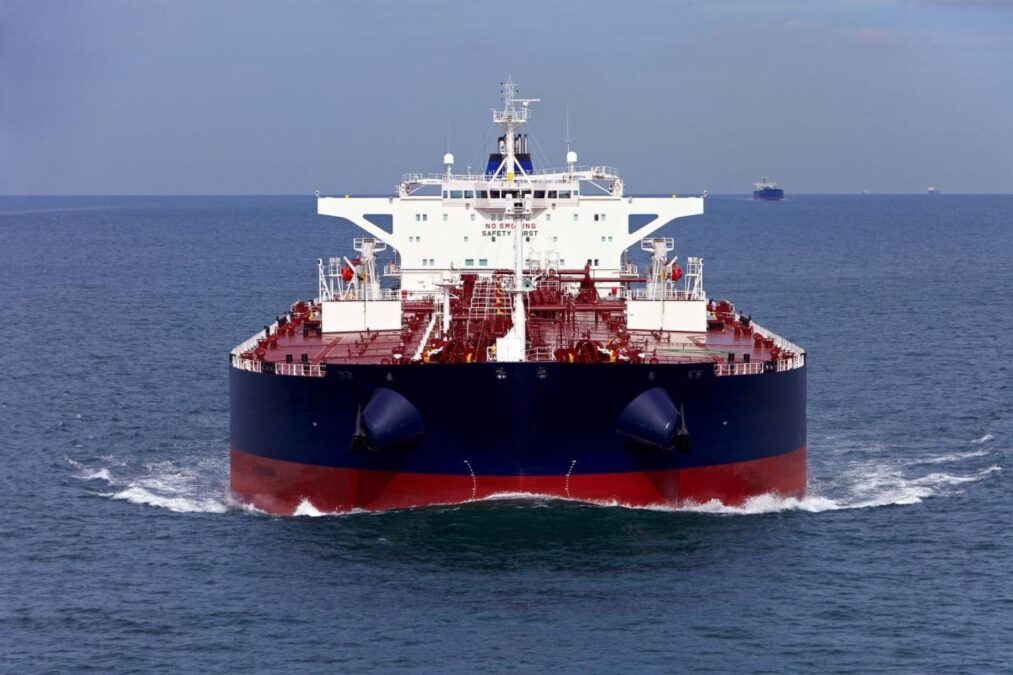
LONDON — A Malta-flagged oil products tanker came under missile attack by Iran’s Islamic Revolutionary Guard Corps (IRGC) in the Strait of Hormuz, forcing its crew to abandon ship after an onboard fire broke out just miles off the coast of Oman.
The vessel, identified as the 2025-built Kavomaleas, was struck approximately eight nautical miles northwest of Kumzar, Oman, according to maritime security operational alerts issued by the United Kingdom Maritime Trade Operations (UKMTO) and private security firm Vanguard.
Despite operating in the strategic waterway while under active U.S. military escort, the tanker was targeted after allegedly utilizing repeated Automatic Identification System (AIS) transponder blackouts to conceal its position while transiting from Fujairah Anchorage into the Persian Gulf.
Crew Rescued as Vessel Drifts Ablaze
The attack occurred at approximately 19:24 UTC, triggering an explosion on board the Panamax-sized tanker, managed by Athens-based Dynacom Tankers Management.
Following the strike, the ship’s Company Security Officer (CSO) confirmed that the crew safely abandoned the burning vessel and were recovered by a responding tugboat. The unmanned tanker was left drifting in the narrow shipping corridor as emergency tugs moved in to battle the flames.
“The vessel was struck by an unknown projectile, resulting in a fire on board,” the UKMTO reported in its advisory. “All crew members have been safely evacuated, and no environmental contamination or oil spill has been detected at this stage.”
IRGC Escalates Targeting of Blackout Transit Ships
In a statement broadcast shortly after the strike, state-linked Iranian military channels claimed responsibility, asserting that the IRGC targeted vessels navigating what Tehran termed an “unauthorized southern route” through the strait without broadcasting active tracking data.
Iranian military sources confirmed that its forces engaged multiple commercial ships operating with disabled transponders, claiming two tankers suffered disabling explosions after ignoring verbal warnings to halt.
Maritime tracking data from MarineTraffic indicated that the Kavomaleas had last transmitted an active location off Fujairah before turning off its AIS transponder to pass through the high-risk maritime choke point—a strategy increasingly adopted by commercial operators attempting to evade Iranian surveillance.
Shipping Choke Point Under Severe Strain
The attack marks the latest in a series of hostile engagements in the Strait of Hormuz, where the Joint Maritime Information Centre (JMIC) has recorded at least 11 targeted strikes against commercial vessels within recent weeks.
The incident sent immediate shockwaves through global energy markets, forcing commercial shipowners to halt transit through the strait and driving Brent crude prices above $90 per barrel as insurers re-evaluated war-risk premiums for Persian Gulf routes.
Military authorities in the region have advised all commercial mariners transiting the Strait of Hormuz to maintain extreme vigilance, maintain direct comms with coalition maritime forces, and report suspicious surface movements immediately.