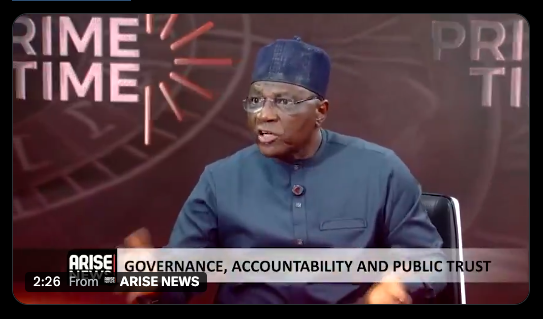

ABUJA, NIGERIA — Bayo Onanuga, the Special Adviser on Information and Strategy to President Bola Ahmed Tinubu, has triggered widespread public fury after openly dismissing the severity of the hunger and cost-of-living crisis biting millions of citizens across the federation. Speaking during a live national television interview, the presidential spokesperson downplayed the economic suffering of the populace, stating bluntly: “I don’t see the level of hunger Nigerians are complaining about.”
The abrasive remarks come at a time when headline inflation has soared past 30 percent and staple food prices have reached historic highs, leading civil society groups and opposition leaders to label the presidency as completely detached, cold, and insulated from the grim realities of the citizens.
+—————————————————————–+
| EXECUTIVE DISCONNECT MONITOR |
+——————-+———————————————+
| Key Speaker | Bayo Onanuga (Presidential Spokesperson) |
| Core Statement | “I don’t see the level of hunger…” |
| National Reality | Double-digit food inflation & soaring poverty|
| Public Backlash | Outrage from labor unions, market groups |
+——————-+———————————————+
Insensitivity at the Highest Level
Defending the administration’s aggressive macroeconomic reforms—including the removal of the petrol subsidy and the floating of the Naira—Onanuga asserted that the economic picture painted by critics is highly exaggerated. He argued that the markets are still bustling and that the purchasing power of citizens has not collapsed to the catastrophic levels reported by the media.
By suggesting instead that the public outcry is being politically weaponised by opposition elements to discredit President Tinubu’s structural agenda, the presidential aide sparked a firestorm of criticism across the country’s socio-political spectrum.
Shaking the Foundations of Public Trust
The presidential aide’s comments have shattered whatever patience was left among the working class and trade associations. Market women, commercial drivers, and low-income families across urban centers like Lagos, Ibadan, Kano, and Aba have fiercely reacted to the broadcast, describing the statement as a slap in the face of struggling households.
Labor leaders have pointed out the bitter irony of the presidency spending billions of Naira on luxury renovations, exotic vehicles, and presidential aircraft, while its top strategists look down on ordinary citizens who can no longer afford two balanced meals a day.
A Democracy of Elite Insulation
Political analysts warn that Onanuga’s public stance mirrors a dangerous pattern of elite insulation that historically precedes severe civil unrest. By denying the existence of systemic hunger, the administration effectively closes the door on constructive dialogue and leaves citizens feeling entirely abandoned by their elected representatives.
Human rights organizations have issued statements reminding the federal government that hunger is not an abstract political concept, but a physical crisis filling public hospitals with malnourished children and forcing families into extreme homelessness.
Demands for Immediate Public Apology and Policy Reversal
As videos of the interview continue to trend across social media platforms, pressure is growing on the presidency to officially walk back Onanuga’s remarks to de-escalate rising public anger.
Coalitions of youth groups and organized labor have warned that this high-handed dismissal of public agony will only accelerate the mobilization for fresh nationwide protests. Until the administration stops hiding behind macroeconomic data templates and acknowledges the physical starvation in the streets, the divide between Aso Rock and the sovereign people of Nigeria will continue to expand beyond repair.