
“As we reflect on the past year, we consider how the Pope’s leadership has impacted our lives and influenced the broader national conversation on unity and compassion. Thus, this anniversary serves not only as a milestone for the Church but also as an opportunity for every Nigerian to reflect on the role of faith in promoting understanding and reconciliation among diverse communities.”
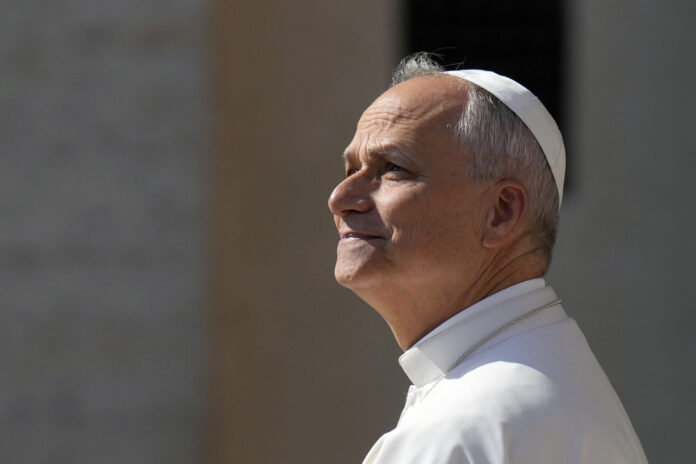
It has now been a year since the historic election of Pope Leo XIV as the Supreme Pontiff of the Roman Catholic Church. His ascension to the papacy sparked a wave of enthusiasm, curiosity, and hope among Catholics and people of various faiths worldwide, particularly during a time when the Church faced significant spiritual, moral, and social challenges. As I take a moment to reflect on the past twelve months, it is clear that Pope Leo XIV has begun to carve out a legacy marked by remarkable humility, a commitment to global outreach, and an unwavering emphasis on moral leadership.
From the outset of his papacy, Pope Leo XIV has made peace, unity, and compassion the cornerstone of his message and mission. In numerous public addresses, he has articulated a powerful stance against war, poverty, injustice, and hatred, highlighting the moral imperative to change these conditions. He has often painted a vivid picture of the suffering endured by the most vulnerable, reminding us of our shared responsibility to care for one another. Amid a landscape marked by political instability and humanitarian crises, the Pope has persistently urged world leaders to prioritize human dignity over the allure of power and personal ambition. His advocacy for dialogue and understanding serves as a foundation for conflict resolution and reconciliation, calling on individuals and nations alike to embrace compassion and solidarity. Pope Leo XIV’s calm yet resolute demeanor, combined with his profound empathy, has garnered respect not only within the Catholic Church but also across diverse communities worldwide. His leadership style resonates with many who are seeking a moral compass in these tumultuous times, making him a pivotal figure in the ongoing quest for a more just and peaceful world.
One of the most prominent aspects of his first year was his international travels. Like many modern popes, Pope Leo XIV recognizes the significance of connecting the Church with people from diverse nations and cultures. Over the past year, he has traveled to several countries grappling with conflict, poverty, and social divisions. His visits include Turkey from November 27 to 30, 2025; Lebanon from November 30 to December 2, 2025; Monaco on March 28, 2026; Algeria from April 13 to 15, 2026; Cameroon from April 15 to 18, 2026; Angola from April 18 to 21, 2026; and Equatorial Guinea from April 21 to 23, 2026. During these visits, he engaged with religious leaders, political authorities, refugees, youth, and victims of violence. His travels transcended mere ceremonial gestures; they carried powerful messages of reconciliation, peace, and solidarity with suffering communities. His commitment to connecting with marginalized groups and advocating for social justice has resonated profoundly, inspiring many to re-engage with the Church’s teachings.
The Pope has consistently articulated deep concern for the poor and marginalized. He urges wealthy nations and global institutions to give greater attention to economic inequality, migration, and humanitarian needs. Many Catholics view this focus as a continuation of Pope Francis’s legacy regarding the Church’s enduring mission of charity and social justice. The Church is pleased that Pope Leo XIV has embraced this direction, emphasizing care for the vulnerable and overlooked. This approach will significantly enhance his reputation as a pastor who is attuned to the needs of ordinary people. Within the Church, Pope Leo XIV has actively promoted dialogue and unity. Amid existing divisions between conservative and progressive Catholics, he has urged patience, mutual respect, and spiritual renewal. Rather than advocating confrontation, he emphasizes the importance of listening and fostering cooperation within the global Church.
Supporters of the Pope commend his remarkable courage in confronting global conflicts and addressing pressing humanitarian crises affecting millions worldwide. Many view him as a transformative leader who is unafraid to speak truth to power, even in the face of significant political pressure and opposition. His deep concern for marginalized groups, including the impoverished, refugees seeking safety, and the victims of war and violence, reflects a compassionate approach that resonates with many people. This dedication has reignited a widespread recognition of the Church’s moral responsibility to advocate for social justice and support those in need, urging followers to engage with these pressing issues and foster a more equitable society. Through his actions and messages, the Pope serves as a poignant reminder of the ethical obligations that come with faith and leadership in a complex world.
However, not everyone agrees with his approach. Some critics argue that he has taken an overly active role in political and international affairs, which they believe detracts from his spiritual responsibilities. They assert that his condemnation of tyrants spending vast sums on war was a direct critique of President Donald Trump. These critics express concern that his involvement in such matters risks alienating members of the Church who hold differing views on these sensitive issues. Additionally, some believe that he should exercise greater caution when tackling controversial social topics, suggesting that a more measured approach could help maintain unity within the Church. This ongoing discourse highlights the deep divides that exist not only between conservative and progressive groups but also within these categories themselves.
As these factions continue to argue over the direction of the Pope’s leadership, it is important to recognize that internal disagreements are not unprecedented in the Church’s history. In fact, such disputes have often shaped the papacy and its influence over the centuries, reflecting the evolving nature of faith, doctrine, and society. These dynamics reveal the complexity of leading a global institution that must navigate the intersection of faith, politics, and social change.
Despite the numerous challenges faced, the first anniversary of Pope Leo’s election represents a significant opportunity for deep reflection and contemplation. This occasion holds weight not only for Catholics around the globe, who are encouraged to examine their beliefs, practices, and the trajectory of their faith under his leadership, but also for those outside the Catholic Church to consider the broader implications of his papacy. As Nigerians from various backgrounds and beliefs engage in this introspection, we can explore how Pope Leo’s leadership and teachings resonate with contemporary issues and contribute to the ongoing dialogue surrounding faith, morality, and the role of religion in Nigeria.
This anniversary arrives at a time when Nigeria grapples with escalating banditry, rampant misinformation, and growing ethnic and religious divisions. In such a climate, many citizens look to religious leaders for guidance and inspiration, viewing them as beacons of hope, capable of offering moral clarity and direction amidst the turmoil. As we reflect on the past year, we consider how the Pope’s leadership has impacted our lives and influenced the broader national conversation on unity and compassion. Thus, this anniversary serves not only as a milestone for the Church but also as an opportunity for every Nigerian to reflect on the role of faith in promoting understanding and reconciliation among diverse communities.
As Pope Leo XIV embarks on his second year as pontiff, his influence within the Catholic Church and the global community continues to expand significantly. While one year may not be enough time to assess the effectiveness of a papacy fully, the early actions of Pope Leo XIV reveal a leader keenly focused on guiding the Church through a lens of compassion, diplomacy, and unwavering moral conviction. As he embarks on his second year as Pope, the expectations surrounding Pope Leo XIV remain extraordinarily high, both among the faithful and outside the confines of the Church. The Nigerian Catholic community, in particular, is closely observing, eager to see whether he can sustain the deep connection he forged with his homeland during his tenure as the Superior General of the Augustinian Order. With Nigeria being home to one of the fastest-growing Catholic populations in the world, the significance of having a Pope who has walked the vibrant streets and visited the chapels scattered across cities like Abuja, Plateau, Maiduguri, Benue, Enugu, Imo, and Lagos cannot be overstated. His familiarity with the diverse cultures, challenges, and spiritual vibrancy of these regions brings a unique authenticity to his papacy. Many hope that he will one day set foot on Nigerian soil to bridge the gap between the Church and the Nigerian leaders, addressing our specific concerns while reinvigorating our spiritual lives in a rapidly changing world.
Therefore, as we reflect on this pivotal year, the Nigerian Catholic community looks forward with anticipation, acknowledging that the leadership of Pope Leo XIV may significantly impact Nigeria and the future of the Nigerian Church. His governance transcends mere administration; it aims to inspire hope and renewal both within the Church and in the broader society. His papacy serves as a poignant reminder of the enduring importance of faith and moral integrity in confronting the complex challenges facing our nation today.
Rev. Ma, S.J., is a Jesuit priest and a public policy analyst. He currently writes from Abuja, Nigeria.