
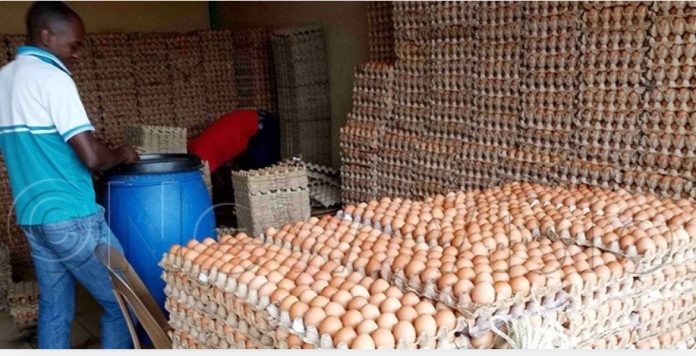


LAGOS, NIGERIA — Public outrage over food inflation has intensified across Nigeria following viral social media reports and market verifications confirming that the price of a crate of eggs has climbed past ₦6,000.
The sharp price increase has triggered widespread criticism from citizens, who blame the federal government’s economic reforms for the relentless rise in the cost of basic food items.
The Current Market Reality
Data from the National Bureau of Statistics (NBS) and market surveys across major cities indicate that the price of a standard crate of 30 eggs now averages between ₦5,800 and ₦6,500 at the retail level, depending on the egg size and geographic location.
- Farm Gate Price: Climbed to approximately ₦5,500 per crate, up from ₦5,000 earlier in the year.
- Retail Outlets: Range firmly between ₦6,000 and ₦6,500 across neighborhood shops.
- Supermarkets: Large grocery stores and premium markets are pricing crates even higher, between ₦7,000 and ₦8,500, to absorb operational overheads and distribution costs.
Geographically, the South-East zone records the highest average price at ₦6,418.32, while the North-West zone maintains the lowest average at ₦5,759.71 per crate.
Drivers of the Poultry Crisis
According to the Poultry Association of Nigeria (PAN), the persistent spike in prices is not caused by arbitrary market fixing, but by severe structural supply shocks rocking the agricultural sector.
The primary catalyst is an acute, nationwide shortage of Day-Old Chicks (DOCs). Hatcheries across the country are fully booked months in advance, forcing poultry farmers to wait up to six months to replenish their stocks after selling off older laying birds.
Compounding the problem is a sharp 50 percent hike in the monthly price of maize and other poultry feed ingredients, alongside a surge in the procurement cost of chicks, which rose from ₦1,800 to around ₦3,300 each.
Public Reactions and Political Backlash
The price hike has struck a sensitive chord with the public, as eggs—historically considered the most affordable source of protein for low-income households—are increasingly pushed beyond the reach of ordinary citizens.
Social media commentators have used the price jump to vent frustrations against the administration’s fiscal choices. Many note that the rapid ascent from previous price points represents a direct assault on household food security.
“Can you imagine? A crate of eggs is now ₦6k from ₦1,500,” one resident lamented online, describing the economic situation as an unbearable burden on everyday Nigerians.
While local PAN chapters have warned that a crate of eggs could hit ₦10,000 if the government does not urgently intervene to stabilize input costs, the presidency continues to maintain that its current agricultural and macroeconomic adjustments will eventually correct production deficits and bring long-term price relief.