
LAGOS, Nigeria — A massive national controversy has erupted following statements made by the Minister of Works, David Umahi, who declared that President Bola Ahmed Tinubu is “the Biafra we have been looking for,” sparking a fierce live-on-air rebuke from prominent journalist Rufai Oseni.
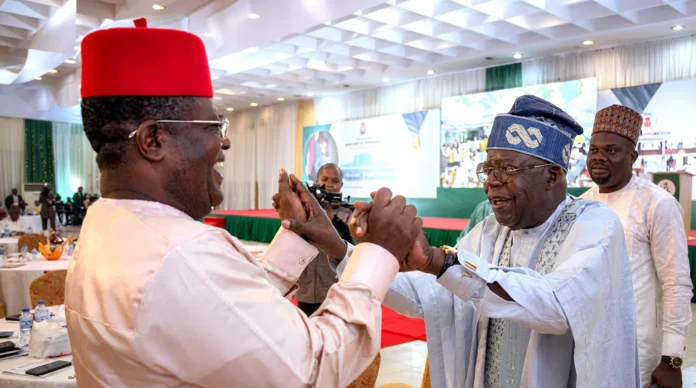
Speaking during an APC political event, Umahi praised the President’s infrastructure drive and political appointments in the South-East. He argued that Tinubu has successfully integrated the region into mainstream Nigerian politics, effectively delivering what regional agitations could not.
The Backlash on Live Television
The Minister’s choice of words met swift, sharp criticism on Arise Television’s The Morning Show, where co-anchor Rufai Oseni strongly condemned the use of the term “Biafra” as a tool for political sycophancy.
“Please, with due respect, Mr. Umahi can support Tinubu in any way he wants to support,” Oseni stated during the broadcast. “But I think it’s a stretch considering the over 3 million people who died. He can hype Tinubu all he wants, but Biafra is a sore point for Igbo people.”
Historical Wounds vs. Political Marketing
Oseni’s reaction highlights a deep-seated anger regarding how historical tragedies are referenced by public officials. The journalist emphasized that the term “Biafra” carries immense emotional weight, bound to the memory of the Nigerian Civil War (1967–1970) and the millions of lives lost, largely to starvation and conflict.
Political analysts note that while Umahi aimed to highlight federal projects under the Tinubu administration—such as his own appointment as the first South-East Minister of Works since independence—the framing has alienated many within his own region. Critics argue that equating infrastructural dividends with the historical and cultural struggle of Biafra trivializes a generational trauma.
A Growing Rift
This latest clash adds fuel to a history of public tension between the Minister and the broadcaster, who have previously faced off on air over federal highway projects.
As the video clips of Umahi’s speech and Oseni’s subsequent takedown circulate widely online, the incident has reignited fierce national debates across social media regarding political accountability, historical literacy, and the boundaries of political rhetoric in Nigeria.