
By 247ureports.com
The contest for leadership of the next Senate, which will be inaugurated in June 2027, has opened early between Senate President Godswill Akpabio and Imo State Governor Hope Uzodimma, with senators declaring the seat “not open to any contest” and Akpabio openly asking President Bola Tinubu to discourage the Imo governor from aspiring to it. The current assembly is the 10th, and the 11th Senate will be chosen by the senators elected in the 2027 polls.
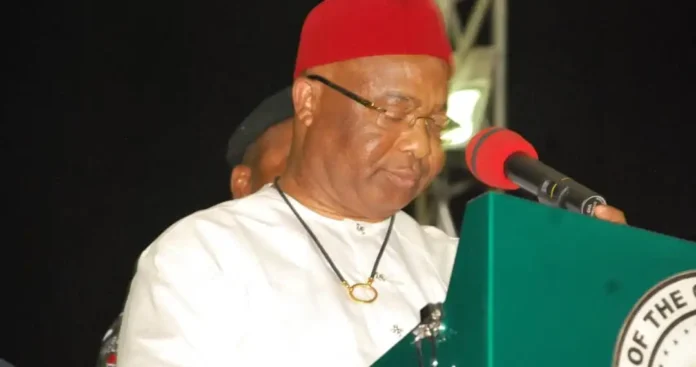
Akpabio made his appeal at the inauguration of the All Progressives Congress (APC) Presidential Campaign Council on Wednesday, asking Tinubu to support his bid to remain Senate President and warning against governors eyeing other offices. He did not name Uzodimma, but his remarks were widely read as aimed at him, since Uzodimma is the APC’s candidate for the Imo West Senate seat and, according to reports, has planned to resign as governor before his term ends in January 2028 and move to the Senate if he wins. “If you try to amend it, you are going to tear the cloth,” Akpabio told Tinubu, urging him to take the advice of Anambra Governor Chukwuma Soludo seriously. Uzodimma, who chairs the Progressive Governors’ Forum and is secretary of the campaign council, told the same gathering that Tinubu’s re-election was inseparable from the electoral fortunes of other APC candidates, himself included.
On Thursday, Senate Chief Whip Tahir Monguno moved a motion declaring that “the seat of the Senate President in the 11th Assembly is not open to any contest. It is already occupied by Senator Godswill Obot Akpabio.” Akpabio supported the motion and put it to a voice vote, which the senators present carried with a loud “aye.” Monguno also backed the Deputy Senate President, Barau Jibrin, and the other principal officers to keep their positions. Sen. Cyril Fasuyi of Ekiti North, who described himself as a serving and incoming senator, also backed the call. The motion came the day after Akpabio faced criticism over remarks on a suicide prevention bill that some read as an attack on Muslims, and he told colleagues that criticism of Senate debates was a misrepresentation.
Party sources say the struggle has so far been fought through lobbying and the courting of likely senators-elect, with proxy battles in media commentary that questions Akpabio’s handling of the Senate and portrays Uzodimma as over-ambitious. Some in the APC fear a repeat of 2015, when Bukola Saraki won the Senate presidency against the wishes of the party leadership. A Senate rule change reported earlier this year requiring a presiding officer to have served two full terms, which critics called the “Akpabio Law,” is seen as an obstacle for Uzodimma, though he spent eight years in the Senate before becoming governor. South-South politicians have also said it would be a betrayal for a South-East figure to challenge Akpabio.
A Senate vote of endorsement does not decide the matter. Under the Constitution, the Senate President is elected by members of the new Senate from among themselves, and only those who win seats in the January election will vote. FCT Minister Nyesom Wike has said separately that he will never support Uzodimma for Senate President, a line from his running dispute with the governor. Uzodimma has not responded publicly to Akpabio’s remarks or to the Senate motion, and the Presidency has not said whom it prefers.