

Port Harcourt, Rivers State — September 3, 2026
The Killing
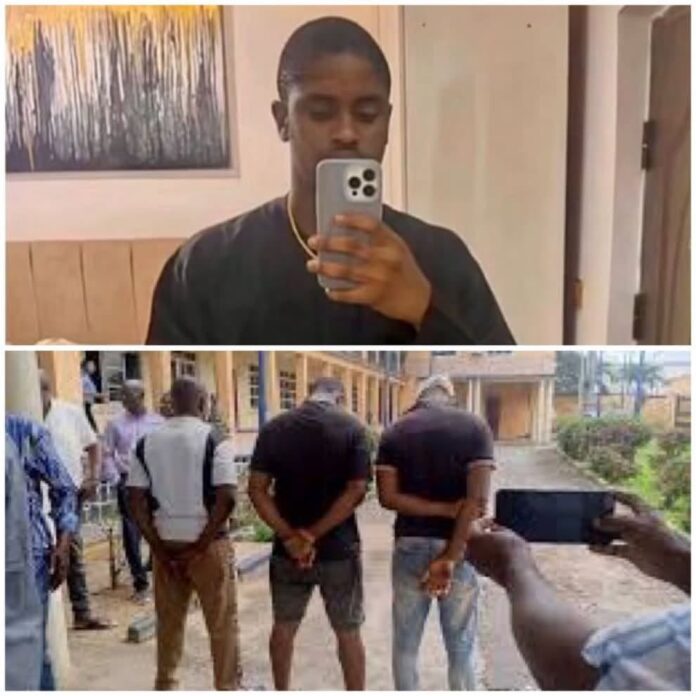
On the afternoon of Thursday, August 27, 2026, 22-year-old Anthony A. Obodo, a fresh graduate of the University of Port Harcourt still waiting for his NYSC call-up letter, was driving a tinted Lexus along the busy Ada George Road in Obio/Akpor Local Government Area when a police patrol team flagged him down. According to accounts from the Rivers State Police Command, Obodo failed to stop, prompting the team to give chase. During the pursuit, Corporal Alfred Louis opened fire on the vehicle, striking Obodo. He was rushed to Palmer’s Hospital in Port Harcourt, where he was later pronounced dead.
Rivers State Commissioner of Police, Olugbenga Adepoju, disclosed the outcome of the internal investigation at a press briefing on Wednesday, September 2, at the Command’s headquarters on Moscow Road. Three officers — reportedly led by an Assistant Superintendent of Police, Fabian Kpeanabari — were tried in an orderly room and recommended for dismissal from the Nigeria Police Force. A fourth suspect, Inspector Solomon Nworgu, fled the scene and has since been declared a deserter. Adepoju said the dismissed officers will now face criminal prosecution.
The killing has ignited unrest across Rivers State, with youths from Obodo’s home community of Ndele in Emohua Local Government Area, alongside residents from other parts of the state, taking to the streets in protest against what many see as yet another case of trigger-happy, unaccountable policing.
A Familiar, Preventable Tragedy
What makes Obodo’s death so combustible is not that it is rare — it is that it is routine. Extrajudicial shootings of unarmed or non-compliant civilians by Nigerian police officers during “routine stops” have followed an almost identical script for years: a patrol team, a vehicle that doesn’t stop fast enough, a chase, gunfire, and then — if there is enough public outcry — a dismissal and a promise of prosecution that rarely produces a conviction. Corporal Louis’s decision to fire live rounds at a fleeing but ordinary civilian vehicle, on a public road in broad daylight, is not an isolated lapse in judgment. It is a symptom of a policing culture that has been allowed to fester for decades under a governance structure that concentrates all policing power in Abuja.
Where the Federal Government’s Failures Come In
While the officers who pulled the trigger bear individual responsibility, it is worth asking why Nigeria keeps producing officers like Corporal Louis in the first place — and that question leads directly to the federal government’s stewardship of the Nigeria Police Force.
A single, centrally-controlled force stretched across a country of over 200 million people. The Nigeria Police Force remains, by law, the only police force permitted to operate in the country. Rivers State’s government has no operational control over the officers who patrol its own roads; command, funding priorities, and personnel decisions run through Abuja via the Inspector-General of Police. Critics of this arrangement — including many state governors — have long argued that a force this centralized cannot be properly staffed, trained, or supervised at the local level, and that community policing suffers as a result. The push for state policing, debated in Nigeria’s National Assembly for years, has repeatedly stalled at the federal level.
Chronic underfunding and undertraining. Nigerian police officers are widely reported to receive minimal, outdated training in use-of-force protocols, de-escalation, and firearms discipline, even as they are routinely deployed with live weapons into high-pressure situations involving ordinary civilians. The federal budget for policing has for years prioritized VIP protection and paramilitary deployments over the kind of rigorous, recurring training that would teach a corporal the difference between a fleeing suspect and a young graduate who panicked at a checkpoint.
A discipline system that only responds to public pressure. The pattern here is instructive: dismissal and a promise of court charges only came after the shooting sparked community protests. Nigeria’s police accountability apparatus — including the Police Service Commission — is a federal body, and it has a long history of moving slowly or not at all in the absence of public outrage or media attention. Without an independent, well-resourced federal oversight mechanism that investigates proactively rather than reactively, officers have little reason to believe that misconduct carries real consequences.
Unfulfilled promises of police reform. The #EndSARS protests of 2020 forced federal commitments to police reform, including promises around use-of-force policy, accountability panels, and compensation for victims of police brutality. Five years on, incidents like the killing of Anthony Obodo suggest those reforms have not meaningfully changed how ordinary patrol teams operate on Nigerian roads.
Taken together, these failures point to a federal government that has been content to manage police brutality as a public-relations problem — a dismissal announcement, a pledge to prosecute — rather than treat it as the structural crisis it is.
The Other Side of the Argument
It is fair to note that the federal government and police leadership would frame this differently. Officials typically point to: the swift internal investigation and dismissal in this case as evidence the system is working; the practical and constitutional difficulties of decentralizing policing in a country with deep ethnic and regional fault lines, where critics fear state police could be weaponized by governors against political opponents; and budgetary constraints that make it difficult to overhaul training nationwide overnight. The Rivers State Commissioner of Police’s own statement — that “no officer is above the law” and that the Command will not shield personnel who act outside it — reflects the federal police leadership’s preferred narrative: that accountability, however belated, is being delivered case by case.
Whether that case-by-case model is a genuine deterrent or simply damage control is likely to remain a central and unresolved question in Nigeria’s policing debate.
What Comes Next
The dismissed officers are expected to be arraigned in court. For Obodo’s family and community, that prosecution — and whether it actually results in a conviction — will be the real test of whether this case breaks from the familiar pattern of headline, outrage, and eventual silence.