

.
.
Hong LGA, Adamawa State — September 14, 2026
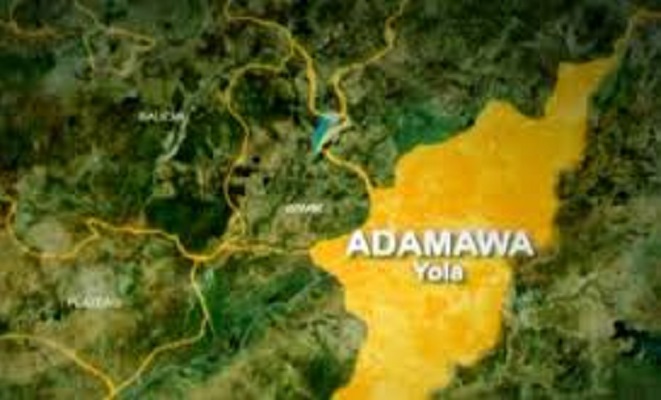
Suspected Boko Haram terrorists have invaded Bitirhuya community in Hong Local Government Area of Adamawa State, killing four residents and setting many houses ablaze.
The attackers reportedly struck between 5 p.m. and 6 p.m. on Sunday, gaining entry into the community on motorcycles and shooting sporadically, forcing residents to scatter for safety. Four people were gunned down amid the confusion. Chairman of Hong Local Government Council, Hon. Aliyu Sa’ad Yerima Hong, confirmed the incident and visited the community, commiserating with bereaved families and assuring them of government efforts to improve security in the area.
The attack came barely a week after suspected Boko Haram fighters killed at least 11 to 12 people in Zaranga and Dzangola villages in neighbouring Gombi Local Government Area on September 7, in raids that also saw houses burned, a church set alight, and shops looted. Adamawa has now recorded at least three major insurgent attacks across two local government areas within roughly a week.
A state at the center of the crisis — and a political flashpoint
Adamawa State remains one of the epicentres of Boko Haram and ISWAP-linked violence in Nigeria’s North-East, alongside Borno and Yobe. It is also the home state of Atiku Abubakar, the African Democratic Congress’s (ADC) presidential candidate for the 2027 election and a former Nigerian vice president, whose political base — the Jada area — sits within the wider region affected by the insurgency.
Atiku’s record on responding to attacks in his home state has become a recurring point of political contention. The Adamawa State chapter of the ruling APC has previously accused him of having been silent as Boko Haram overran Adamawa communities, displaced families, and shut down livelihoods during earlier phases of the insurgency, arguing he only “found his voice” to criticize the government once, in the party’s telling, peace was returning. Presidential aide Bayo Onanuga separately criticized Atiku in July 2026 for not immediately commenting after the rescue of kidnapped Oyo schoolchildren, contrasting his response time unfavourably with that of NDC candidate Peter Obi. Former presidential aide Babachir Lawal has also publicly questioned whether Atiku has ever condoled with communities affected by insurgency or condemned Boko Haram killings directly.
The record is mixed, however: Atiku did publicly condemn a February 2026 wave of attacks in Madagali and Hong LGAs that killed more than 20 people, and has repeatedly linked Nigeria’s worsening insecurity to what he describes as fiscal indiscipline and misplaced spending priorities under the Tinubu administration. As of this writing, Atiku had not issued a public statement specifically addressing the Bitirhuya attack.
Federal response under scrutiny
The renewed violence in Adamawa adds to mounting criticism of the federal government’s capacity to contain the insurgency more than 15 years after it began. Despite continued military operations under frameworks such as Operation Enduring Peace, and despite Adamawa Governor Ahmadu Umaru Fintiri’s insistence that Northern leaders share responsibility for the region’s insecurity rather than placing blame solely on the presidency, attacks in Gombi, Madagali, and Hong LGAs have continued through 2026 with little sign of abating. Critics argue that recurring, near-weekly raids in the same cluster of border communities — often exploiting the area’s proximity to the Sambisa Forest, a long-standing Boko Haram and ISWAP stronghold — point to persistent gaps in the security architecture despite Nigeria’s 2025 federal defence and security budget of roughly ₦6.57 trillion. The federal government has not yet issued a specific response to the Bitirhuya attack.