
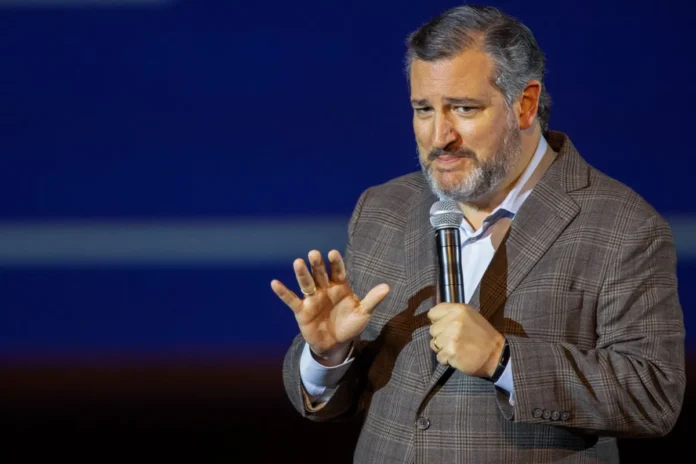

WASHINGTON / ABUJA — Senior United States Senator Ted Cruz (R-Texas) has launched a sharp critique against the administration of President Bola Ahmed Tinubu, accusing Nigerian officials of squandering state resources on Washington lobbyists and public relations firms rather than addressing international concerns regarding religious persecution.
The Texas lawmaker, who chairs the Senate Foreign Relations Subcommittee on Africa, made the remarks as the U.S. Congress considers legislative measures to restrict economic and security assistance to Nigeria over the treatment of religious minorities and the enforcement of blasphemy laws.
“Instead of responding to American concerns, Nigerian officials waged a public relations campaign against critics,” Cruz said in a statement on Wednesday. “They were confident in that campaign and in their ability to continue the status quo, and I am heartened that the House has just definitively proven them wrong.”
Legislative Push for Targeted Sanctions
The senator’s comments coincide with congressional momentum surrounding the Nigeria Religious Freedom Accountability Act of 2025 (S.2747), introduced by Cruz in the Senate and co-sponsored in the House of Representatives by Congressman Marlin Stutzman.
The proposed legislation seeks to enforce strict measures against Nigerian government functionaries, including:
- Targeted Sanctions: Imposing visa bans and asset freezes under the Global Magnitsky Act against state officials who facilitate, ignore, or enforce sharia-based blasphemy laws or armed attacks against religious communities.
- Country Designation: Re-designating Nigeria as a “Country of Particular Concern” (CPC) under the U.S. International Religious Freedom Act.
- Foreign Aid Restrictions: Freezing specific security assistance packages until the U.S. Department of State certifies measurable progress in protecting vulnerable rural populations from extremist violence.
Tensions Over Washington Public Relations Push
The lawmaker’s statement highlights growing friction between Capitol Hill and Nigerian diplomatic channels.
In recent months, the Nigerian government has stepped up engagement with foreign advocacy firms and congressional committees to counter claims of systemic religious persecution, arguing that the country’s security challenges stem from complex socio-economic, environmental, and agrarian conflicts rather than state-sponsored religious bias.
Senior Nigerian officials, including Senate President Godswill Akpabio and Foreign Affairs Ministry representatives, have publicly pushed back against Cruz’s characterizations, maintaining that terrorist networks like Boko Haram and armed bandits target citizens indiscriminately regardless of faith.
However, U.S. lawmakers maintain that official silence surrounding the enforcement of blasphemy statutes and ongoing violence against farming communities across the Middle Belt and North-East regions warrants direct accountability for state actors.