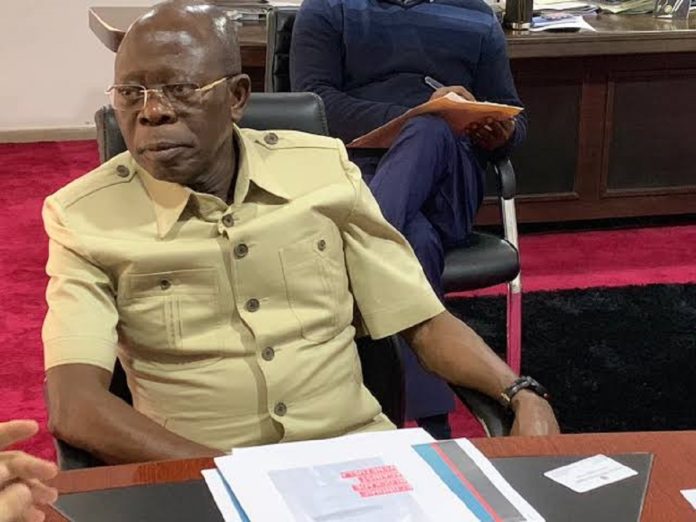

ABUJA — Former Edo State Governor and Senator representing Edo North, Adams Oshiomhole, has launched a sharp critique against the business philosophy of former presidential candidate Peter Obi, arguing that his commercial operations actively harm Nigeria’s local economy.
Speaking on TVC News’ Beyond The Headlines on Monday, July 27, 2026, Oshiomhole asserted that Nigeria’s path to economic recovery requires deep manufacturing investments and long-term capital retention, rather than reliance on consumer import networks.
Key Points from Oshiomhole’s Remarks
To illustrate his argument that Obi’s background is rooted in trading and short-term turnover rather than job creation, Oshiomhole recounted a personal shopping experience at one of Obi’s retail outlets:
“Obi’s business is to export jobs and import unemployment to the country. That is what he lives for. He’s a trader. He owns a shopping mall, and you go there. There was a time I went to buy red wine in one of his stores, and I was told Peter Obi was the sole importer of a particular brand of red wine or something from South Africa.”

Core Critique of the Import-Driven Economy
  SPEAKER:             Senator Adams Oshiomhole (Edo North)
  TARGET:              Peter Obi (2023 Presidential Candidate / Business Executive)
  PRIMARY ALLEGATION:  Focusing on consumer importation over domestic manufacturing
  ECONOMIC ARGUMENT:   Import-heavy business models export domestic capital and jobs abroad
- Traders vs. Manufacturers: Oshiomhole argued that traders operate on short-term horizons—typically 3 to 6-month cycles—and lack the structural patience required to build local manufacturing plants that create enduring jobs.
- Exporting Employment: The former Nigeria Labour Congress (NLC) President contended that importing finished consumer goods—such as foreign wines and retail merchandise—sustains factories and workers in exporting nations while exacerbating unemployment in Nigeria.
- Defense of Economic Reforms: Oshiomhole used the comparison to contrast Obi’s retail background with President Bola Ahmed Tinubu’s long-term economic restructuring, which he described as necessary, painful “surgery” to rebuild Nigeria’s productive base.
Political Implications
The remarks come amid continued political debates ahead of upcoming electoral cycles. While supporters of Peter Obi point to his business experience as evidence of financial prudence and private-sector success, critics like Oshiomhole continue to frame his commercial legacy as an example of Nigeria’s over-reliance on foreign imports over domestic production.