

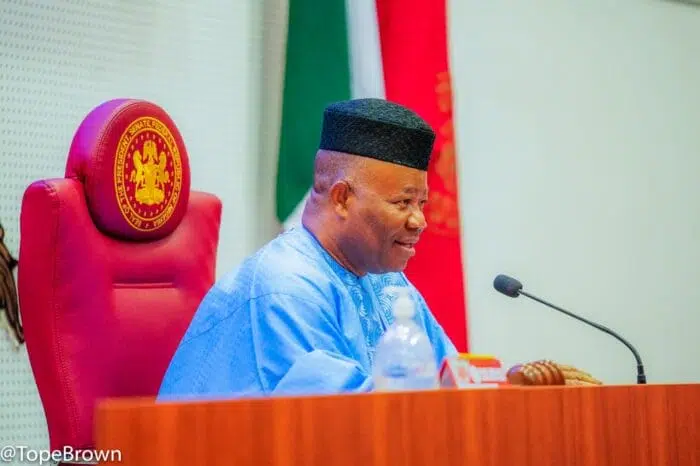
ABUJA — Sections 88 and 89 of the 1999 Constitution of the Federal Republic of Nigeria (as amended) grant the National Assembly extraordinary powers. The legislature is tasked not merely with passing laws, but with acting as the ultimate institutional shield against executive recklessness, financial waste, and administrative fraud.
Yet, the unprecedented scandals riddling the N35.2 Trillion 2026 Appropriation Act reveal a legislative branch that has effectively abdicated its primary constitutional duty.
Rather than serving as vigilant gatekeepers checking public finance excesses, lawmakers across the Senate and House of Representatives have presided over an appropriation process defined by unchecked budget padding, off-mandate project dumping, and a catastrophic breakdown in committee oversight.
The PFIPC Ghost Agency: A Masterclass in Oversight Failure
Nothing illustrates the collapse of legislative scrutiny in the N35.2 trillion national spending plan more starkly than the Presidential Foreign Intervention Promotion Council (PFIPC) scandal.
Under Budget Code 0111062001, the entity secured a N1.302 billion allocation—complete with line items for salaries, overheads, and capital procurements. Weeks after passage, senior Presidency officials publicly disowned the agency, describing it as an unauthorized, non-existent “ghost entity”.
      [ Executive Budget Preparation ]
                     │
                     ▼  (Forged documents slip through)
      [ National Assembly Committees ]  <--- CRITICAL BREAKDOWN:
                     │                       Zero verification or budget defense
                     ▼                       hearings conducted
      [ N1.3 Billion Enacted Budget ]
The fundamental question exposing the National Assembly’s complicity is simple: How did an agency that does not legally exist pass through legislative budget defense sessions undetected during the N35.2 trillion budget breakdown?
- No Budget Defense Hearings: Inside reports reveal that no official from the PFIPC ever appeared before the relevant Senate or House committees to defend the N1.3 billion proposal. Lawmakers passed the line item without verifying its statutory establishing act, gazette, or physical location.
- Voting Against Self-Scrutiny: When public outrage erupted, the Senate actively declined to adopt motions seeking an independent parliamentary investigation into how the entry entered the budget bill, choosing instead to defer entirely to executive anti-graft agencies. Political scientists and legal experts termed the refusal a “constitutionally indefensible” surrender of legislative power.
The Almajiri Road Trap: Oversight Replaced by Self-Interest
While the legislature failed to catch executive-side ghost allocations, it actively engineered its own structural abuses through off-mandate project insertions inside the N35.2 trillion framework.
The National Commission for Almajiri and Out-of-School Children’s Education (NCAOOSCE) was created to address Nigeria’s staggering crisis of over 15 million out-of-school children. Yet, its 2026 budget was loaded with N8.4 billion for regional road construction across Ogun, Ekiti, and Katsina states.
  NCAOOSCE Statutory Mandate:   Basic Education & Out-of-School Youth
  Actual Budget Insertions:   N8.4B Asphalt Roads, Ambulances, Streetlights
  Oversight Result:            Zero Alignment with Agency Core Purpose
When confronted, the Commission openly confirmed that the road construction lines were constituency projects inserted directly by lawmakers during the harmonization phase.
By forcing specialized human capital agencies to act as procurement hubs for physical asphalt and streetlights, legislative committees purposefully sabotaged standard monitoring mechanisms. An agency built to recruit teachers and rehabilitate vulnerable street children possesses no civil engineers or surveyors to inspect multi-billion naira road construction—a gap lawmakers exploited to shield constituency spending from rigorous technical audits.
The Collapse of Committee Gatekeeping
Every single line item in the N35.2 trillion federal budget passes through specific standing committees in both chambers—from Appropriations to Finance, Education, and Health.
Instead of exercising rigorous gatekeeping, the committee system has turned the national budget into a transactional vehicle:
| Infraction / Insertion | Statutory MDA Used | The Oversight Failure |
| N1.302 Billion Personnel & Overheads | Non-Existent PFIPC Agency | Passed without verifying enabling law or hosting defense sessions. |
| N8.4 Billion Asphalt Roads | Almajiri Education Commission | Inserted by lawmakers into an education agency lacking engineering capacity. |
| Hundreds of Millions in Faith Items | Industrial Arbitration Panel (IAP) | Smuggled religious sound gear into a labor dispute resolution tribunal. |
| Solar Streetlights & Local Kits | Specialized Agricultural & Cancer Institutes | Scattered across non-core institutes where procurement rules are easily bypassed. |
A System Without Gatekeepers
When the parliament charged with protecting the public purse becomes the primary source of budgetary distortion, democratic checks and balances cease to function.
The N35.2 trillion 2026 Appropriation Act has demonstrated that Nigeria’s budget crisis is not merely a problem of executive overreach—it is fundamentally a failure of legislative integrity.
Until the National Assembly enforces strict mandate-matching mandates, opens committee defense sessions to real-time public live-streams, and punishes internal budget padding, the federal budget will remain what civic groups have rightly called it: a crime scene with an official cover page.