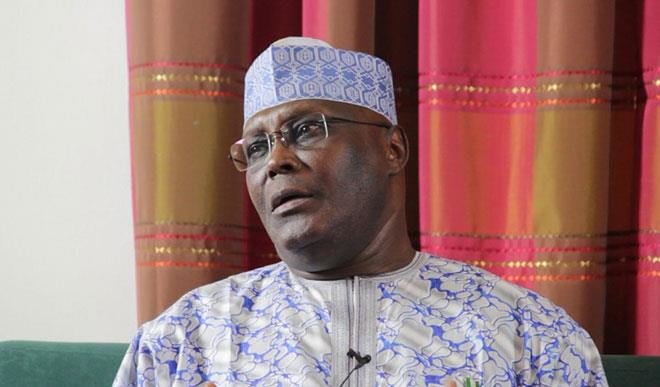

ABUJA — While the Supreme Court victory for Senator David Mark’s leadership was framed as a win for the rule of law, a more calculating narrative is emerging behind the scenes. Within the high-walled boardrooms of Abuja, the African Democratic Congress (ADC) is increasingly being viewed not as a neutral platform for the opposition, but as a vehicle specifically reserved for the final presidential run of former Vice President Atiku Abubakar.
The restoration of the David Mark-led executive is now seen by many insiders as the final piece of a structural takeover. Allegations have surfaced that Atiku’s camp has successfully consolidated control over nearly 70% of the party’s organs, from the national working committee down to the state chapters. This shift became undeniable in November 2025, when Atiku formally resigned from the PDP and picked up an ADC membership card, effectively turning the party into a bespoke political home.
However, the plan to build a “super-coalition” around this platform has hit a significant wall: the refusal of Peter Obi and Rabiu Kwankwaso to play the secondary roles assigned to them.
Sources close to the negotiations reveal that while intense pressure was placed on Obi to collapse his structure into the ADC, the invitation was never for an equal partnership. Instead, the strategy was to use Obi’s massive youth appeal to boost the party’s visibility and nationwide reach, essentially serving as the fuel for an Atiku-driven engine. Obi, recognizing that the party machinery had already been calibrated for a Northern candidate, has remained a member of the Labour Party, reportedly warning his inner circle that he will not be a “visibility booster” for a pre-packaged candidacy.
Rabiu Kwankwaso has staged a similarly strategic retreat. Since the Supreme Court ruling, the former Kano governor has distanced himself from the ADC, reportedly viewing the current legal setup as a “trap” designed to sideline rivals on technical grounds during the 2027 primaries. The refusal of Atiku to commit to a Southern rotation—a non-negotiable for the Obi camp—has confirmed suspicions that the ADC was never intended to be an open field for the “Third Force,” but a fortress for the Abubakar project.
This internal cold war has left the ADC in a state of “structural paralysis.” While the party leadership insists they owe no allegiance to any single individual, the reality suggests a party reserved for one man but rejected by the very allies he needs to win. As Atiku secures his grip on the party’s machinery, the refusal of Obi and Kwankwaso to be used leaves the ADC as a specialized vehicle with a specific driver, but no passengers, facing a Tinubu administration that is more than happy to watch the “grand alliance” fail.