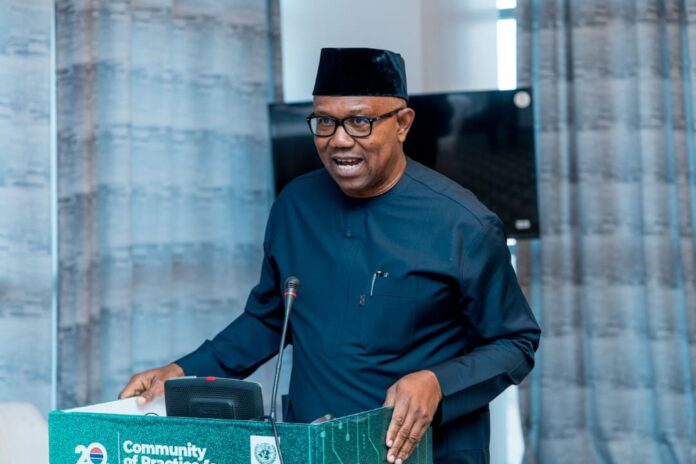


The departure of Peter Obi from the coalition and his move toward an independent ticket has sent a seismic shock through the camp of former Vice President Atiku Abubakar, fundamentally redrawing the electoral map for the 2027 presidential race.
From a realist perspective, the loss of Obi is not just a personnel change; it is a structural blow to Atiku’s path to the Presidency.
The Southern Fortress Crumbles
For Atiku, the most immediate crisis is the “25 percent hurdle.” Constitutional requirements demand that a winner must secure a quarter of the votes in at least 24 states. Without Obi on his ticket to provide a bridge to the South-East and parts of the South-South, Atiku’s ability to clear this bar in the Southern states has been severely compromised.
While the Atiku camp may attempt to forge new alliances in the South, many analysts believe he will struggle in vain to make meaningful inroads into a region that increasingly sees Obi as its primary voice.
Incursion into the North
Perhaps more worrying for the Atiku campaign is the reality that Obi is no longer confined to the South. Evidence suggests that Obi is prepared to make significant incursions into traditional Northern strongholds—territory Atiku desperately needs to sweep to remain competitive.
Obi’s brand of politics is expected to resonate strongly across the Middle Belt and areas with significant Christian communities. Projections show Obi is well-positioned to win Plateau, Nasarawa, Benue, and Taraba states, as well as the Federal Capital Territory (FCT). Beyond these, Obi is expected to post strong numbers in the “Southern belts” of the North, including Southern Kaduna, Southern Borno, Southern Gombe, and Southern Adamawa.
The Weight of Absence
The absence of the Obi-Kwankwaso bloc within an Atiku-led coalition has reshaped the contest into a multi-way struggle, diluting the opposition vote. For Atiku, who has long positioned himself as the unifier of the North and South, the emergence of an independent front means he is now fighting a war on two fronts: defending his Northern base against Kwankwaso and Obi while trying to regain a foothold in a South that has moved on.
As the political dust settles, the weight of this exit is becoming undeniable. Atiku Abubakar is now facing his most difficult electoral path yet—one where the math simply doesn’t add up without the man who once stood by his side.