

ABUJA — A blistering viral critique from a young Nigerian, Zekeri Idris, has stripped away the legislative jargon surrounding the National Assembly’s electoral reform debate, exposing what many citizens call a “shameful technological paradox” at the heart of Nigeria’s democracy.
As the 10th Senate maintains its controversial rejection of mandatory real-time electronic result transmission for the 2027 polls, Idris’s words have become the rallying cry for a nation pushed to the brink. “Bandits are transmitting and broadcasting their victims live from inside the forest,” Idris pointed out in a widely shared video. “But the Nigerian government is telling me they cannot transmit my vote from my polling unit?”

A Tale of Two Signal Strengths
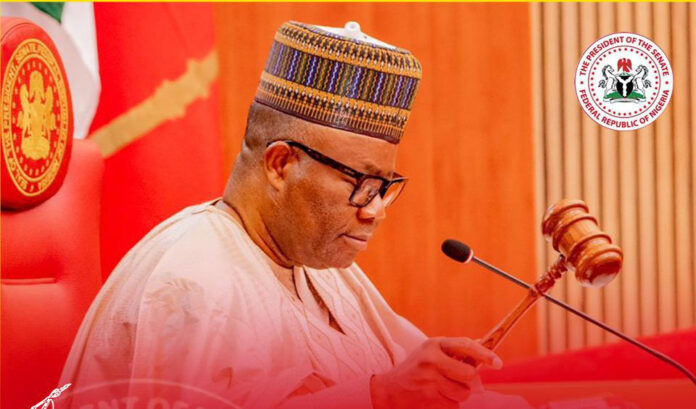
The “network coverage” excuse, championed by Senate President Godswill Akpabio, has been met with visceral derision across the federation. Critics point out the bitter irony: while the Nigerian state claims it cannot find a signal to protect the sanctity of the ballot in rural areas, kidnappers and terrorists seemingly have no trouble accessing high-speed data to livestream the torture of their victims from the densest forest reserves in Kwara, Katsina, and Benue.
“It is a slap in the face of every Nigerian,” said one protester at the National Assembly gates, where Mr Peter Obi recently joined hundreds to demand transparency. “If a criminal can upload a ransom demand from a cave, why is a polling unit in a local government headquarters considered ‘offline’?”
The ‘Rigging’ Anxiety and Elite Disconnect
The Senate’s decision, which the African Democratic Congress (ADC) has labeled a “Renewed Rigging Plan,” is being framed as a deliberate move to preserve manual manipulation. Senior statesmen like David Mark have already warned Akpabio to “not speak for INEC,” insisting that the legislature should provide the law and let the electoral body handle the technicalities.
This legislative friction is playing out against a backdrop of deep national despair:
- Economic Collapse: With petrol nearing ₦1,000 per litre and the national debt at ₦152 trillion, many see the rejection of e-transmission as a move to suppress the backlash from a vanishing middle class.
- The ₦7.6tn Contrast: Protesters are asking why the government can unilaterally write off trillions for the NNPCL but refuses to invest in the technology that would secure the future of the 133 million Nigerians in poverty.
Emergency Plenary: A Turning Point?
Under immense pressure from civil society and a looming nationwide consumer boycott of celebrity brands, the Senate has scheduled an emergency plenary sitting for Tuesday morning.
The question remains: will the leadership listen to the “voice of the forest” cited by Zekeri Idris, or will they continue to hide behind a “lack of network” while the nation’s security and electoral integrity continue to bleed?