

AWKA, Nigeria — Dr. Michael O. Egbebike, who served as Anambra State’s Commissioner for Environment from 2008 to 2012, has issued a detailed public rebuttal to President Bola Ahmed Tinubu’s recent remarks accusing former Governor Peter Obi of failing to confront Anambra’s gully erosion crisis.
In a formal statement titled “Peter Obi and Anambra’s Erosion Crisis: The Facts Must Speak,” Egbebike rejected the President’s characterization, arguing that contemporary government records, budget addresses, and World Bank documentation demonstrate that the Obi administration actively intervened in the state’s environmental challenges.
The Political Exchange
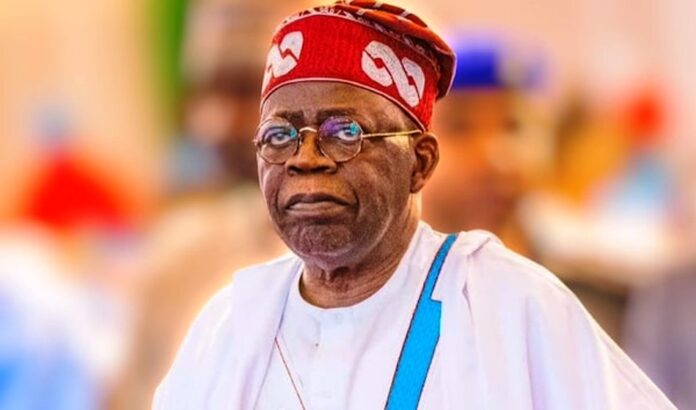
The dispute stems from remarks made by President Tinubu on November 6, 2026, during a campaign rally in Akwa Ibom State ahead of the 2027 general elections. Addressing supporters, Tinubu contrasted Obi’s tenure in Anambra with his own record as governor of Lagos State and that of Akwa Ibom Governor Umo Eno.
“He ran away from erosion in Anambra State. He could not confront erosion,” Tinubu said of Obi, who is running on the platform of the Nigeria Democratic Congress (NDC). “I, Bola Ahmed Tinubu, I confronted the Atlantic Ocean, I tamed it for you. Umo Eno confronted the erosion in Akwa Ibom, and it’s working for you.”
Obi subsequently dismissed the President’s claims as false, stating earlier this week that he had personally engaged the late President Umaru Musa Yar’Adua and federal environmental officials to help conceptualize the national framework currently used to combat erosion.
Egbebike’s Account of the Obi Administration
Joining the debate, Egbebike—a civil engineer, environmental scientist, surveyor, and legal practitioner—noted that Obi personally recruited him from the United States in 2008 specifically to bring technical expertise to Anambra’s complex geological and hydrological challenges.
Egbebike cited several state-level interventions documented in official records during his tenure and in Obi’s December 18, 2012, budget address to the Anambra State House of Assembly:
- Completed Works: Erosion-control projects at Nkpor, Mgbakwu, and Ebenebe.
- Ongoing Interventions: Projects at Agulu–Nanka, Adazi-Nnukwu, Nkisi Water Works, Omagba (Phases I and II), Nsugbe, the New Judiciary Complex in Awka, Utuh/Osumenyi, Iyiagu Channelisation (Phase II), and Nnewi-Ichi.
- Urban Stormwater & Major Sites: Drainage works around Okpoko and the Sakamori network in Onitsha, alongside the March 7, 2012, flag-off of the ₦1.2 billion gully remediation project at Amakor village in Nanka.
The NEWMAP Record
Central to Egbebike’s rebuttal is the Obi administration’s role in establishing the Nigeria Erosion and Watershed Management Project (NEWMAP), a federal and multistate initiative backed by the World Bank.
Approved by the World Bank in May 2012 while Obi was in office and launched nationally in September 2014, NEWMAP targeted severe land degradation across seven initial participating states, including Anambra. Egbebike pointed to independent institutional acknowledgments from that period:
- Federal Recognition: At NEWMAP’s September 2014 launch in Abuja, former Minister of Environment John Odey publicly credited Obi with persistently advocating for the program when several other governors were hesitant.
- World Bank Commendation: Contemporary media reports from The Nation (September 5, 2014) recorded then-World Bank Country Director for Nigeria, Marie-Françoise Marie-Nelly, commending Obi as the first governor to pay his state’s ₦500 million counterpart funding contribution.
Egbebike also noted that Obi’s March 2012 engagements with World Bank specialists helped secure a reported $1 million grant to develop an urban stormwater master plan for Onitsha.
Technical Distinctions
Addressing President Tinubu’s direct comparison between Lagos and Anambra, Egbebike emphasized that coastal erosion and inland gully erosion require distinct engineering approaches. While Lagos’s shoreline challenges involve wave action, tidal forces, and seawalls, Anambra’s gullies are driven by concentrated stormwater runoff cutting through steep, highly erodible soils—requiring watershed management, energy-dissipation structures, and slope stabilization.
“Peter Obi did not eliminate Anambra’s erosion crisis. Neither did he abandon it,” Egbebike concluded, adding that while subsequent administrations carried out the physical construction phases under NEWMAP, historical records confirm that Obi’s government initiated projects, secured international partnerships, and committed early state funds to confront the threat.
You can watch President Tinubu’s original campaign remarks in this Channels Television clip covering his speech in Akwa Ibom, which sparked the ongoing debate over both leaders’ environmental records.