
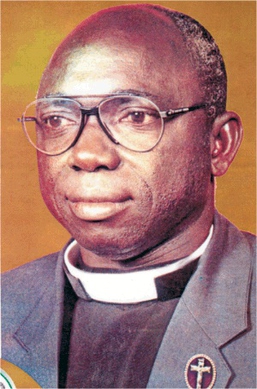


MAKURDI, Nigeria — More than three decades after the late Rev. Fr. Moses Orshio Adasu served as Benue State’s second civilian chief executive, a historical evaluation comparing his administrative legacy with that of current Governor Rev. Fr. Hyacinth Iormem Alia has underscored the transformative impact of ordained Catholic priests in the state’s political development.
In an analysis issued in Makurdi, Sir Tersoo Kula, Chief Press Secretary to the Governor, highlighted how both clergymen, separated by thirty-four years, have utilized public office to establish enduring institutions and drive comprehensive governance across the state.
Rev. Fr. Adasu assumed office in January 1992 during the Third Republic. Despite his tenure being cut short after just eighteen months by a military intervention in November 1993, his administration delivered several structural projects that remain central to the state today. His defining achievement was the establishment of Benue State University in Makurdi, the first state-owned university in northern Nigeria, which was subsequently renamed Father Adasu University in his honor. Over the past three decades, the institution has produced more than fifty thousand graduates. His administration also founded the College of Education in Oju, established the J.S. Tarka Foundation, and initiated early industrial projects including the BENCO Roof Tiles Company in Abinsi.
Building upon those foundational achievements, Rev. Fr. Hyacinth Alia, now in his third year as governor, is expanding specialized higher education beyond the state capital. His administration established the Faculty of Engineering at Father Adasu University in Adikpo and founded the Benue State University of Agriculture, Science and Technology in Ihugh, which has already matriculated its pioneer batch of students.
In basic education, the current administration has recruited nearly ten thousand primary school teachers, renovated hundreds of school structures, introduced free basic education from Basic One to Nine, and covered national examination fees for public school students during the 2023/2024 academic session.
The state’s infrastructure has similarly seen major expansions. Governor Alia’s administration has completed over fifty intra-city roads, constructed more than three hundred and seventy kilometers of rural roads, built major interchanges at High Level in Makurdi and in Gboko, and completed the Achusa-Idye-Wurukum drainage canal to mitigate urban flooding. Solar street lighting has also been deployed across urban centers in all twenty-three local government areas.
On the economic front, efforts are underway to revive moribund state enterprises. The Bensono Fruit Concentrate Plant was commissioned in June 2026, while operations have resumed at Taraku Mills following the resolution of long-standing legal and financial liabilities. The government has also established the Food Basket Brewery and initiated revival plans for the Yandev integrated swine project and the Ikyogen Cattle Ranch.
Worker welfare and healthcare have received direct intervention as well. The government has implemented a seventy-five thousand naira minimum wage, cleared inherited salary arrears, and approved long-delayed civil service promotions. Healthcare facilities at the Benue State University Teaching Hospital have been upgraded with billions in funded arrears, alongside two billion naira committed to a new cancer treatment center.
Addressing persistent debates regarding the involvement of clergy in partisan politics, the administration noted that the leadership records of both governors demonstrate that priesthood does not disqualify anyone from governing effectively. The ultimate test of leadership remains whether communities enjoy functional roads, accessible healthcare, quality education, and enduring public institutions.