
.
.
.
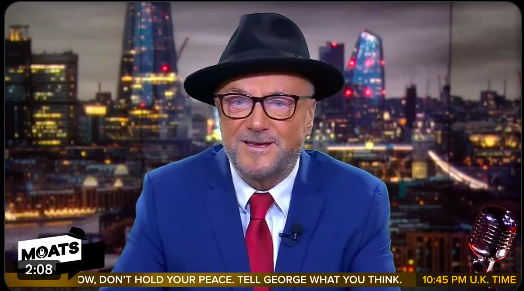
Lagos/London — Former British Member of Parliament George Galloway has once again turned his fire on Nigerian President Bola Tinubu, mocking him as a “crook” whose academic credentials are not only allegedly forged but, in Galloway’s telling, misspelled on the very document meant to prove his qualifications.
The Latest Broadside
In his most recent salvo, Galloway asked pointedly why, if Nigeria was going to be led by a “crook,” the country could not at least have “a more presentable one” — someone capable of correctly spelling the name of the university he is accused of having forged a certificate from, and one who would not resist efforts to make his educational records public.
The line is consistent with Galloway’s long-running campaign against the Nigerian leader. On his online talk show Mother of All Talk Shows (MOATS), he has previously mocked Tinubu directly over the spelling of his disputed university credential, and has framed the entire saga as part of a broader pattern of what he calls identity fraud surrounding the president.
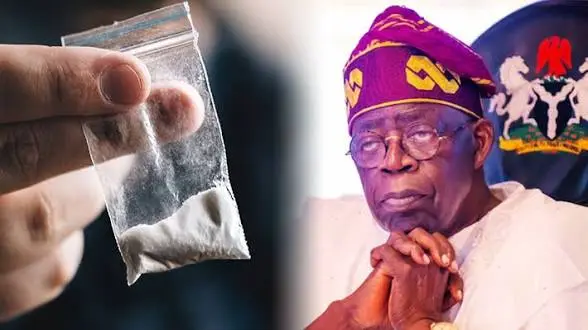
Galloway, who represented Labour and the Respect Party in the UK’s House of Commons between 1987 and 2015, has been especially animated on the subject since mid-2023, when he said he was astonished to learn of allegations tying Tinubu to organized crime and drug trafficking networks in Chicago, calling these “discouraging attributes” for a national leader.
He has also rejected suggestions that his criticism is rooted in Tinubu’s ethnicity or religion, insisting instead that his opposition is grounded purely in allegations that Tinubu is a “crook,” a “thief,” and someone who forged both his election papers and, by extension, his path to power.
Background: The Chicago State University Saga
At the heart of Galloway’s attacks is a controversy that has dogged Tinubu since well before his 2023 election victory: unresolved questions about the authenticity of the academic certificate he says he earned from Chicago State University (CSU) in 1979.
Doubts about Tinubu’s educational history date back to at least 1999, when opposition figures first challenged him to produce credentials from the primary and secondary schools he claimed to have attended. Chief Olabode George, a former Deputy National Chairman of the Peoples Democratic Party (PDP) and a longstanding Tinubu critic, has maintained for years that Tinubu never attended the primary and secondary institutions he named, and publicly challenged him to produce verifiable documentation.
The issue resurfaced with new intensity during the 2023 election cycle. After Tinubu told Nigeria’s electoral commission, INEC, that his primary and secondary school certificates had been lost, and submitted a CSU degree certificate as evidence of his tertiary education, his main rival, former Vice President Atiku Abubakar of the PDP, moved to test the document’s authenticity.
The U.S. Court Battle
Unable to resolve the dispute through Nigerian courts alone, Atiku pursued a legal avenue in the United States, petitioning a federal court in Illinois to compel CSU to release Tinubu’s academic records.
The case produced a series of contentious rulings. A magistrate judge initially sided with Atiku, ordering the university to hand over the records. Tinubu’s legal team fought the order, seeking to block release of the documents, but Judge Nancy Maldonado of the U.S. District Court for the Northern District of Illinois ultimately upheld the magistrate’s decision, rejecting Tinubu’s objections and directing CSU to comply.
The most explosive moment came when CSU’s registrar, Caleb Westberg, submitted a sworn deposition stating that the certificate Tinubu had presented to INEC — dated June 22, 1979 — did not match records the university could authenticate, and that the school could not verify the document’s origin. The deposition fueled widespread public speculation in Nigeria that the president’s credentials had been fabricated, with critics invoking a constitutional provision that bars anyone who presents a forged certificate to INEC from holding presidential office.
CSU’s position was not entirely consistent, however. At one stage the university separately confirmed that a Bola Tinubu had graduated from the institution in 1979, and at Nigeria’s Supreme Court, Justice Inyang Okoro noted that there were conflicting letters from CSU — one appearing to authenticate the president’s certificate and another appearing to discredit it — leaving the court unable to rely on a single, uncontested account from the university itself.
The Supreme Court’s Verdict
Atiku and Labour Party candidate Peter Obi both took their challenges to Nigeria’s Supreme Court, seeking to overturn the Presidential Election Petition Tribunal’s September 2023 ruling that had affirmed Tinubu’s victory. Atiku specifically asked the apex court for permission to introduce Westberg’s deposition as fresh evidence of forgery.
On October 26, 2023, a seven-member panel led by Justice Inyang Okoro unanimously dismissed both appeals. Crucially, the court did not rule on the authenticity of the certificate itself. Instead, it held that it lacked jurisdiction to admit the CSU deposition as new evidence because forgery had not been among the issues raised before the original election tribunal, and because Atiku had not sought an extension of time or amended his pleadings to include the allegation before Nigeria’s strict 180-day constitutional deadline for resolving election petitions had lapsed.
In short: the Supreme Court closed the door on the forgery claim for procedural reasons, not because it examined and rejected the underlying allegation. The court affirmed Tinubu’s election on all substantive grounds it did consider, including disputes over electronic transmission of results and the calculation of the 25-percent threshold across states.
Reactions
Atiku, in the aftermath, said the verdict “leaves much to be desired,” accusing the Supreme Court and INEC of enabling illegality, identity theft, impersonation, forgery, and perjury, and argued that Tinubu had never been qualified to contest the election in the first place.
Tinubu’s camp and APC officials have pushed back forcefully against Galloway in particular. Dr. Josef Onoh, a former Tinubu spokesman in southeastern Nigeria, dismissed Galloway as an attention-seeking figure whose accusations were, in his characterization, unsubstantiated and driven by personal instability rather than genuine concern for Nigeria. Supporters of the president have pointed to the Supreme Court’s affirmation of his victory — and to CSU’s own confirmation that a Bola Tinubu graduated in 1979 — as evidence that the forgery narrative has not been proven in any court of law, Nigerian or American.
Where Things Stand
More than two years after the Supreme Court’s ruling, the core factual question — whether the specific certificate Tinubu submitted to INEC is authentic — has never been definitively adjudicated on its merits by any court. The matter remains a live political flashpoint: opposition figures and commentators like Galloway continue to cite the CSU registrar’s deposition as proof of forgery, while the president’s allies maintain that no court has found him to have committed forgery and that his electoral mandate stands as constitutionally settled.
Galloway’s latest remarks suggest he has no intention of letting the issue drop, continuing to use his media platform to press the allegation even as the legal avenues to relitigate it inside Nigeria’s electoral courts have been exhausted.