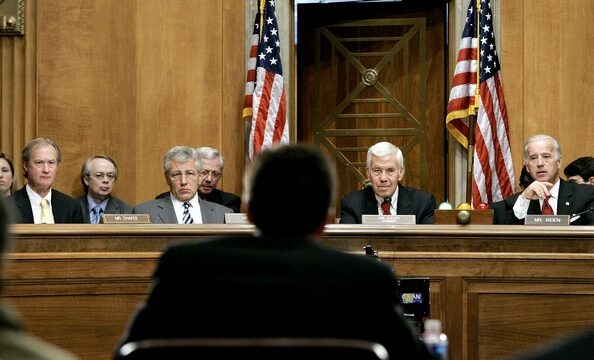
WASHINGTON, D.C. – The political tremors shaking Abuja have officially reached the corridors of power in Washington. In a move that signals a massive escalation of international scrutiny, the high-level U.S. policy firm Von Batten-Montague-York has announced it will formally brief the U.S. Congress and the Trump administration on the Independent National Electoral Commission’s (INEC) decision to “freeze” the leadership of the African Democratic Congress (ADC). This decision to elevate the ADC crisis to the desks of American lawmakers suggests that the world’s most powerful democracy is no longer content to sit on the sidelines while Nigeria’s opposition is systematically dismantled.
In a stinging statement released on Friday, April 3, 2026, the firm expressed grave concern over what it described as a coordinated effort to stifle political competition. By de-listing the Senator David Mark-led National Working Committee (NWC), the firm argues that INEC has effectively put a “ball and chain” on a major opposition platform at a critical pre-election junction. A spokesperson for the firm stated that the suspension of the ADC leadership raises serious red flags about the neutrality of Nigeria’s electoral umpire and confirmed they are briefing the Trump administration on the potential for this move to create a “one-party state” environment that defies global democratic standards.
The news of Washington’s intervention has sent shockwaves through the Tinubu administration, but not everyone is convinced that the U.S. will ride to the rescue. Former Senator Shehu Sani took a swipe at the move on Friday, mockingly suggesting that those reporting INEC to the Trump administration are barking up the wrong tree. Sani pointed out the irony of seeking help from a leader reportedly eyeing a third term for himself and who famously ignored electoral irregularities in Uganda and Tanzania. He quipped that Nigeria likely isn’t among Trump’s top 50 priorities and jokingly suggested that the opposition might have better luck reporting the matter to CAF.
Despite the skepticism from figures like Sani, the international spotlight is shining an uncomfortable light on the government’s handling of the opposition. The briefing is expected to focus on several troubling developments, including allegations from Governor Bala Mohammed and Bolaji Abdullahi that the EFCC and INEC are being used as “Gestapo-style” tools of coercion. It will also cover claims by Nasir El-Rufai regarding illegal ₦100 billion monthly deductions from the Federation Account—an “impeachable offence” that has caught the ear of international fiscal watchdogs. While the European Union has already noted its deep concern over the shrinking democratic space in Nigeria, the U.S. briefing could lead to more tangible consequences, including targeted sanctions or a review of security cooperation. In Abuja, INEC Chairman Professor Joash Amupitan remains defiant, dismissing the international outcry as “misinformed” and insisting he is merely a servant of the Court of Appeal’s status quo order.