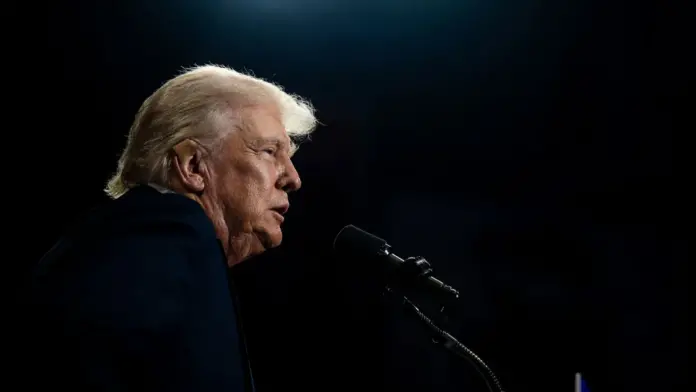
WASHINGTON D.C. – In a move that has sent geopolitical tremors from the Caribbean to the Kremlin, President Donald Trump has officially declared that the island of Cuba is the next target in his aggressive global “liberation” campaign. Fresh off the heels of a massive military escalation against Iran, Trump announced that once Tehran is fully neutralized, his sights will shift to toppling the long-standing communist regime in Havana to “save the Cuban people.”
The “One-Two Punch” Strategy
Speaking with trademark bravado during a high-energy rally, Trump didn’t just hint at regime change—he promised it.
“Cuba is trapped in a nightmare, a dictatorship that has gone on for far too long,” Trump told a roaring crowd. “We’ve dealt with Iran, and we’re winning bigly. People said we couldn’t do it, but we’re doing it. And I’m telling you now: Cuba is next. We are going to free those people and Make the World Great Again.”
While asserting that the U.S. military is powerful enough to “handle both Iran and Cuba at the same time,” Trump noted a strategic preference for a sequential takedown, focusing his “total fire” on one conflict at a time to ensure a “total and complete victory.”
The Africa “Snub”: Why Is the Continent Being Left Behind?
As Trump’s “liberation” rhetoric sets the Western Hemisphere on fire, a haunting question is echoing across the Atlantic: Why is Africa being ignored?
Despite a continent-wide plea for similar “liberation” from systemic corruption, poverty, and rising insurgencies, the Trump administration has remained conspicuously silent on African intervention. Insiders suggest the “Trump Doctrine” is brutally transactional—focusing on direct ideological rivals like Cuba or high-stakes oil giants like Iran, while viewing Africa through a lens of “business potential” rather than state-building.
While Trump has previously teased Africa as a “land of tremendous opportunity” for American firms, his current lack of appetite for “liberating” African nations has left many wondering if the continent simply doesn’t fit into his high-stakes game of global chess.
The Cuban Fallout
In Havana, the atmosphere is one of defiant anxiety. Trump has already tapped Secretary of State Marco Rubio to lead the charge, praising him for a “fantastic job” in tightening the economic noose around the island. Trump’s latest “friendly takeover” rhetoric suggests he believes the Cuban government is “ready to make a deal” because they are in “deep, deep trouble.”
As the world watches the smoke rise from the Middle East, the shadow of the American eagle is now stretching toward the Caribbean. With North Korea—once the primary suspect for the next conflict—seemingly pushed to the back burner, the stage is set for a historic showdown just 90 miles from Florida’s coast.