
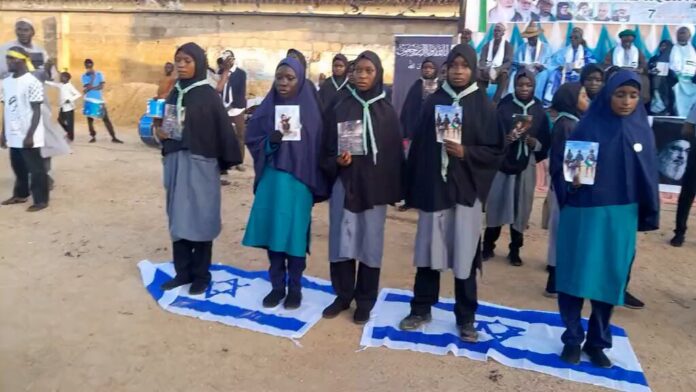

KANO, Nigeria — Thousands of students and radical youths flooded the streets across Northern Nigeria on Wednesday, trampling on and denigrating American and Israeli flags in a massive show of solidarity with the Islamic Republic of Iran.
The coordinated demonstrations, which paralyzed major northern capitals including Kano, Kaduna, and Sokoto, followed reports of a joint U.S.-Israeli strike in the Middle East. The protesters, many of whom are members of the Islamic Movement in Nigeria (IMN), transformed university campuses and city centers into sea of Iranian flags and portraits of Tehran’s leadership.
“down with the oppressors”
The atmosphere turned volatile in Kano as students from various tertiary institutions led a procession through the city’s ancient gates. In a choreographed display of defiance, protesters laid large replicas of the U.S. Stars and Stripes and the Israeli Star of David across major intersections, inviting the marching crowds to stomp on them.
“We are here to tell the world that the assassination of the Supreme Leader is an attack on every Muslim,” shouted Ibrahim Musa, a student leader at the Kano rally. “America and Israel must know that their footprints in the Middle East will be met with resistance even here in Africa.”
security forces on high alert
The sheer scale of the marches triggered an immediate security lockdown. In Abuja, the U.S. Embassy took the unprecedented step of canceling all consular appointments and advising American citizens to remain indoors.
The Inspector-General of Police, Tunji Disu, confirmed that tactical teams had been deployed to “strategic flashpoints” to prevent the protests from escalating into direct attacks on foreign interests. Despite the heavy presence of the Nigeria Police Force, the students remained undeterred, burning effigies and chanting anti-Western slogans for several hours.
a divided nation
While the northern states saw a surge in pro-Iranian sentiment, religious leaders in the south have urged for restraint. The League of Imams issued a statement calling on Nigerians to focus on domestic challenges, including the biting economic hardship and local insecurity, rather than being drawn into a foreign war.
“Our children should be in classrooms studying how to fix Nigeria, not on the streets fighting for Tehran,” said a Lagos-based cleric. “We have enough fire in our own house to be looking for smoke in the Persian Gulf.”
As of Wednesday evening, the protests had largely dispersed, though student groups have threatened “continuous action” if the U.S. military presence in Qatar and the UAE is not withdrawn.






