
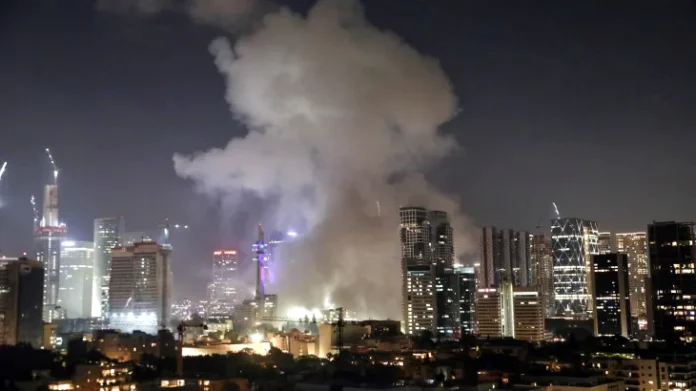

ARAD, Israel — The Middle East is teetering on the edge of an all-out inferno this morning after a swarm of Iranian ballistic missiles slammed into the southern Israeli cities of Arad and Dimona, leaving a trail of shattered glass, smoking craters, and 180 people wounded. In a terrifying security breach, Israel’s world-renowned air defenses failed to swat the projectiles from the sky, allowing them to tear through residential neighborhoods and strike the doorstep of the nation’s most sensitive nuclear site.
The scenes in Arad are nothing short of apocalyptic, with rescue workers from Magen David Adom pulling 116 bloodied victims from the husks of apartment buildings that had their facades ripped clean off. Just a few miles away in Dimona, another 64 people were rushed to hospitals, including a 10-year-old boy fighting for his life after being shredded by shrapnel. While the IAEA confirms that the nearby Shimon Peres Nuclear Research Center escaped a direct hit, the message from Tehran was loud and clear: nowhere is off-limits.
This wasn’t just a random act of aggression; Iranian state media is already gloating, calling the strikes a “eye-for-an-eye” receipt for the Saturday morning hit on their own Natanz nuclear plant. The failure of the interceptors has sent shockwaves through the IDF, sparking an urgent investigation into why the multi-billion dollar shield didn’t hold when it mattered most.
The fallout is already going global. With oil prices screaming past $105 a barrel, the White House has lost its patience. President Trump has slapped Tehran with a brutal 48-hour ultimatum: reopen the Strait of Hormuz or watch your power grid be “obliterated.” Back in Israel, the streets are ghost towns as schools move online and Prime Minister Netanyahu vowing a retaliation that will be felt “on all fronts.” As Israeli jets scream toward Tehran this Sunday morning, the question isn’t if the war will grow—it’s how much of the world it will take with it.






