
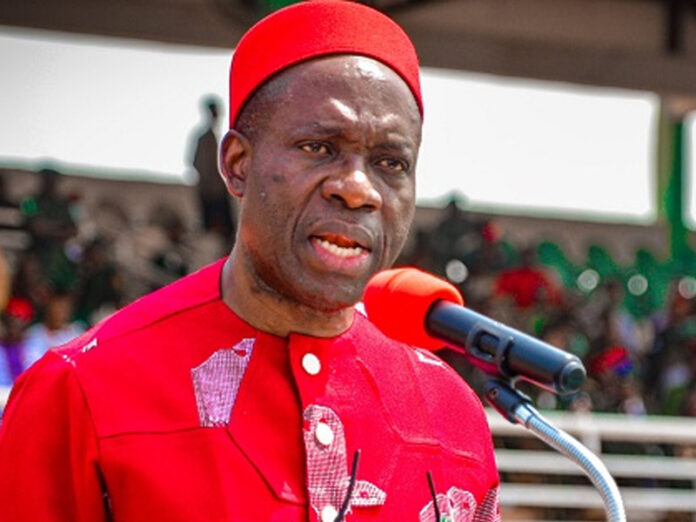

AWKA — The Anambra State Government has significantly heightened its offensive against the lingering shadows of the illegal Monday “sit-at-home” order, suspending nine primary school headteachers for what it described as “gross negligence” and failure to enforce school attendance.
The suspensions, which take effect immediately for a duration of two weeks, were announced on Monday evening, February 9, 2026. The move follows a series of unannounced monitoring exercises across the state’s three senatorial districts, revealing a disturbing trend where teachers reportedly signed attendance registers but left classrooms empty of pupils.
Empty Desks, Harsh Sanctions
The crackdown is the latest enforcement of Governor Chukwuma Soludo’s recent Executive Order, which formally abolished the Monday closures that have crippled the South-East’s economy and educational calendar for years. While the government had previously threatened salary forfeitures and 20% cuts for absent teachers, the focus has now shifted to the leadership within the schools.
According to the Anambra State Universal Basic Education Board (ASUBEB), the suspended headteachers failed to implement the state’s strategy of conducting “mandatory Monday tests”—a tactic designed to compel parents to send their children to school.
“We observed a situation in some local governments, particularly in the Enugwu-Ukwu and Abagana axes, where headteachers were physically present but made no effort to ensure pupils were in class,” a senior ASUBEB official noted. “Governance is about results, not just marking attendance in a register while the future of our children remains on the streets.”
The Battle for ‘Monday Productivity’
Governor Soludo’s administration has characterized the sit-at-home as a “self-inflicted economic wound” that the state can no longer afford.
- The Economic Toll: Regional data suggests the South-East loses an estimated ₦13 billion every Monday to the forced closures.
- Security Assurances: The state government has repeatedly assured parents that security forces have been fully mobilized to protect all educational institutions—public, private, and mission-owned.
A Region in Transition
The enforcement in Anambra mirrors a wider, often tense, transition across the South-East. While many residents in Aba and Enugu have begun returning to business, some communities still live in the shadow of “enforcers.”
Critics of the government’s “hardline” approach argue that the suspension of teachers is a “misplaced aggression” that ignores the underlying security fears of parents. However, Commissioner for Education, Prof. Ngozi Chuma-Udeh, has remained resolute, previously warning that private schools found shut on Mondays risk immediate withdrawal of their operational licenses.
What Happens Next
The nine suspended headteachers have been ordered to hand over their duties to their most senior assistants. The state has warned that a second infraction will result in permanent dismissal from the civil service.
As of Tuesday morning, February 10, 2026, ASUBEB monitoring teams have intensified their presence across all 21 local government education authorities. The message from the “Light of the Nation” is clear: Monday is no longer a day of rest, but a day of reckoning for those who fail to comply with the state’s new educational rhythm.






