
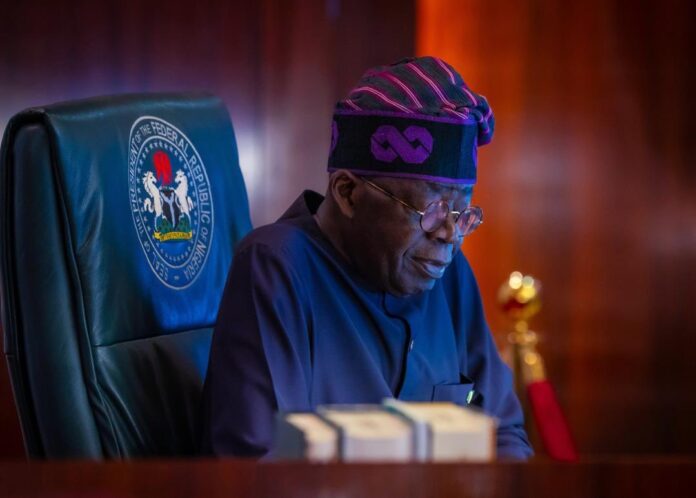

ABUJA — For thirty years, the legend of the “NADECO financier” was the cornerstone of a political identity. It was a story of sacrifice, of fleeing across the border in disguise, and of spending millions to sustain a resistance against military jackboots.
But on a Tuesday in late February 2025, that carefully curated history met a startling end.
Standing at the podium during the launch of General Ibrahim Babangida’s autobiography, A Journey in Service, the man who once claimed to be the shield of the June 12 mandate offered a tribute that felt like a surrender to the very forces he supposedly spent a lifetime fighting.
The “Progressive” Dictator?
The most jarring moment of the evening came when the former activist credited the “Maradona of Minna” for his entire political existence. Far from condemning the era of annulments and coups, he praised IBB’s “progressive revolution” of the late 1980s as the catalyst that “inspired” him to join the fray.
“Without you, people like me would not be in politics,” he told the aging General. To the veterans of the street protests of 1993, this wasn’t just a polite gesture; it was an admission. By attributing his rise to a military-engineered “new breed” program, he effectively stripped the NADECO movement of its moral high ground, suggesting his entry into the arena was a product of the junta’s design rather than a rebellion against it.
“In the Best Interest of the Country”
Perhaps the deepest cut for the families of those who died fighting for the M.K.O. Abiola mandate was the defense of the General’s “bold decisions.”
In a move that left political historians stunned, the former NADECO stalwart described IBB’s controversial postponements and political maneuvers as actions taken in the “best interest of the country.” The irony was thick enough to choke: NADECO was founded on the singular premise that the annulment was a crime against the Nigerian people. To now describe the architect of that era as an “exemplary” decision-maker rubbishes the memory of every activist who was jailed, exiled, or killed in the name of democracy.
Yesterday’s Defenders, Today’s Admirers
The fallout has been immediate and visceral. Critics have pointed out the hollow nature of yearly June 12 speeches when contrasted with this newfound adulation for the man who killed the mandate.
Leading voices in the opposition, including Peter Obi, have seized on the moment to highlight a “shameless irony.” On April 2, 2026, Obi remarked that those who once masqueraded as the defenders of democracy have now become its destroyers, even suggesting that the era they once fought against now seems “more democratic” than the current dispensation.
Conviction or Convenience?
The Abuja tribute has reignited a long-standing suspicion: Was the activism of the 90s a genuine conviction, or was it a self-serving investment?
By showering praises on the man who triggered the very reason for NADECO’s existence, the “activist” has signaled that the war is over—not because democracy won, but because the actors have finally reconciled behind closed doors.
As the General smiled from his seat, the ghosts of the June 12 struggle were left to wander, seemingly forgotten by the very man who once claimed to be their greatest champion.






